
植物是内生菌的外显子——生物活性化合物的实际来源。
Plants as the Extended Phenotype of Endophytes-The Actual Source of Bioactive Compounds.
机构信息
Institute of Molecular and Industrial Biotechnology, Lodz University of Technology, Stefanowskiego 2/22, 90-537 Lodz, Poland.
出版信息
Int J Mol Sci. 2023 Jun 13;24(12):10096. doi: 10.3390/ijms241210096.
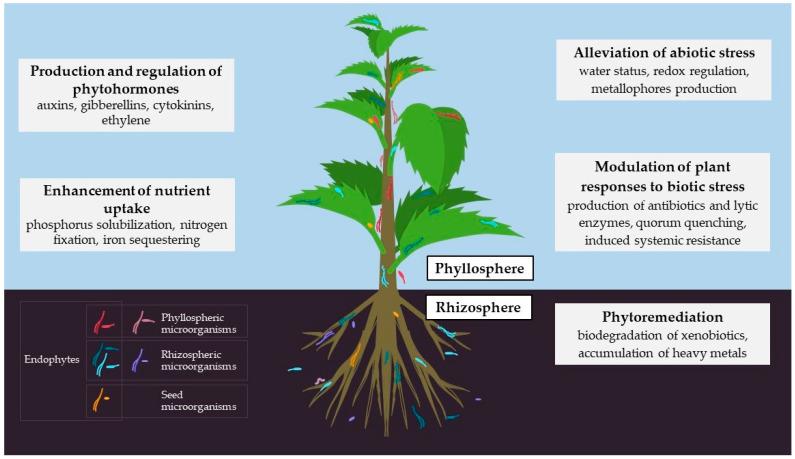
For thousands of years, plants have been used for their medicinal properties. The industrial production of plant-beneficial compounds is facing many drawbacks, such as seasonal dependence and troublesome extraction and purification processes, which have led to many species being on the edge of extinction. As the demand for compounds applicable to, e.g., cancer treatment, is still growing, there is a need to develop sustainable production processes. The industrial potential of the endophytic microorganisms residing within plant tissues is undeniable, as they are often able to produce, in vitro, similar to or even the same compounds as their hosts. The peculiar conditions of the endophytic lifestyle raise questions about the molecular background of the biosynthesis of these bioactive compounds in planta, and the actual producer, whether it is the plant itself or its residents. Extending this knowledge is crucial to overcoming the current limitations in the implementation of endophytes for larger-scale production. In this review, we focus on the possible routes of the synthesis of host-specific compounds in planta by their endophytes.
几千年来,植物一直被用于其药用特性。植物有益化合物的工业化生产面临着许多缺点,例如季节性依赖和繁琐的提取和纯化过程,这导致许多物种濒临灭绝。由于对适用于癌症治疗等的化合物的需求仍在增长,因此需要开发可持续的生产工艺。植物组织内内生微生物的工业潜力是不可否认的,因为它们通常能够在体外产生与其宿主相似或甚至相同的化合物。内生生活方式的特殊条件引发了关于这些生物活性化合物在植物体内生物合成的分子背景的问题,以及实际的生产者,是植物本身还是其居民。扩展这方面的知识对于克服目前在实施内生菌进行大规模生产方面的限制至关重要。在这篇综述中,我们重点讨论了内生菌在植物体内合成宿主特异性化合物的可能途径。
 Zotero 插件