
阈值吸气肌训练对重症监护病房患者撤机时间的影响:一项随机临床试验。
The effect of threshold inspiratory muscle training on the duration of weaning in intensive care unit-admitted patients: A randomized clinical trial.
作者信息
Khodabandeloo Farnoosh, Froutan Razieh, Yazdi Arash Peivandi, Shakeri Mohammad Taghi, Mazlom Seyed Reza, Moghaddam Ahmad Bagheri
机构信息
Medical Student, Faculty of Medicine, Mashhad University of Medical Sciences, Mashhad, Iran.
Department of Medical-Surgical Nursing, School of Nursing and Midwifery, Mashhad University of Medical Sciences, Mashhad, Iran.
出版信息
J Res Med Sci. 2023 May 29;28:44. doi: 10.4103/jrms.jrms_757_22. eCollection 2023.
BACKGROUND
The purpose of this study was to evaluate the effect of threshold inspiratory muscle training (IMT) on the duration of weaning in intensive care unit (ICU)-admitted patients.
MATERIALS AND METHODS
This randomized clinical trial enrolled 79 ICU-admitted, mechanically ventilated patients in 2020-2021 in Imam Reza Hospital, Mashhad. Patients were randomly divided into intervention ( = 40) and control ( = 39) groups. The intervention group received threshold IMT and conventional chest physiotherapy, while the control group only received conventional chest physiotherapy once a day. Before and after the end of the intervention, the strength of inspiratory muscles and the duration of weaning were measured in both the groups.
RESULTS
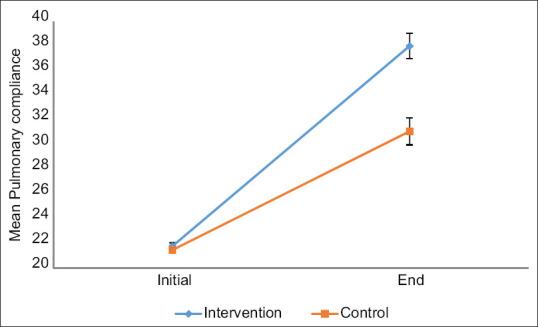
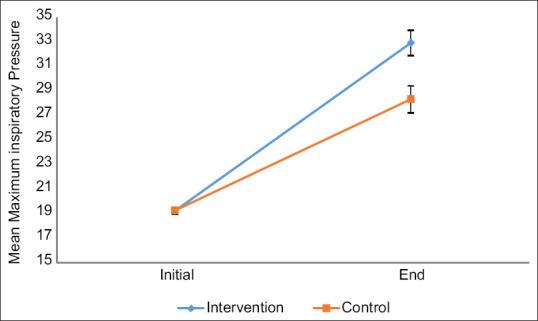
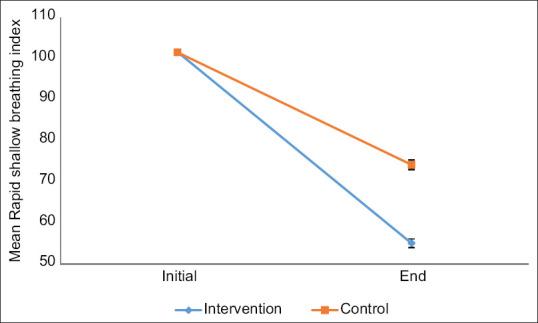
The duration of weaning was shorter in the intervention group (8.4 ± 1.1 days) versus the control group (11.2 ± 0.6 days) ( < 0.001). The rapid shallow breathing index decreased by 46.5% in the intervention group and by 27.3% in the control group after the intervention (both < 0.001), and the between-group comparison showed a significantly higher reduction in the intervention group than control group ( < 0.001). The patients' compliance after the intervention compared to the 1 day increased to 16.2 ± 6.6 in the intervention group and 9.6 ± 6.8 in the control group (both < 0.001), and the between-group comparison showed a significantly higher increase in the intervention group than control group. The maximum inspiratory pressure increased by 13.7 ± 6.1 in the intervention group and by 9.1 ± 6.0 in the control group ( < 0.001). Furthermore, the weaning success was 54% more probable in the intervention group than control group ( < 0.05).
CONCLUSION
The results of this study showed the positive effect of IMT with threshold IMT trainer on increased strength of respiratory muscles and reduced weaning duration.
背景
本研究旨在评估阈值吸气肌训练(IMT)对入住重症监护病房(ICU)患者撤机时间的影响。
材料与方法
本随机临床试验于2020年至2021年在马什哈德伊玛目礼萨医院纳入了79例入住ICU且接受机械通气的患者。患者被随机分为干预组(n = 40)和对照组(n = 39)。干预组接受阈值IMT和常规胸部物理治疗,而对照组仅每天接受一次常规胸部物理治疗。在干预结束前后,对两组患者的吸气肌力量和撤机时间进行了测量。
结果
干预组的撤机时间(8.4±1.1天)短于对照组(11.2±0.6天)(P<0.001)。干预后,干预组的快速浅呼吸指数下降了46.5%,对照组下降了27.3%(均P<0.001),组间比较显示干预组的下降幅度显著高于对照组(P<0.001)。干预后,干预组患者的依从性相比于第1天增加到16.2±6.6,对照组增加到9.6±6.8(均P<0.001),组间比较显示干预组的增加幅度显著高于对照组。干预组的最大吸气压力增加了13.7±6.1,对照组增加了9.1±6.0(P<0.001)。此外,干预组撤机成功的可能性比对照组高54%(P<0.05)。
结论
本研究结果显示,使用阈值IMT训练器进行IMT对增加呼吸肌力量和缩短撤机时间具有积极作用。

 Zotero 插件