
与马来西亚人群结直肠癌风险相关的饮食模式:病例对照研究与探索性因子和回归分析。
Dietary patterns associated with colorectal cancer risk in the Malaysian population: a case-control study with exploratory factor and regression analysis.
机构信息
Nutrition Programme, School of Health Sciences, Health Campus, Universiti Sains Malaysia, Kubang Kerian, Kelantan, 16150, Malaysia.
Department of Medicine, Faculty of Medicine, Universiti Kebangsaan Malaysia, Jalan Yaacob Latif, Bandar Tun Razak, Kuala Lumpur, Cheras, 56000, Malaysia.
出版信息
BMC Public Health. 2023 Jul 19;23(1):1386. doi: 10.1186/s12889-023-16283-6.
BACKGROUND
Studies on the relationship between diet and colorectal cancer (CRC) risk using single food or nutrient approach are widely conducted as opposed to dietary pattern approach. Therefore, this study aimed to determine the major dietary patterns and their association with CRC risk among Malaysians.
METHODS
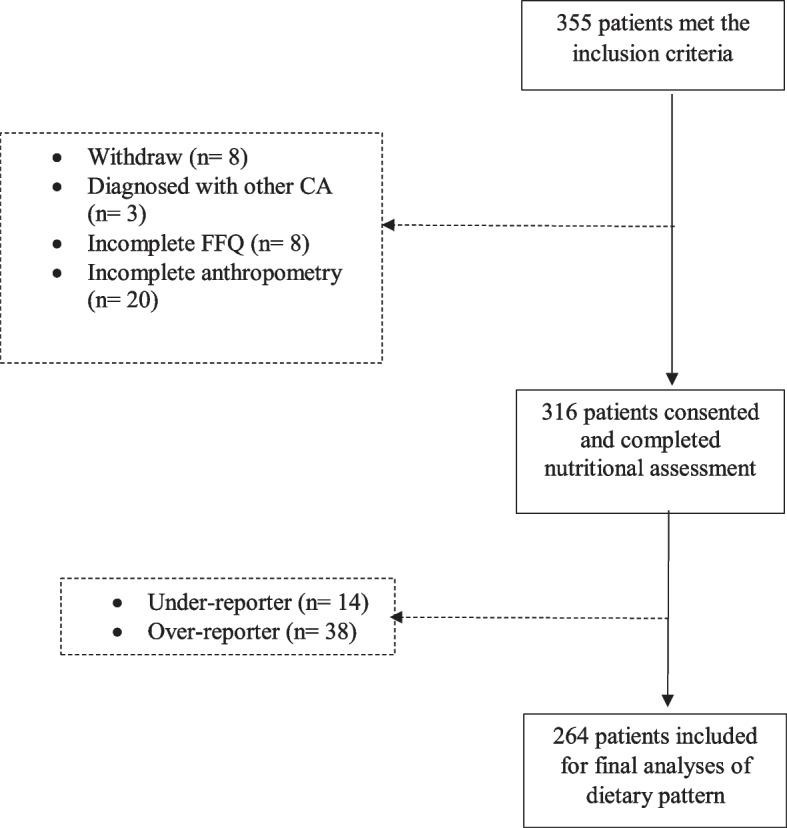
Patients aged between 18 and 80 years old from two teaching hospitals in Peninsular Malaysia were recruited through purposive sampling. Socio-demographic information and anthropometry data were assessed before the colonoscopy procedure, and dietary intake was also recorded using a validated semi-quantitative food frequency questionnaire (FFQ). Cases were those patients having histopathologically proven CRC, while controls were those without.
RESULTS
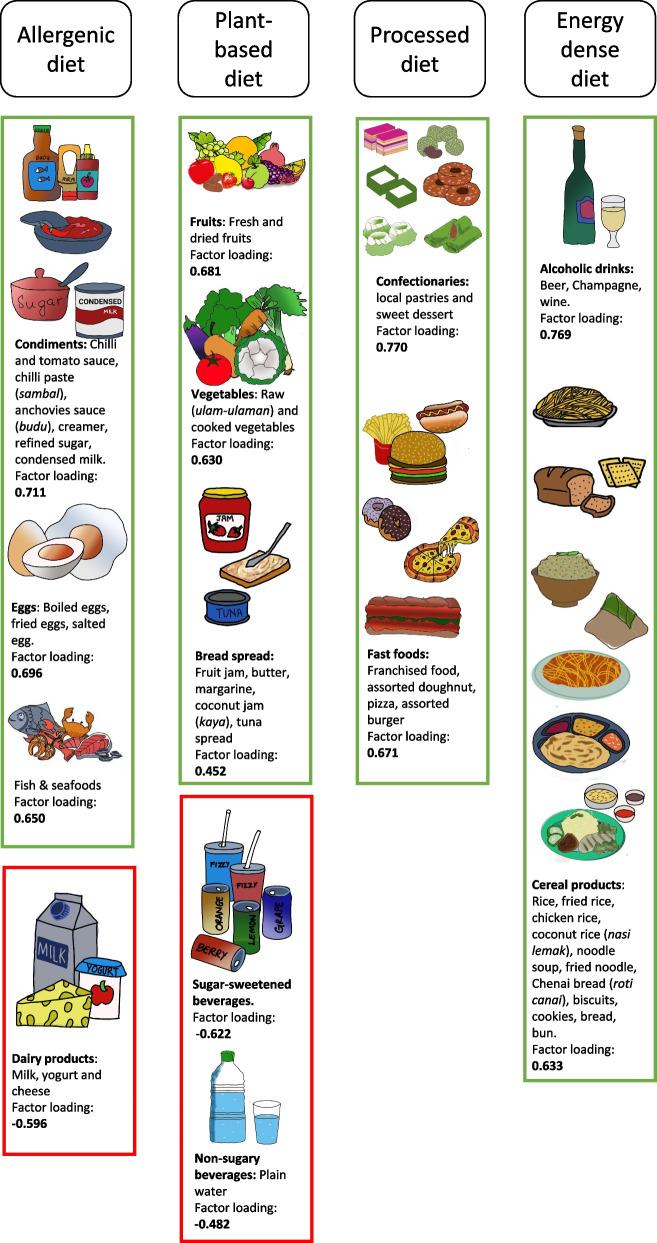
Four major dietary patterns were identified: the allergenic diet, plant-based diet, processed diet, and energy-dense diet pattern. After adjusting for potential covariates, the processed diet pattern was consistently associated with CRC (OR = 3.45; 95% CI = 1.25-9.52; P = 0.017) while the plant-based diet, energy-dense diet, and allergenic diet were not associated with CRC risk.
CONCLUSIONS
The processed diet pattern attributed to a diet high in confectionaries and fast foods was associated with an increased risk of CRC in the Malaysian population. In order to give prevention measures through lifestyle change, more research could be done on the effect of food patterns on faecal microbiota associated with CRC.
背景
相较于饮食模式法,采用单一食物或营养素方法研究饮食与结直肠癌(CRC)风险之间的关系较为常见。因此,本研究旨在确定马来西亚人的主要饮食模式及其与 CRC 风险的关联。
方法
本研究通过目的性抽样,从马来西亚半岛的两家教学医院招募年龄在 18 至 80 岁之间的患者。在结肠镜检查前评估社会人口统计学信息和人体测量数据,并使用经过验证的半定量食物频率问卷(FFQ)记录饮食摄入情况。病例组为经组织病理学证实患有 CRC 的患者,对照组为无 CRC 的患者。
结果
确定了四种主要的饮食模式:变应原饮食、植物性饮食、加工饮食和高能量饮食模式。在调整潜在混杂因素后,加工饮食模式与 CRC 始终相关(OR=3.45;95%CI=1.25-9.52;P=0.017),而植物性饮食、高能量饮食和变应原饮食与 CRC 风险无关。
结论
以糖果和快餐为主的加工饮食模式与马来西亚人群 CRC 风险增加有关。为了通过生活方式改变提供预防措施,可以对食物模式对与 CRC 相关的粪便微生物群的影响进行更多研究。
 Zotero 插件