
代谢分类提示 GLUT1/ALDOB/G6PD 轴是化疗耐药性胰腺癌的治疗靶点。
Metabolic classification suggests the GLUT1/ALDOB/G6PD axis as a therapeutic target in chemotherapy-resistant pancreatic cancer.
机构信息
State Key Laboratory of Cell Biology, Shanghai Key Laboratory of Molecular Andrology, Shanghai Institute of Biochemistry and Cell Biology, Center for Excellence in Molecular Cell Science, Chinese Academy of Sciences, Shanghai 200031, China; University of Chinese Academy of Sciences, Beijing 100049, China.
Department of Hepatobiliary Pancreatic Surgery, Changhai Hospital, Second Military Medical University (Naval Medical University), Shanghai 200433, China.
出版信息
Cell Rep Med. 2023 Sep 19;4(9):101162. doi: 10.1016/j.xcrm.2023.101162. Epub 2023 Aug 18.
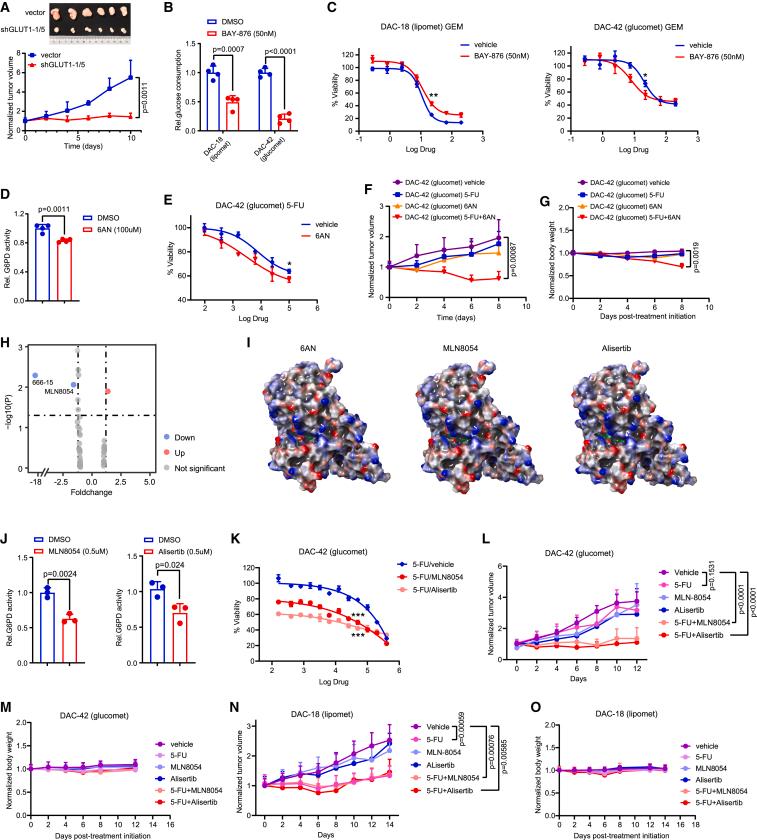
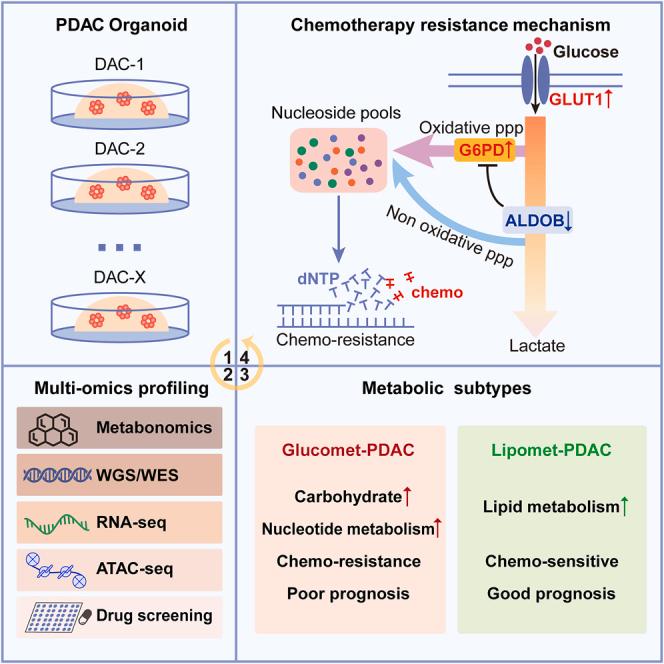
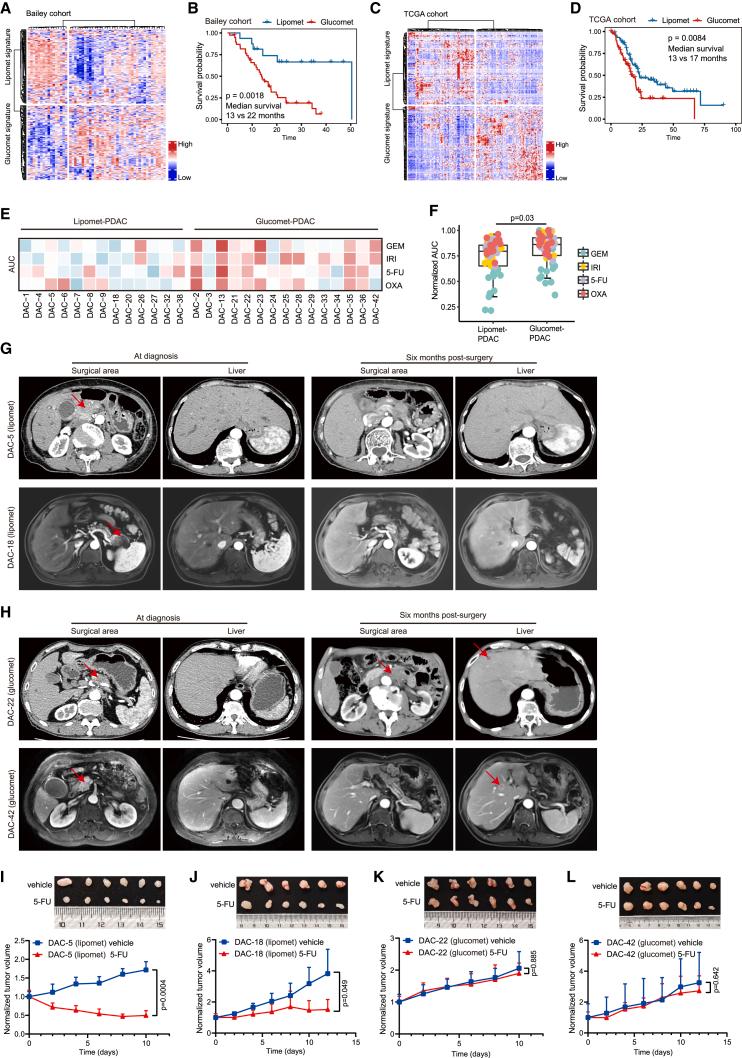
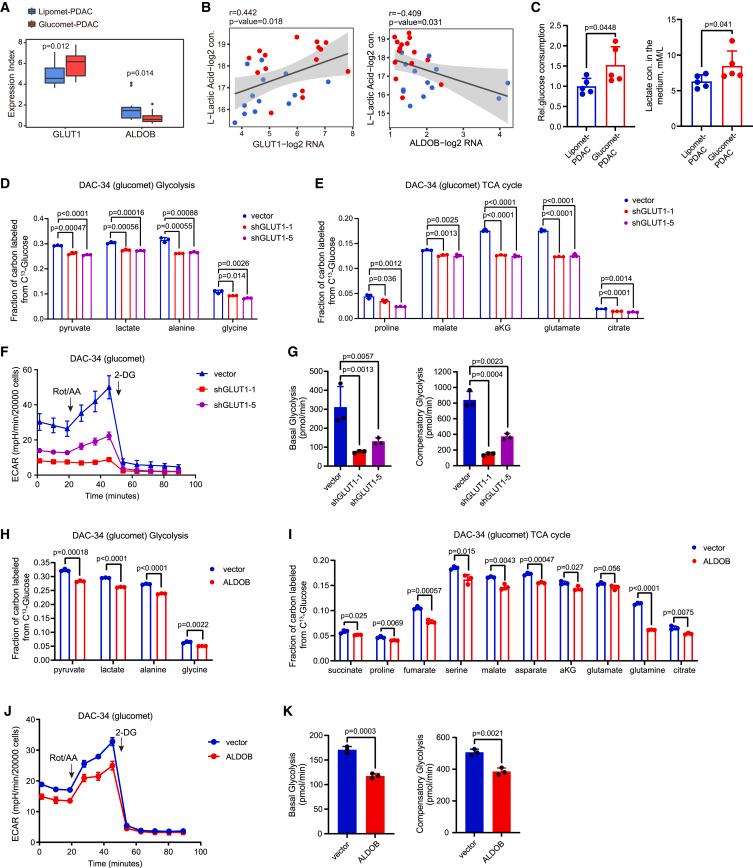
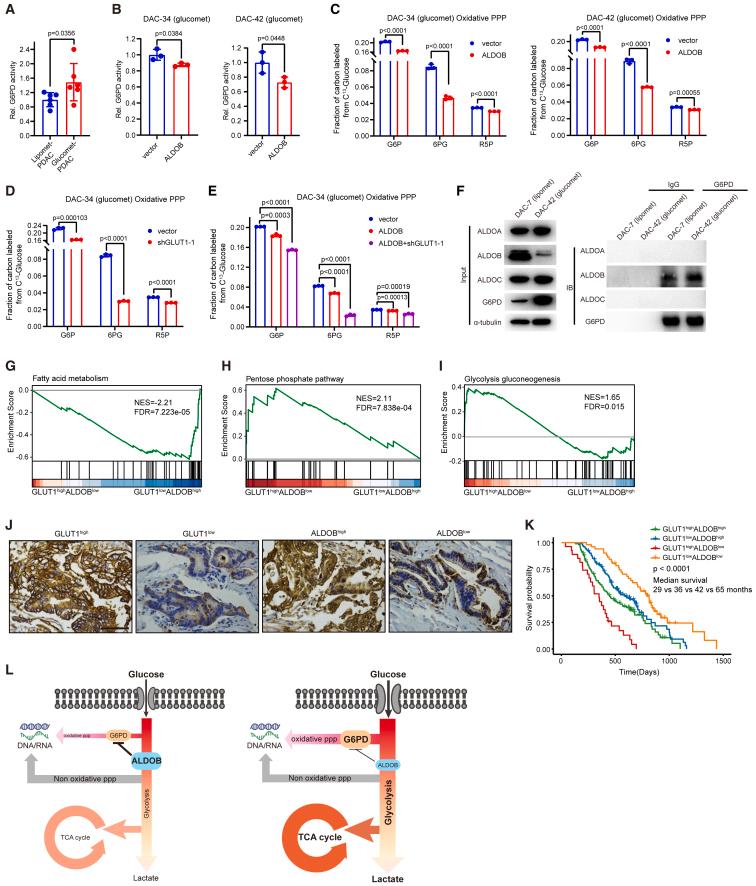
Metabolic reprogramming is known as an emerging mechanism of chemotherapy resistance, but the metabolic signatures of pancreatic ductal adenocarcinomas (PDACs) remain unclear. Here, we characterize the metabolomic profile of PDAC organoids and classify them into glucomet-PDAC (high glucose metabolism levels) and lipomet-PDAC (high lipid metabolism levels). Glucomet-PDACs are more resistant to chemotherapy than lipomet-PDACs, and patients with glucomet-PDAC have a worse prognosis. Integrated analyses reveal that the GLUT1/aldolase B (ALDOB)/glucose-6-phosphate dehydrogenase (G6PD) axis induces chemotherapy resistance by remodeling glucose metabolism in glucomet-PDAC. Increased glycolytic flux, G6PD activity, and pyrimidine biosynthesis are identified in glucomet-PDAC with high GLUT1 and low ALDOB expression, and these phenotypes could be reversed by inhibiting GLUT1 expression or by increasing ALDOB expression. Pharmacological inhibition of GLUT1 or G6PD enhances the chemotherapy response of glucomet-PDAC. Our findings uncover potential metabolic heterogeneity related to differences in chemotherapy sensitivity in PDAC and develop a promising pharmacological strategy for patients with chemotherapy-resistant glucomet-PDAC through the combination of chemotherapy and GLUT1/ALDOB/G6PD axis inhibitors.
代谢重编程被认为是化疗耐药的一种新兴机制,但胰腺导管腺癌(PDAC)的代谢特征仍不清楚。在这里,我们描述了 PDAC 类器官的代谢组学特征,并将其分为糖代谢 PDAC(高葡萄糖代谢水平)和脂代谢 PDAC(高脂质代谢水平)。与脂代谢 PDAC 相比,糖代谢 PDAC 对化疗的耐药性更强,且糖代谢 PDAC 患者的预后更差。综合分析表明,GLUT1/醛缩酶 B(ALDOB)/葡萄糖-6-磷酸脱氢酶(G6PD)轴通过重塑糖代谢诱导糖代谢 PDAC 的化疗耐药性。在高 GLUT1 和低 ALDOB 表达的糖代谢 PDAC 中,鉴定出增加的糖酵解通量、G6PD 活性和嘧啶生物合成,通过抑制 GLUT1 表达或增加 ALDOB 表达可逆转这些表型。GLUT1 或 G6PD 的药理学抑制增强了糖代谢 PDAC 的化疗反应。我们的研究结果揭示了与 PDAC 化疗敏感性差异相关的潜在代谢异质性,并通过化疗和 GLUT1/ALDOB/G6PD 轴抑制剂联合为化疗耐药性糖代谢 PDAC 患者开发了一种有前途的药理学策略。


 Zotero 插件