
气道上皮衍生免疫介质在 COVID-19 中的作用。
Airway Epithelial-Derived Immune Mediators in COVID-19.
机构信息
Centre for Heart Lung Innovation, Providence Healthcare Research Institute, St. Paul's Hospital, University of British Columbia, 1081 Burrard St., Vancouver, BC V6Z 1Y6, Canada.
Department of Medicine, University of British Columbia, 2775 Laurel St., Vancouver, BC V5Z 1M9, Canada.
出版信息
Viruses. 2023 Jul 29;15(8):1655. doi: 10.3390/v15081655.
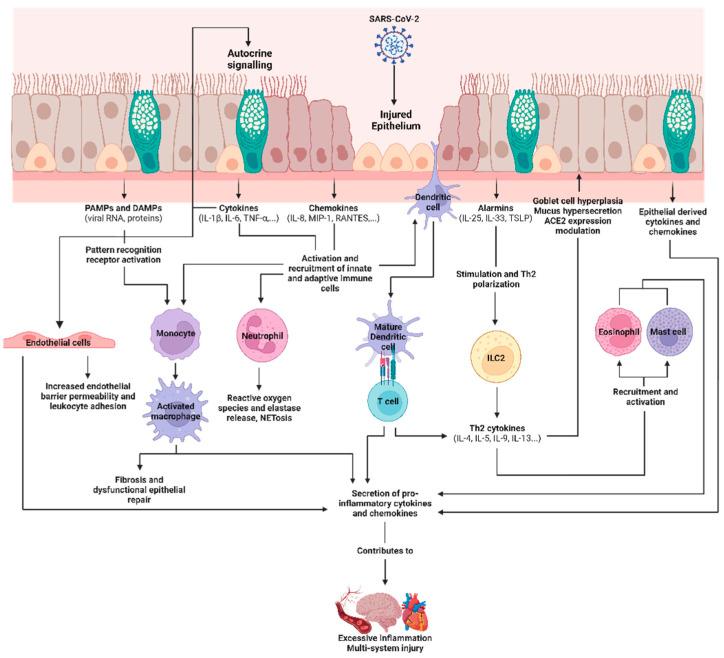
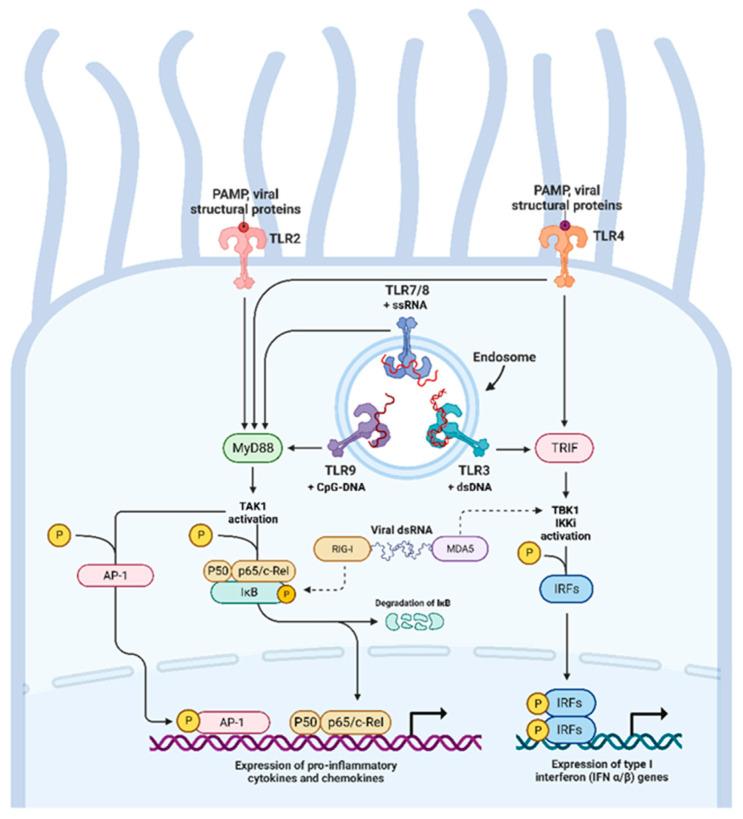
The airway epithelium, which lines the conducting airways, is central to the defense of the lungs against inhaled particulate matter and pathogens such as SARS-CoV-2, the virus that causes COVID-19. Recognition of pathogens results in the activation of an innate and intermediate immune response which involves the release of cytokines and chemokines by the airway epithelium. This response can inhibit further viral invasion and influence adaptive immunity. However, severe COVID-19 is characterized by a hyper-inflammatory response which can give rise to clinical presentations including lung injury and lead to acute respiratory distress syndrome, viral pneumonia, coagulopathy, and multi-system organ failure. In response to SARS-CoV-2 infection, the airway epithelium can mount a maladaptive immune response which can delay viral clearance, perpetuate excessive inflammation, and contribute to the pathogenesis of severe COVID-19. In this article, we will review the barrier and immune functions of the airway epithelium, how SARS-CoV-2 can interact with the epithelium, and epithelial-derived cytokines and chemokines and their roles in COVID-19 and as biomarkers. Finally, we will discuss these immune mediators and their potential as therapeutic targets in COVID-19.
气道上皮细胞排列在传导气道中,是肺部抵御吸入的颗粒物和病原体(如 SARS-CoV-2 病毒,引起 COVID-19 的病毒)的核心。对病原体的识别会导致先天和中间免疫反应的激活,其中包括气道上皮细胞释放细胞因子和趋化因子。这种反应可以抑制病毒进一步入侵并影响适应性免疫。然而,严重的 COVID-19 的特点是过度炎症反应,可导致包括肺损伤在内的临床症状,并导致急性呼吸窘迫综合征、病毒性肺炎、凝血功能障碍和多系统器官衰竭。在 SARS-CoV-2 感染时,气道上皮细胞可以产生适应性免疫反应,从而延迟病毒清除、持续过度炎症,并促进严重 COVID-19 的发病机制。在本文中,我们将回顾气道上皮细胞的屏障和免疫功能、SARS-CoV-2 如何与上皮细胞相互作用以及上皮细胞衍生的细胞因子和趋化因子及其在 COVID-19 中的作用和作为生物标志物的作用。最后,我们将讨论这些免疫介质及其作为 COVID-19 治疗靶点的潜力。

 Zotero 插件