
严重急性呼吸综合征冠状病毒2(SARS-CoV-2)刺突蛋白处理和转染会损害气道上皮修复。
SARS-CoV-2 spike treatment and transfection impairs airway epithelial repair.
作者信息
Guo Tony, Singhera Gurpreet, Memar Vaghri Jasmine, Liang Wan Yi, Leung Janice M, Dorscheid Del
机构信息
University of British Columbia, Centre for Heart Lung Innovation, Providence Healthcare Research Institute, St Paul's Hospital, Vancouver, BC, Canada.
Department of Medicine, University of British Columbia, Vancouver, BC, Canada.
出版信息
ERJ Open Res. 2025 Aug 4;11(4). doi: 10.1183/23120541.00940-2024. eCollection 2025 Jul.
BACKGROUND
The airway epithelium serves as a physical and immune barrier against inhaled insults. This tissue is susceptible to severe acute respiratory syndrome coronavirus 2 (SARS-CoV-2) infection and, following injury, the airway epithelium undergoes repair to restore barrier function. Although components of SARS-CoV-2, such as the spike glycoprotein essential in viral entry, have been shown to alter biological functions in various tissues, it is unclear how SARS-CoV-2 can impact airway epithelial functions, such as wound repair.
METHODS
In this study, 16HBE14o- epithelial monolayer cultures were either treated with recombinant SARS-CoV-2 spike glycoprotein S1 subunit at 4 μg·mL or transfected with a plasmid expressing full-length spike glycoprotein. Secreted inflammatory mediators, markers of proliferation and cell cycle arrest, culture proliferation, and wound closure measurements following mechanical injury were assessed.
RESULTS
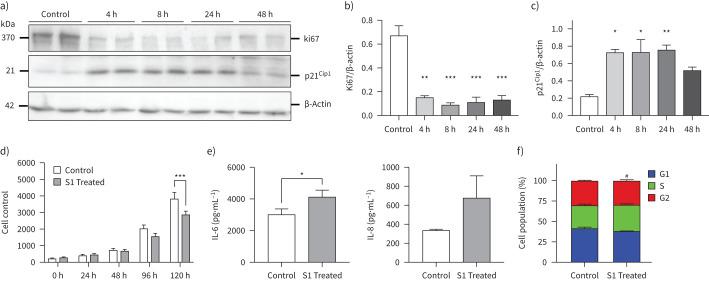
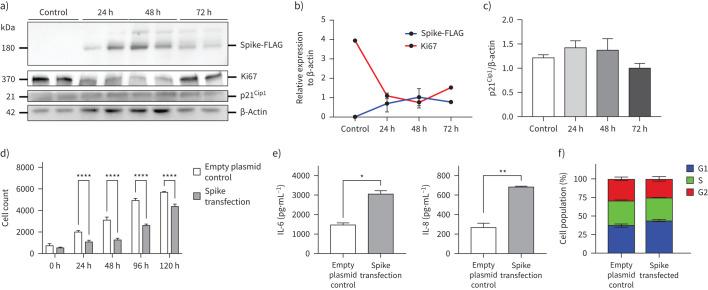
Spike treatment and transfection altered measures of culture proliferation and markers of proliferation and cell cycle arrest. Secreted interleukin-6 but not interleukin-8 were significantly higher with spike S1 treatment, while both were significantly elevated with spike transfection. Wound closure was inhibited by both spike treatment and transfection, with significant reductions compared to control.
CONCLUSIONS
SARS-CoV-2 spike S1 treatment and transfection can alter measures of proliferation and inflammation as well as impair wound closure of 16HBE14o- airway epithelial cells. These results highlight how components of SARS-CoV-2 can impair functions of the airway epithelium independent of viral replication.
背景
气道上皮作为抵御吸入性损伤的物理和免疫屏障。该组织易受严重急性呼吸综合征冠状病毒2(SARS-CoV-2)感染,损伤后,气道上皮会进行修复以恢复屏障功能。尽管SARS-CoV-2的成分,如病毒进入所必需的刺突糖蛋白,已被证明可改变各种组织中的生物学功能,但尚不清楚SARS-CoV-2如何影响气道上皮功能,如伤口修复。
方法
在本研究中,16HBE14o-上皮单层培养物分别用4μg·mL的重组SARS-CoV-2刺突糖蛋白S1亚基处理或用表达全长刺突糖蛋白的质粒转染。评估了分泌的炎症介质、增殖和细胞周期停滞标志物、培养物增殖以及机械损伤后的伤口闭合情况。
结果
刺突处理和转染改变了培养物增殖指标以及增殖和细胞周期停滞标志物。刺突S1处理后,分泌的白细胞介素-6显著升高,而白细胞介素-8未显著升高,而两者在刺突转染后均显著升高。刺突处理和转染均抑制了伤口闭合,与对照相比有显著降低。
结论
SARS-CoV-2刺突S1处理和转染可改变增殖和炎症指标,并损害16HBE14o-气道上皮细胞的伤口闭合。这些结果突出了SARS-CoV-2的成分如何独立于病毒复制而损害气道上皮功能。

 Zotero 插件