
长期暴露于聚苯乙烯微塑料会引发睾丸早衰。
Long-term exposure to polystyrene microplastics triggers premature testicular aging.
机构信息
College of Animal Science and Technology, Jilin Agricultural University, Changchun, 130118, China.
The Second Affiliated Hospital of Guangxi Medical University, Nanning, 530005, China.
出版信息
Part Fibre Toxicol. 2023 Aug 28;20(1):35. doi: 10.1186/s12989-023-00546-6.
BACKGROUND
Plastic pollution is greatly serious in the ocean and soil. Microplastics (MPs) degraded from plastic has threatened animals and humans health. The accumulation of MPs in the tissues and blood in animals and humans has been found. There is therefore a need to assess the toxicological effects of MPs on the reproductive system.
RESULTS
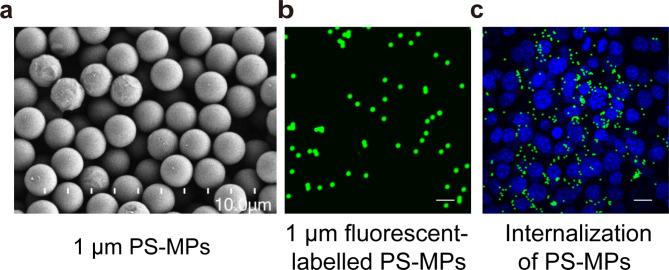
In this study, we explored the effect of polystyrene microplastics (PS-MPs) on premature testicular aging in vitro and in vivo. In vitro, we found that testicular sertoli cells (TM4 cells) was prematurely senescent following PS-MPs treatment by the evaluation of a range of aging marker molecules (such as Sa-β-gal, p16 and 21). TM4 cells were then employed for in vitro model to study the potential molecular mechanism by which PS-MPs induce the premature senescence of TM4 cells. NF-κB is identified as a key molecule for PS-MPs-induced TM4 cellular senescence. Furthermore, through eliminating reactive oxygen species (ROS), the activation of nuclear factor kappa B (NF-κB) was blocked in PS-MPs-induced senescent TM4 cells, indicating that ROS triggers NF-κB activation. Next, we analyzed the causes of mitochondrial ROS (mtROS) accumulation induced by PS-MPs, and results showed that Ca overload induced the accumulation of mtROS. Further, PS-MPs exposure inhibits mitophagy, leading to the continuous accumulation of senescent cells. In vivo, 8-week-old C57 mice were used as models to assess the effect of PS-MPs on premature testicular aging. The results illustrated that PS-MPs exposure causes premature aging of testicular tissue by testing aging markers. Additionally, PS-MPs led to oxidative stress and inflammatory response in the testicular tissue.
CONCLUSION
In short, our experimental results revealed that PS-MPs-caused testicular premature aging is dependent on Ca/ROS/NF-κB signaling axis. The current study lays the foundation for further exploration of the effects of microplastics on testicular toxicology.
背景
塑料污染在海洋和土壤中非常严重。塑料降解产生的微塑料(MPs)已经威胁到动物和人类的健康。已经发现 MPs 在动物和人类的组织和血液中积累。因此,有必要评估 MPs 对生殖系统的毒理学影响。
结果
在这项研究中,我们探索了聚苯乙烯微塑料(PS-MPs)对体外和体内睾丸早衰的影响。在体外,我们发现 PS-MPs 处理睾丸支持细胞(TM4 细胞)后,通过一系列衰老标志物分子(如 Sa-β-gal、p16 和 21)评估,细胞提前衰老。然后,TM4 细胞被用于体外模型,以研究 PS-MPs 诱导 TM4 细胞提前衰老的潜在分子机制。NF-κB 被鉴定为 PS-MPs 诱导 TM4 细胞衰老的关键分子。此外,通过消除活性氧(ROS),PS-MPs 诱导的衰老 TM4 细胞中 NF-κB 的激活被阻断,表明 ROS 触发 NF-κB 激活。接下来,我们分析了 PS-MPs 诱导的线粒体 ROS(mtROS)积累的原因,结果表明 Ca 超载导致 mtROS 积累。进一步,PS-MPs 暴露抑制自噬,导致衰老细胞的持续积累。在体内,我们使用 8 周龄 C57 小鼠作为模型,评估 PS-MPs 对睾丸早衰的影响。结果表明,PS-MPs 暴露通过测试衰老标志物导致睾丸组织过早衰老。此外,PS-MPs 导致睾丸组织氧化应激和炎症反应。
结论
总之,我们的实验结果表明,PS-MPs 引起的睾丸早衰依赖于 Ca/ROS/NF-κB 信号轴。本研究为进一步探索微塑料对睾丸毒理学的影响奠定了基础。




 Zotero 插件