
违背常遗传效应假设可能导致非线性孟德尔随机化的有偏估计。
Violation of the Constant Genetic Effect Assumption Can Result in Biased Estimates for Non-Linear Mendelian Randomization.
机构信息
MRC Biostatistics Unit, University of Cambridge, Cambridge, UK.
Department of Public Health and Primary Care, Cardiovascular Epidemiology Unit, University of Cambridge, Cambridge, UK.
出版信息
Hum Hered. 2023;88(1):79-90. doi: 10.1159/000531659. Epub 2023 Aug 31.
INTRODUCTION
Non-linear Mendelian randomization is an extension of conventional Mendelian randomization that performs separate instrumental variable analyses in strata of the study population with different average levels of the exposure. The approach estimates a localized average causal effect function, representing the average causal effect of the exposure on the outcome at different levels of the exposure. The commonly used residual method for dividing the population into strata works under the assumption that the effect of the genetic instrument on the exposure is linear and constant in the study population. However, this assumption may not hold in practice.
METHODS
We use the recently developed doubly ranked method to re-analyse various datasets previously analysed using the residual method. In particular, we consider a genetic score for 25-hydroxyvitamin D (25[OH]D) used in a recent non-linear Mendelian randomization analysis to assess the potential effect of vitamin D supplementation on all-cause mortality.
RESULTS
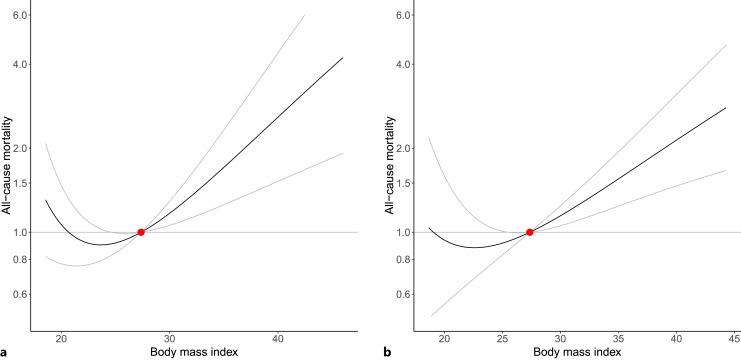
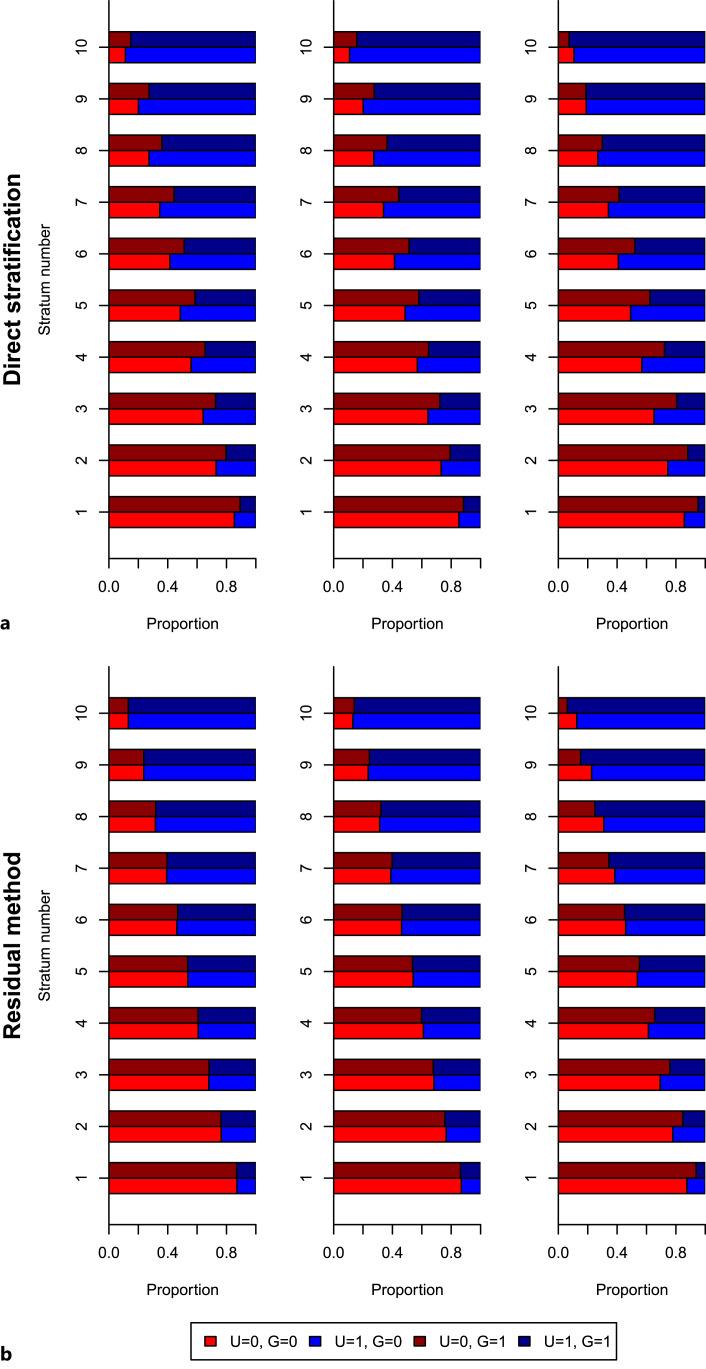
The effect of the genetic score on 25(OH)D concentrations varies strongly, with a five-fold difference in the estimated genetic association with the exposure in the lowest and highest decile groups. Evidence for a protective causal effect of vitamin D supplementation on all-cause mortality in low vitamin D individuals is evident for the residual method but not for the doubly ranked method. We show that the constant genetic effect assumption is more reasonable for some exposures and less reasonable for others. If the doubly ranked method indicates that this assumption is violated, then estimates from both the residual and doubly ranked methods can be biased, although bias was smaller on average in the doubly ranked method.
CONCLUSION
Analysts wanting to perform non-linear Mendelian randomization should compare results from both the residual and doubly ranked methods, as well as consider transforming the exposure for the residual method to reduce heterogeneity in the genetic effect on the exposure.
简介
非线性孟德尔随机化是传统孟德尔随机化的扩展,它在具有不同暴露平均水平的研究人群的子集中分别进行工具变量分析。该方法估计了一个局部平均因果效应函数,代表了暴露对不同暴露水平下的结果的平均因果效应。通常用于将人群分为子群的残差方法假设遗传工具对暴露的影响在研究人群中是线性且不变的。然而,在实践中,这种假设可能并不成立。
方法
我们使用最近开发的双重排序方法重新分析了以前使用残差方法分析的各种数据集。特别是,我们考虑了一种用于 25-羟维生素 D(25[OH]D)的遗传评分,用于最近的非线性孟德尔随机化分析,以评估维生素 D 补充对全因死亡率的潜在影响。
结果
遗传评分对 25(OH)D 浓度的影响差异很大,在暴露的最低和最高十分位数组中,估计的遗传相关性差异高达五倍。对于残差方法,低维生素 D 个体中维生素 D 补充对全因死亡率的保护因果效应的证据是明显的,但对于双重排序方法则不然。我们表明,对于某些暴露,遗传效应的恒定假设更合理,而对于其他暴露则不太合理。如果双重排序方法表明该假设被违反,那么来自残差和双重排序方法的估计都可能存在偏差,尽管在双重排序方法中平均偏差较小。
结论
希望进行非线性孟德尔随机化的分析人员应该比较残差和双重排序方法的结果,并考虑对暴露进行转换以减少遗传对暴露影响的异质性。



 Zotero 插件