
解决孟德尔随机化中的可信度危机。
Addressing the credibility crisis in Mendelian randomization.
机构信息
Medical Research Council Biostatistics Unit, University of Cambridge, Cambridge, UK.
Cardiovascular Epidemiology Unit, Department of Public Health and Primary Care, University of Cambridge, Cambridge, UK.
出版信息
BMC Med. 2024 Sep 11;22(1):374. doi: 10.1186/s12916-024-03607-5.
BACKGROUND
Genome-wide association studies have enabled Mendelian randomization analyses to be performed at an industrial scale. Two-sample summary data Mendelian randomization analyses can be performed using publicly available data by anyone who has access to the internet. While this has led to many insightful papers, it has also fuelled an explosion of poor-quality Mendelian randomization publications, which threatens to undermine the credibility of the whole approach.
FINDINGS
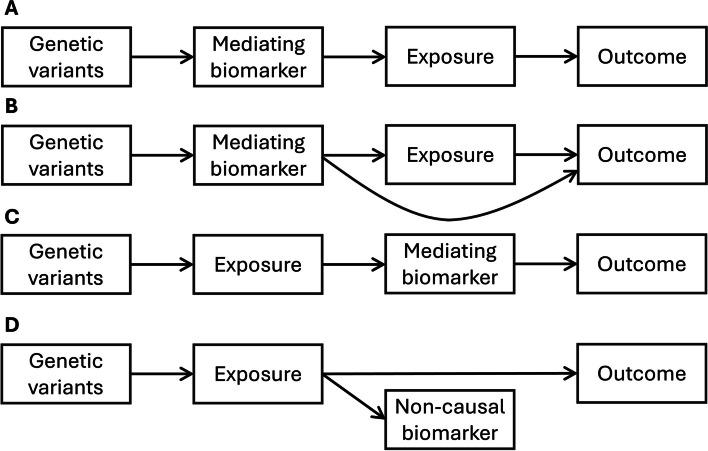
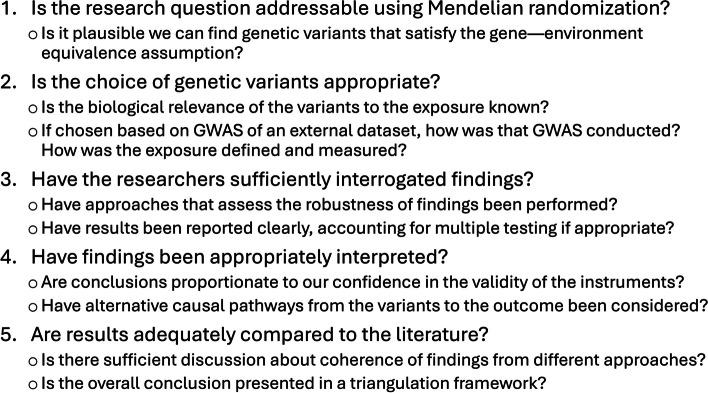
We detail five pitfalls in conducting a reliable Mendelian randomization investigation: (1) inappropriate research question, (2) inappropriate choice of variants as instruments, (3) insufficient interrogation of findings, (4) inappropriate interpretation of findings, and (5) lack of engagement with previous work. We have provided a brief checklist of key points to consider when performing a Mendelian randomization investigation; this does not replace previous guidance, but highlights critical analysis choices. Journal editors should be able to identify many low-quality submissions and reject papers without requiring peer review. Peer reviewers should focus initially on key indicators of validity; if a paper does not satisfy these, then the paper may be meaningless even if it is technically flawless.
CONCLUSIONS
Performing an informative Mendelian randomization investigation requires critical thought and collaboration between different specialties and fields of research.
背景
全基因组关联研究使得孟德尔随机化分析能够在工业规模上进行。任何人只要能够访问互联网,就可以使用公开可用的数据进行两样本汇总数据孟德尔随机化分析。虽然这产生了许多有见地的论文,但也导致了大量低质量的孟德尔随机化出版物的出现,这有可能破坏整个方法的可信度。
发现
我们详细介绍了进行可靠的孟德尔随机化研究的五个陷阱:(1)不恰当的研究问题,(2)作为工具的变体选择不当,(3)对研究结果的充分探究,(4)对研究结果的不当解释,以及(5)缺乏与先前工作的接触。我们提供了一个简短的检查表,列出了进行孟德尔随机化研究时需要考虑的要点;这并不能替代以前的指导,但强调了关键的分析选择。期刊编辑应该能够识别出许多低质量的投稿,并在不需要同行评审的情况下拒绝论文。同行评审员最初应重点关注有效性的关键指标;如果一篇论文不符合这些标准,那么即使它在技术上是完美的,这篇论文也可能毫无意义。
结论
进行有意义的孟德尔随机化研究需要不同专业和研究领域之间的批判性思维和协作。
 Zotero 插件