
转铁蛋白受体过表达意味着胃肠道间质瘤预后不良和复发。
Overexpressed transferrin receptor implied poor prognosis and relapse in gastrointestinal stromal tumors.
作者信息
Zhuang Chun, Li Xiaoqi, Yang Linxi, Ma Xinli, Shen Yanying, Huang Chen, Pan Tao, Cui Jianzhi, Ni Bo, Wang Ming
机构信息
Department of Gastrointestinal Surgery, Renji Hospital, Shanghai Jiao Tong University School of Medicine, Shanghai, China.
出版信息
Front Oncol. 2023 Aug 22;13:1151687. doi: 10.3389/fonc.2023.1151687. eCollection 2023.
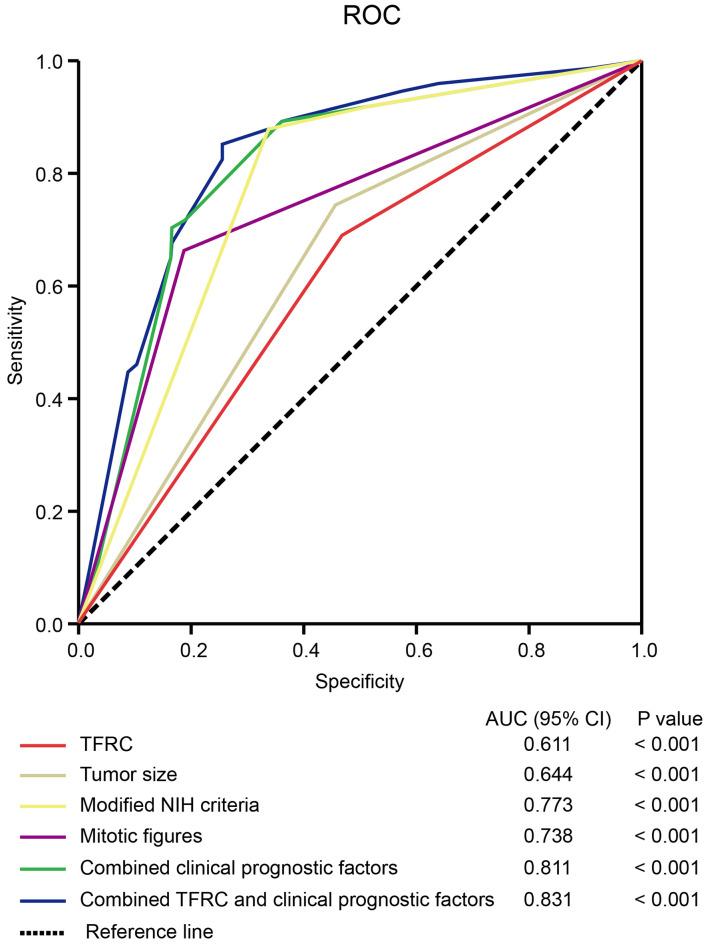
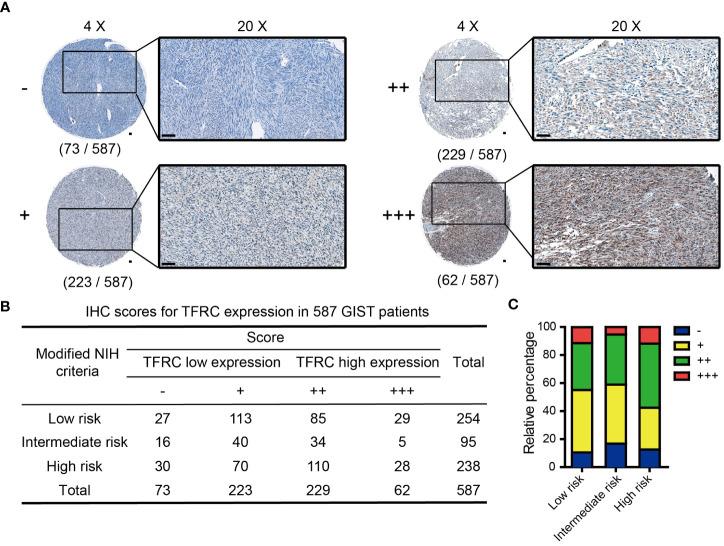
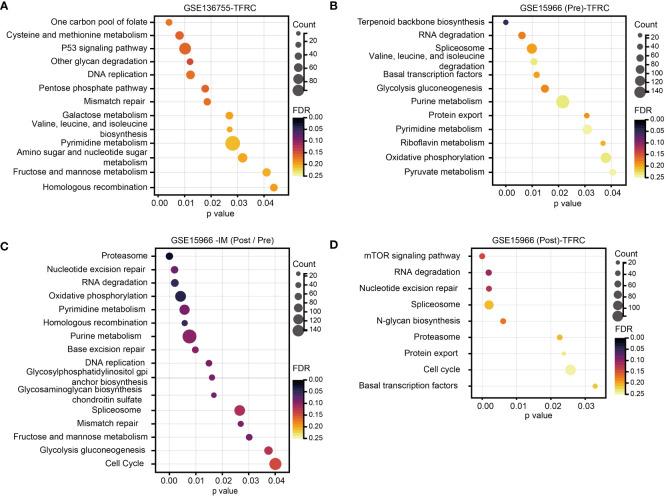
Ferroptosis, as a novel-induced programmed cell death, plays critical roles in the pathogenesis of cancers. However, the promising biomarkers of ferroptosis in gastrointestinal stromal tumor (GIST) remain to be elucidated. Herein, the expression of ferroptosis-related genes was analyzed in GIST. Among the 64 ferroptosis-related genes, transferrin receptor (TFRC) expression presented a remarkable upregulation in high-risk patients through Gene Expression Omnibus (GEO) dataset analysis, as well as its significant change after imatinib was treated. Kyoto Encyclopedia of Genes and Genomes (KEGG) pathway enrichment analysis of TFRC-relevant genes revealed that TFRC expression was closely associated with cell growth pathways and metabolism-related pathways. Furthermore, patients at high risk of recurrence were more likely to exhibit high TFRC expression by immunohistochemistry. Additionally, high TFRC expression indicated an undesirable state of patient relapse, which could serve as a powerful significant independent predictor of recurrence-free survival (RFS). In summary, we systematically summarize the expression characteristics and clinical relevance of TFRC and show that TFRC can be used as a prognostic factor, which can be considered a potential therapeutic target in GIST.
铁死亡作为一种新型的程序性细胞死亡方式,在癌症发病机制中发挥着关键作用。然而,胃肠道间质瘤(GIST)中铁死亡的有前景的生物标志物仍有待阐明。在此,我们分析了GIST中铁死亡相关基因的表达情况。在64个铁死亡相关基因中,通过基因表达综合数据库(GEO)数据分析发现,转铁蛋白受体(TFRC)在高危患者中表达显著上调,并且在伊马替尼治疗后其表达也有明显变化。对与TFRC相关基因的京都基因与基因组百科全书(KEGG)通路富集分析表明,TFRC表达与细胞生长通路和代谢相关通路密切相关。此外,通过免疫组织化学分析发现,复发高危患者更有可能表现出高TFRC表达。另外,高TFRC表达表明患者复发状态不佳,其可作为无复发生存期(RFS)的有力独立预测指标。总之,我们系统总结了TFRC的表达特征及其临床相关性,并表明TFRC可用作预后因素,可被视为GIST的潜在治疗靶点。


 Zotero 插件