
肠道微生物群在昆虫与植物相互作用中对可持续害虫管理的关键作用。
The pivotal roles of gut microbiota in insect plant interactions for sustainable pest management.
机构信息
State Key Laboratory of Biocatalysis and Enzyme Engineering, School of Life Sciences, Hubei University, 430062, Wuhan, China.
State Key Laboratory of Subtropical Silviculture, Zhejiang A & F University, 311300, Hangzhou, China.
出版信息
NPJ Biofilms Microbiomes. 2023 Sep 21;9(1):66. doi: 10.1038/s41522-023-00435-y.
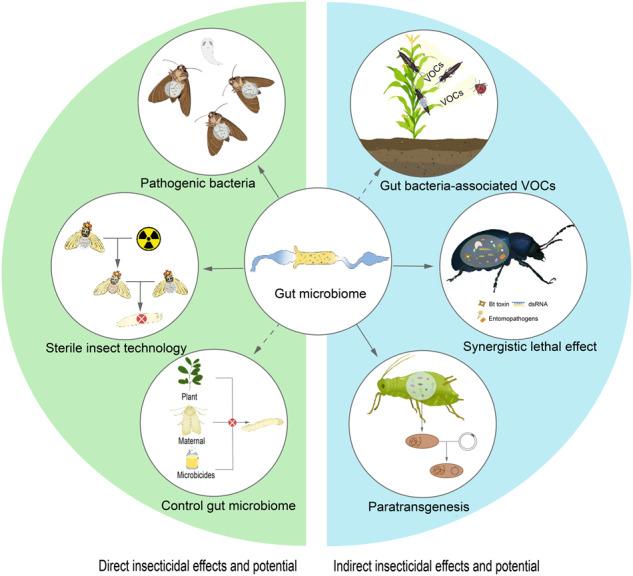
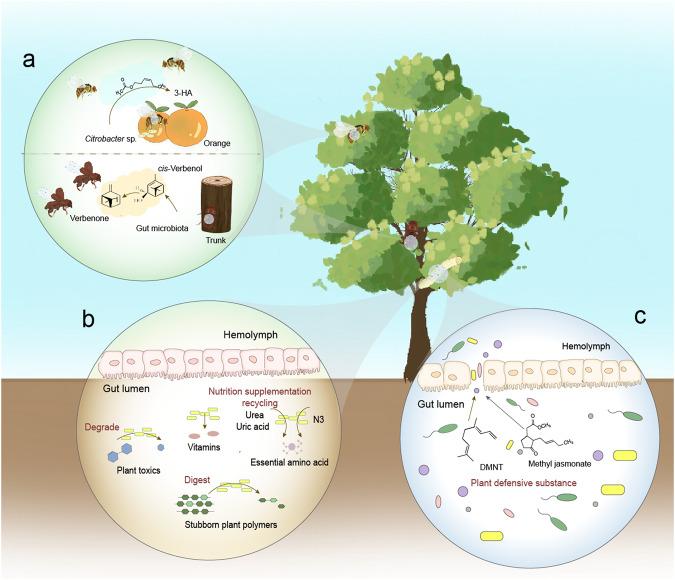
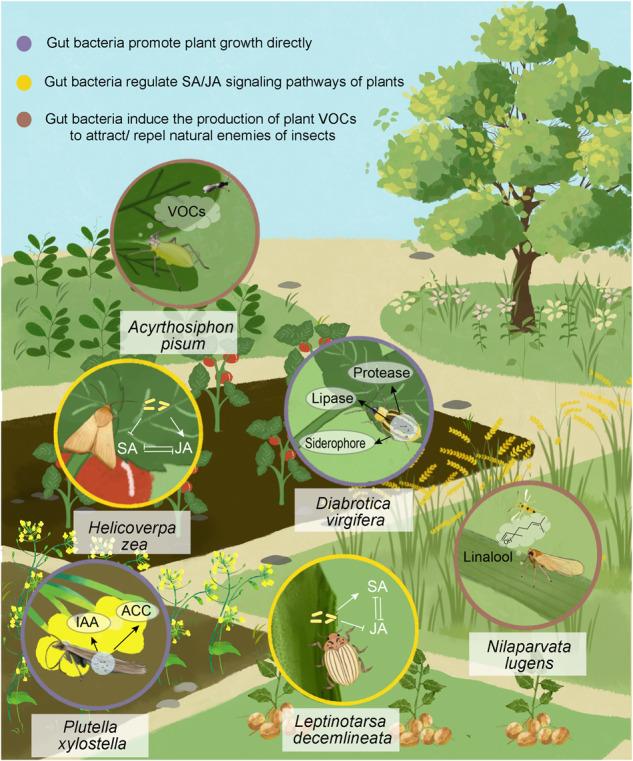
The gut microbiota serves as a critical "organ" in the life cycle of animals, particularly in the intricate interplay between herbivorous pests and plants. This review summarizes the pivotal functions of the gut microbiota in mediating the insect-plant interactions, encompassing their influence on host insects, modulation of plant physiology, and regulation of the third trophic level species within the ecological network. Given these significant functions, it is plausible to harness these interactions and their underlying mechanisms to develop novel eco-friendly pest control strategies. In this context, we also outline some emerging pest control methods based on the intestinal microbiota or bacteria-mediated interactions, such as symbiont-mediated RNAi and paratransgenesis, albeit these are still in their nascent stages and confront numerous challenges. Overall, both opportunities and challenges coexist in the exploration of the intestinal microbiota-mediated interactions between insect pests and plants, which will not only enrich the fundamental knowledge of plant-insect interactions but also facilitate the development of sustainable pest control strategies.
肠道微生物群作为动物生命周期中的一个关键“器官”,特别是在草食性害虫和植物之间错综复杂的相互作用中发挥着重要作用。本综述总结了肠道微生物群在介导昆虫-植物相互作用中的关键功能,包括它们对宿主昆虫的影响、对植物生理学的调节以及对生态网络中第三营养级物种的调控。鉴于这些重要的功能,利用这些相互作用及其潜在机制来开发新型环保型害虫控制策略是合理的。在这方面,我们还概述了一些基于肠道微生物群或细菌介导相互作用的新兴害虫控制方法,例如共生介导的 RNAi 和 paratransgenesis,但这些方法仍处于起步阶段,面临着许多挑战。总的来说,在探索昆虫与植物之间肠道微生物群介导的相互作用时,机遇与挑战并存,这不仅将丰富植物-昆虫相互作用的基础知识,还有助于开发可持续的害虫控制策略。

 Zotero 插件