
健康老年成年人肠道微生物群与脑成像标志物、载脂蛋白E基因型、钙和蔬菜摄入量以及肥胖之间的关联。
Gut microbiome association with brain imaging markers, APOE genotype, calcium and vegetable intakes, and obesity in healthy aging adults.
作者信息
Hammond Tyler C, Green Stefan J, Jacobs Yael, Chlipala George E, Xing Xin, Heil Sally, Chen Anna, Aware Chetan, Flemister Abeoseh, Stromberg Arnold, Balchandani Priti, Lin Ai-Ling
机构信息
Sanders-Brown Center on Aging, University of Kentucky, Lexington, KY, United States.
Department of Neuroscience, University of Kentucky, Lexington, KY, United States.
出版信息
Front Aging Neurosci. 2023 Sep 6;15:1227203. doi: 10.3389/fnagi.2023.1227203. eCollection 2023.
INTRODUCTION
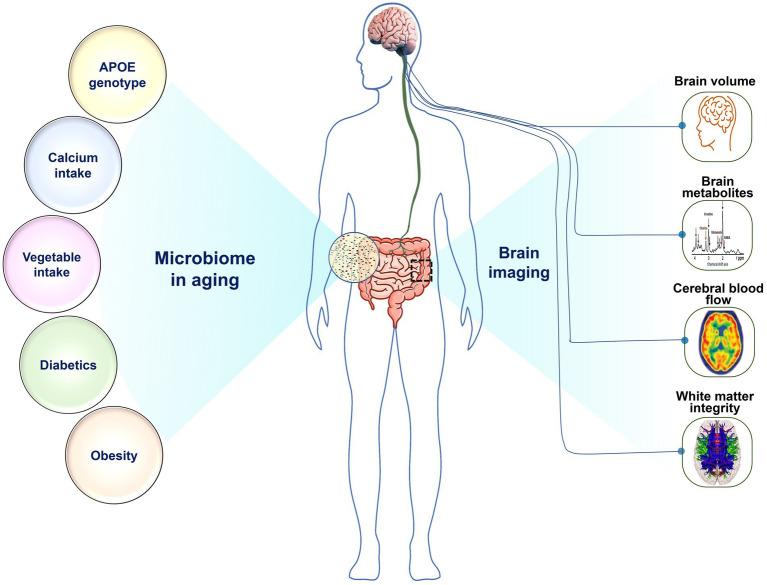
Advanced age is a significant factor in changes to brain physiology and cognitive functions. Recent research has highlighted the critical role of the gut microbiome in modulating brain functions during aging, which can be influenced by various factors such as apolipoprotein E (APOE) genetic variance, body mass index (BMI), diabetes, and dietary intake. However, the associations between the gut microbiome and these factors, as well as brain structural, vascular, and metabolic imaging markers, have not been well explored.
METHODS
We recruited 30 community dwelling older adults between age 55-85 in Kentucky. We collected the medical history from the electronic health record as well as the Dietary Screener Questionnaire. We performed APOE genotyping with an oral swab, gut microbiome analysis using metagenomics sequencing, and brain structural, vascular, and metabolic imaging using MRI.
RESULTS
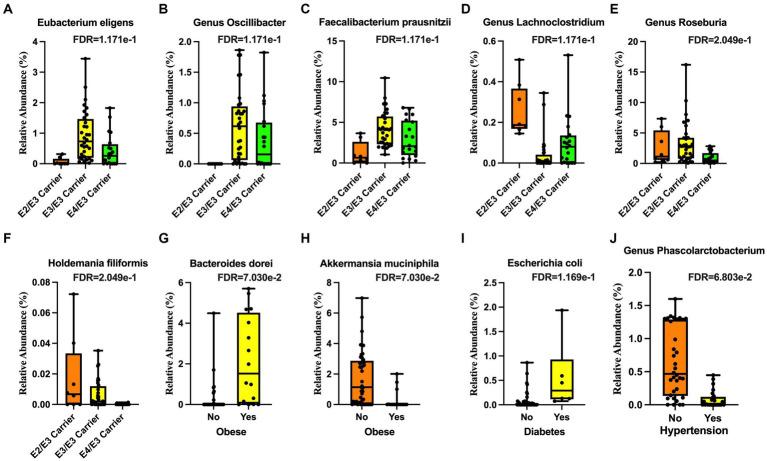
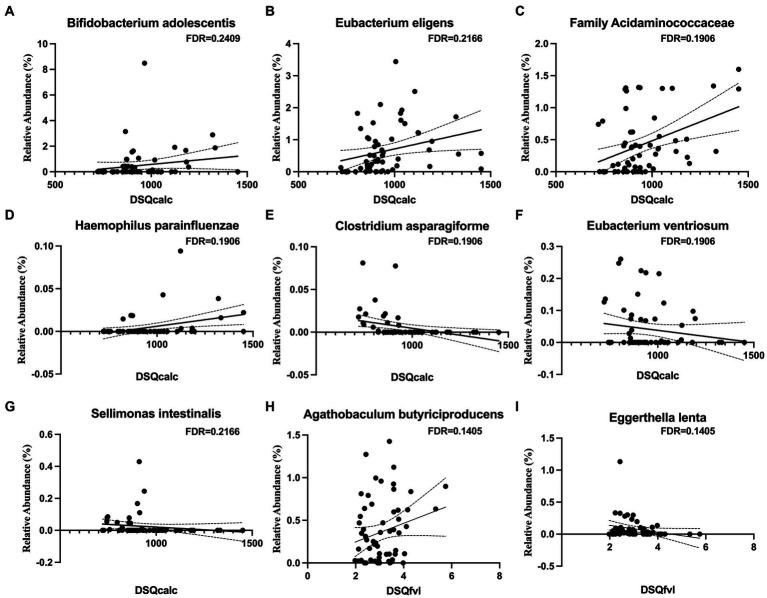
Individuals with APOE e2 and APOE e4 genotypes had distinct microbiota composition, and higher level of pro-inflammatory microbiota were associated higher BMI and diabetes. In contrast, calcium- and vegetable-rich diets were associated with microbiota that produced short chain fatty acids leading to an anti-inflammatory state. We also found that important gut microbial butyrate producers were correlated with the volume of the thalamus and corpus callosum, which are regions of the brain responsible for relaying and processing information. Additionally, putative proinflammatory species were negatively correlated with GABA production, an inhibitory neurotransmitter. Furthermore, we observed that the relative abundance of bacteria from the family , equol producers, was correlated with white matter integrity in tracts connecting the brain regions related to language, memory, and learning.
DISCUSSION
These findings highlight the importance of gut microbiome association with brain health in aging population and could have important implications aimed at optimizing healthy brain aging through precision prebiotic, probiotic or dietary interventions.
引言
高龄是大脑生理和认知功能变化的一个重要因素。最近的研究强调了肠道微生物群在衰老过程中调节大脑功能的关键作用,而这可能受到多种因素的影响,如载脂蛋白E(APOE)基因变异、体重指数(BMI)、糖尿病和饮食摄入。然而,肠道微生物群与这些因素以及脑结构、血管和代谢成像标志物之间的关联尚未得到充分探索。
方法
我们在肯塔基州招募了30名年龄在55至85岁之间的社区老年人。我们从电子健康记录以及饮食筛查问卷中收集病史。我们使用口腔拭子进行APOE基因分型,使用宏基因组测序进行肠道微生物群分析,并使用MRI进行脑结构、血管和代谢成像。
结果
携带APOE e2和APOE e4基因型的个体具有不同的微生物群组成,且促炎微生物群水平较高与较高的BMI和糖尿病相关。相比之下,富含钙和蔬菜的饮食与产生短链脂肪酸从而导致抗炎状态的微生物群相关。我们还发现,重要的肠道微生物丁酸盐产生菌与丘脑和胼胝体的体积相关,丘脑和胼胝体是大脑中负责传递和处理信息的区域。此外,假定的促炎物种与抑制性神经递质γ-氨基丁酸(GABA)的产生呈负相关。此外,我们观察到来自马栗树皮素产生菌科的细菌的相对丰度与连接与语言、记忆和学习相关的脑区的白质完整性相关。
讨论
这些发现凸显了肠道微生物群与老年人群大脑健康关联的重要性,并可能对通过精准益生元、益生菌或饮食干预优化健康大脑衰老具有重要意义。


 Zotero 插件