
台湾地区 SARS-CoV-2 奥密克戎变异株 BA.1 和 2 的流行病学和分析。
Epidemiology and analysis of SARS-CoV-2 Omicron subvariants BA.1 and 2 in Taiwan.
机构信息
Department of Medical Laboratory Science and Biotechnology, College of Medical Technology, Chung Hwa University of Medical Technology, Tainan City, Taiwan.
Graduate Institute of Clinical Medicine, College of Medicine, Kaohsiung Medical University, Kaohsiung City, Taiwan.
出版信息
Sci Rep. 2023 Oct 3;13(1):16583. doi: 10.1038/s41598-023-43357-7.
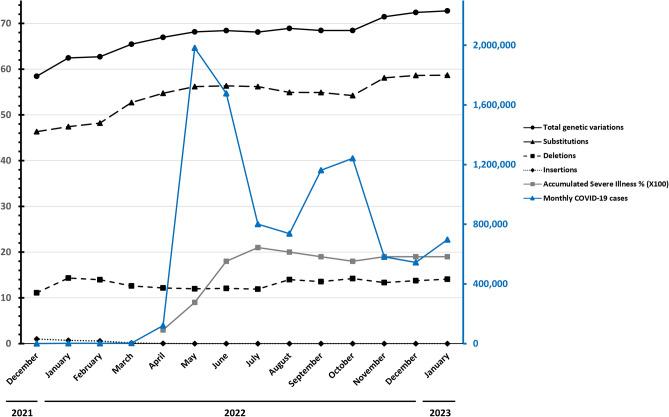
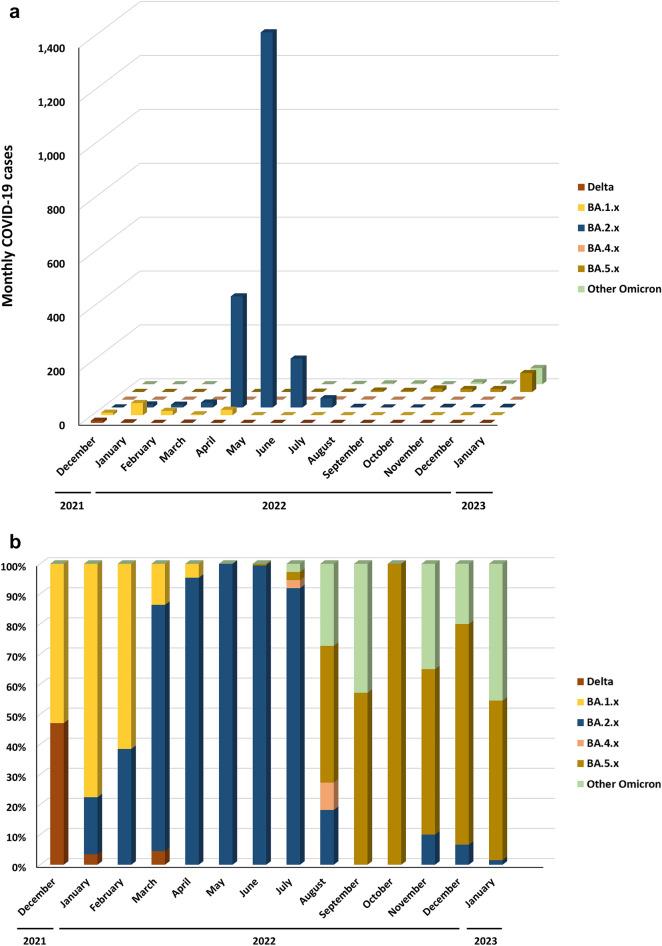
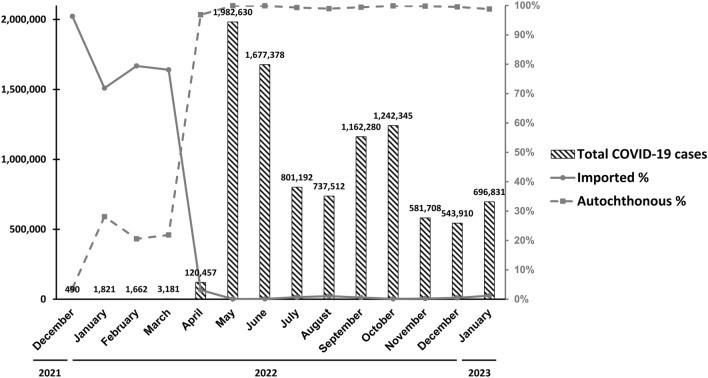
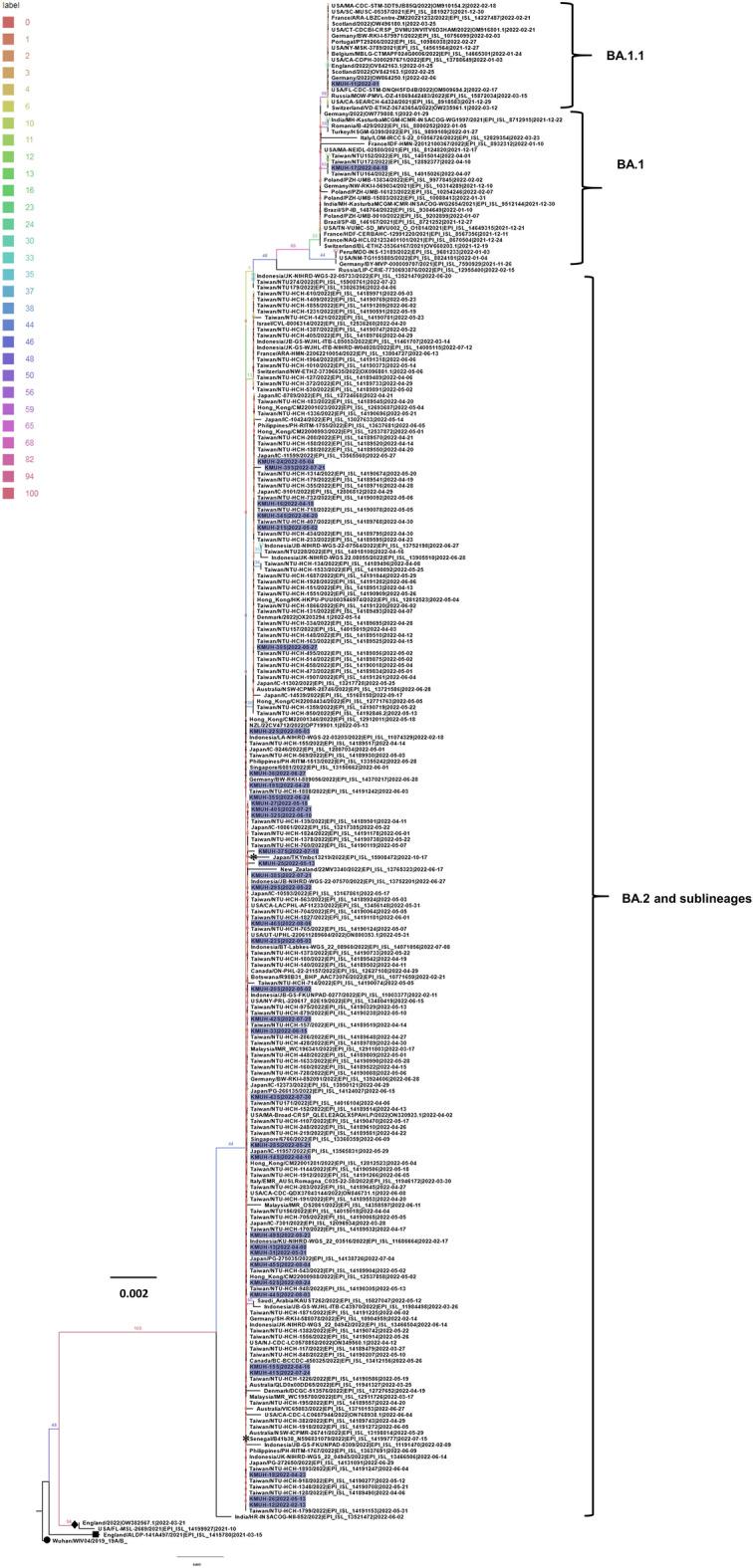
The Omicron variant of severe acute respiratory syndrome coronavirus 2 (SARS-CoV-2), first detected in October 2021, possessed many mutations compared to previous variants. We aimed to identify and analyze SARS-CoV-2 Omicron subvariants among coronavirus disease 2019 (COVID-19) patients between January 2022 and September 2022 in Taiwan. The results revealed that BA.2.3.7, featuring K97E and G1251V in the spike protein compared with BA.2, emerged in March 2022 and persistently dominated between April 2022 and August 2022, resulting in the largest COVID-19 outbreak since 2020. The accumulation of amino acid (AA) variations, mainly AA substitution, in the spike protein was accompanied by increasing severity in Omicron-related COVID-19 between April 2022 and January 2023. Older patients were more likely to have severe COVID-19, and comorbidity was a risk factor for COVID-19-related mortality. The accumulated case fatality rate (CFR) dropped drastically after Omicron variants, mainly BA.2.3.7, entered Taiwan after April 2022, and the CFR was 0.16% in Taiwan, which was lower than that worldwide (0.31%) between April 2021 and January 2023. The relatively low CFR in Omicron-related COVID-19 patients can be attributed to adjustments to public health policies, promotion of vaccination programs, effective antiviral drugs, and the lower severity of the Omicron variant.
新冠病毒变异株奥密克戎(SARS-CoV-2)于 2021 年 10 月首次被发现,与之前的变异株相比,它具有许多突变。我们旨在确定和分析 2022 年 1 月至 2022 年 9 月在台湾的 2019 年冠状病毒病(COVID-19)患者中的 SARS-CoV-2 奥密克戎亚变种。结果显示,与 BA.2 相比,刺突蛋白中具有 K97E 和 G1251V 的 BA.2.3.7 于 2022 年 3 月出现,并在 2022 年 4 月至 8 月期间持续占主导地位,导致自 2020 年以来最大的 COVID-19 疫情。奥密克戎相关 COVID-19 的严重程度在 2022 年 4 月至 2023 年 1 月之间逐渐增加,这与刺突蛋白中氨基酸(AA)变异的积累有关,主要是 AA 取代。老年患者更容易出现严重的 COVID-19,合并症是 COVID-19 相关死亡的危险因素。奥密克戎变异株,主要是 BA.2.3.7,于 2022 年 4 月进入台湾后,累积病死率(CFR)急剧下降,台湾的 CFR 为 0.16%,低于 2021 年 4 月至 2023 年 1 月全球的 0.31%。奥密克戎相关 COVID-19 患者的 CFR 相对较低,这归因于公共卫生政策的调整、疫苗接种计划的推广、有效的抗病毒药物以及奥密克戎变异株的严重性较低。

 Zotero 插件