
在FDA不良事件报告系统(FAERS)数据库中进行的依托泊苷药物警戒研究,现实情况如何?
A pharmacovigilance study of etoposide in the FDA adverse event reporting system (FAERS) database, what does the real world say?
作者信息
Cui Zhiwei, Cheng Feiyan, Wang Lihui, Zou Fan, Pan Rumeng, Tian Yuhan, Zhang Xiyuan, She Jing, Zhang Yidan, Yang Xinyuan
机构信息
Department of Obstetrics and Gynecology, The First Affiliated Hospital of Xi'an Jiaotong University, Xi'an, China.
Department of Respiratory and Critical Care Medicine, Affiliated Hospital of Zunyi Medical University, Zunyi, China.
出版信息
Front Pharmacol. 2023 Oct 26;14:1259908. doi: 10.3389/fphar.2023.1259908. eCollection 2023.
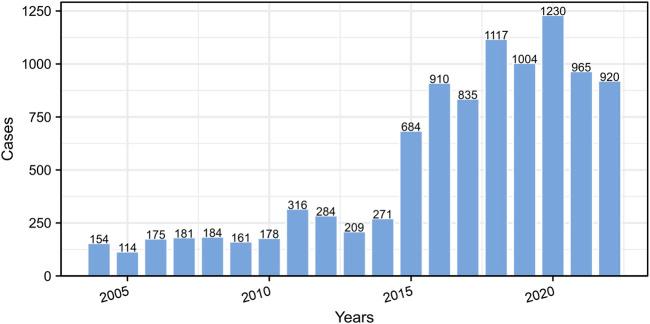
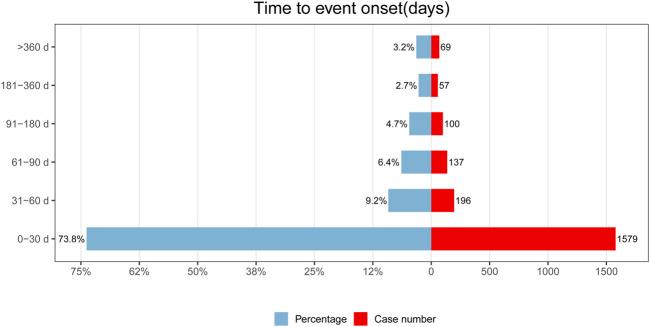
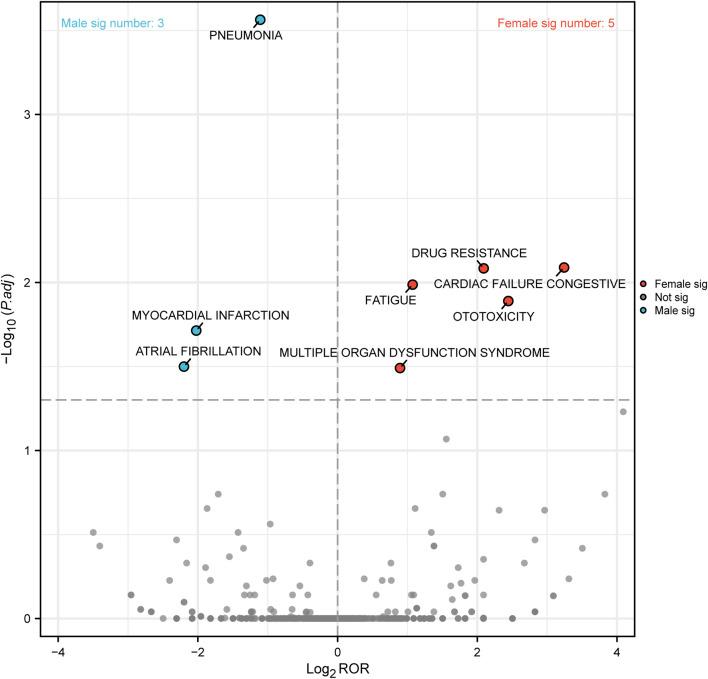
Etoposide is a broad-spectrum antitumor drug that has been extensively studied in clinical trials. However, limited information is available regarding its real-world adverse reactions. Therefore, this study aimed to assess and evaluate etoposide-related adverse events in a real-world setting by using data mining method on the U.S. Food and Drug Administration Adverse Event Reporting System (FAERS) database. Through the analysis of 16,134,686 reports in the FAERS database, a total of 9,892 reports of etoposide-related adverse drug events (ADEs) were identified. To determine the significance of these ADEs, various disproportionality analysis algorithms were applied, including the reporting odds ratio (ROR), the proportional reporting ratio (PRR), the Bayesian confidence propagation neural network (BCPNN), and the multi-item gamma Poisson shrinker (MGPS) algorithms. As a result, 478 significant disproportionality preferred terms (PTs) that were identified by all four algorithms were retained. These PTs included commonly reported adverse events such as thrombocytopenia, leukopenia, anemia, stomatitis, and pneumonitis, which align with those documented in the drug's instructions and previous clinical trials. However, our analysis also uncovered unexpected and significant ADEs, including thrombotic microangiopathy, ototoxicity, second primary malignancy, nephropathy toxic, and ovarian failure. Furthermore, we examined the time-to-onset (TTO) of these ADEs using the Weibull distribution test and found that the median TTO for etoposide-associated ADEs was 10 days (interquartile range [IQR] 2-32 days). The majority of cases occurred within the first month (73.8%) after etoposide administration. Additionally, our analysis revealed specific high-risk signals for males, such as pneumonia and cardiac infarction, while females showed signals for drug resistance and ototoxicity. These findings provide valuable insight into the occurrence of ADEs following etoposide initiation, which can potentially support clinical monitoring and risk identification efforts.
依托泊苷是一种广谱抗肿瘤药物,已在临床试验中得到广泛研究。然而,关于其在现实世界中的不良反应的信息有限。因此,本研究旨在通过对美国食品药品监督管理局不良事件报告系统(FAERS)数据库使用数据挖掘方法,在现实环境中评估和评价依托泊苷相关的不良事件。通过对FAERS数据库中的16134686份报告进行分析,共识别出9892份依托泊苷相关药物不良事件(ADEs)报告。为了确定这些ADEs的显著性,应用了各种不成比例分析算法,包括报告比值比(ROR)、比例报告比(PRR)、贝叶斯置信传播神经网络(BCPNN)和多项目伽马泊松收缩器(MGPS)算法。结果,保留了所有四种算法识别出的478个显著不成比例的首选术语(PTs)。这些PTs包括常见报告的不良事件,如血小板减少、白细胞减少、贫血、口腔炎和肺炎,这与药物说明书和先前临床试验中记录的一致。然而,我们的分析还发现了意外且显著的ADEs,包括血栓性微血管病、耳毒性、第二原发性恶性肿瘤、肾毒性和卵巢功能衰竭。此外,我们使用威布尔分布检验检查了这些ADEs的发病时间(TTO),发现依托泊苷相关ADEs的中位TTO为10天(四分位间距[IQR]2 - 32天)。大多数病例发生在依托泊苷给药后的第一个月内(73.8%)。此外,我们的分析揭示了男性的特定高风险信号,如肺炎和心肌梗死,而女性则显示出耐药性和耳毒性信号。这些发现为依托泊苷开始使用后ADEs的发生提供了有价值的见解,这可能有助于临床监测和风险识别工作。



 Zotero 插件