
SOS1 和 KSR1 根据 PI3K 和 KRAS 突变状态调节 MEK 抑制剂对靶向耐药细胞群体的反应性。
SOS1 and KSR1 modulate MEK inhibitor responsiveness to target resistant cell populations based on PI3K and KRAS mutation status.
机构信息
Department of Pharmacology and Molecular Therapeutics, Uniformed Services University of the Health Sciences, Bethesda, MD 20814.
Eppley Institute for Research in Cancer and Allied Diseases, University of Nebraska Medical Center, Omaha, NE 68198.
出版信息
Proc Natl Acad Sci U S A. 2023 Nov 21;120(47):e2313137120. doi: 10.1073/pnas.2313137120. Epub 2023 Nov 16.
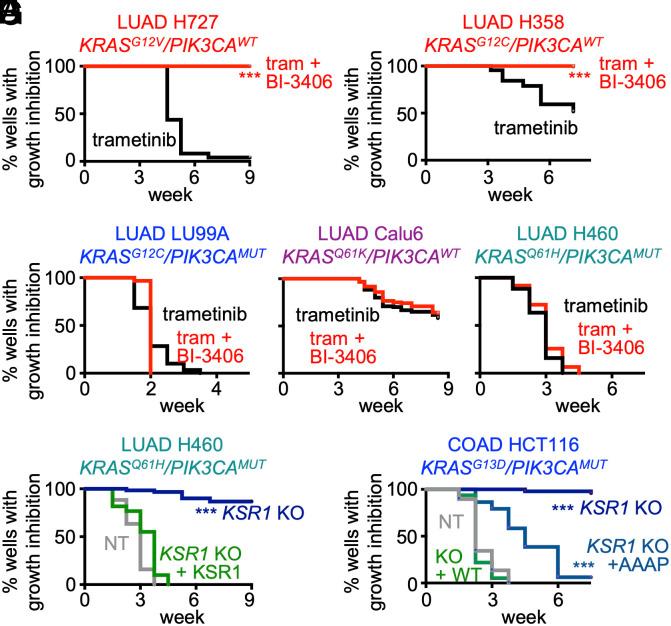
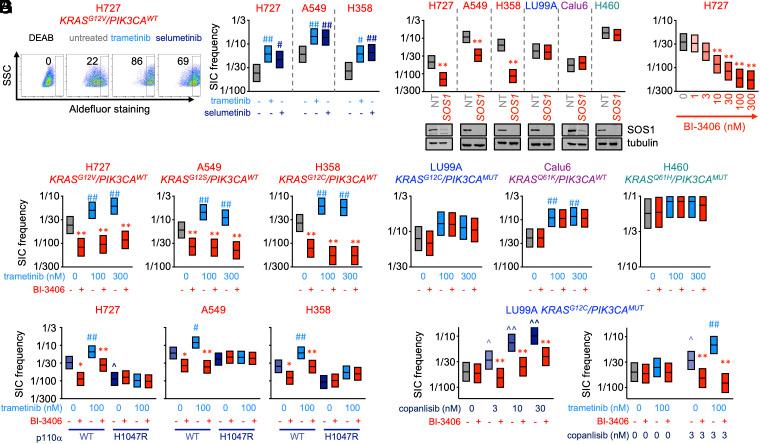
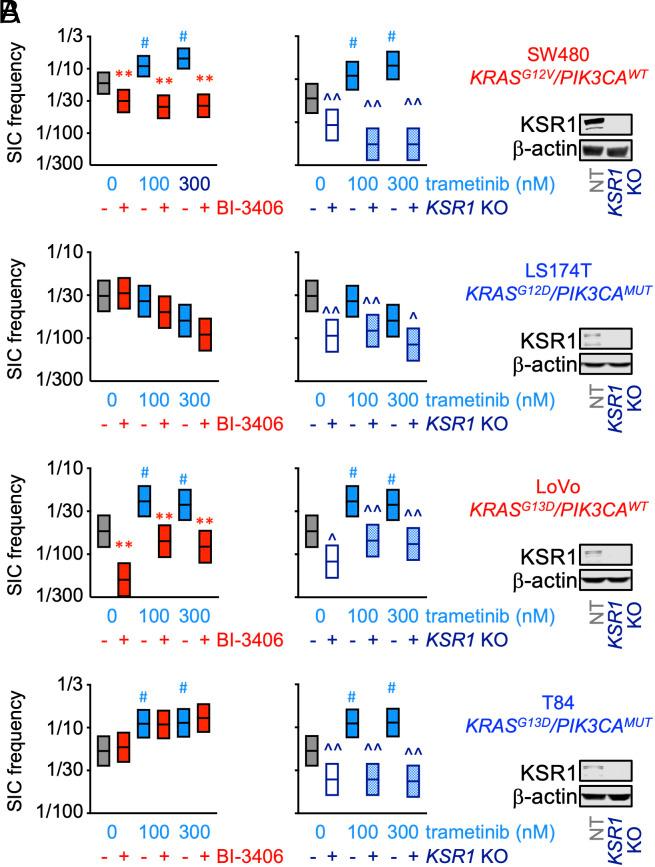
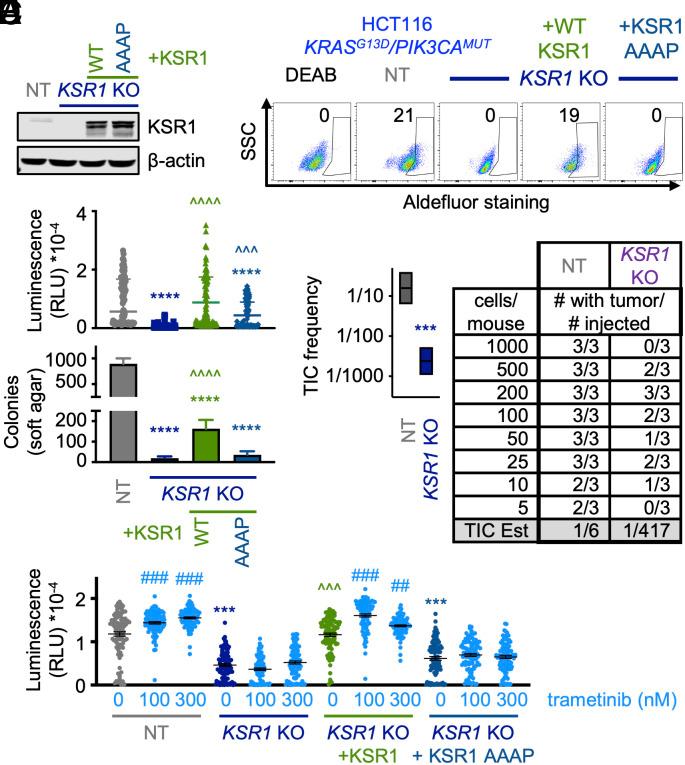
KRAS is the most commonly mutated oncogene. Targeted therapies have been developed against mediators of key downstream signaling pathways, predominantly components of the RAF/MEK/ERK kinase cascade. Unfortunately, single-agent efficacy of these agents is limited both by intrinsic and acquired resistance. Survival of drug-tolerant persister cells within the heterogeneous tumor population and/or acquired mutations that reactivate receptor tyrosine kinase (RTK)/RAS signaling can lead to outgrowth of tumor-initiating cells (TICs) and drive therapeutic resistance. Here, we show that targeting the key RTK/RAS pathway signaling intermediates SOS1 (Son of Sevenless 1) or KSR1 (Kinase Suppressor of RAS 1) both enhances the efficacy of, and prevents resistance to, the MEK inhibitor trametinib in -mutated lung (LUAD) and colorectal (COAD) adenocarcinoma cell lines depending on the specific mutational landscape. The SOS1 inhibitor BI-3406 enhanced the efficacy of trametinib and prevented trametinib resistance by targeting spheroid-initiating cells in -mutated LUAD and COAD cell lines that lacked comutations. Cell lines with and/or mutations were insensitive to trametinib and BI-3406 combination therapy. In contrast, deletion of the RAF/MEK/ERK scaffold protein prevented drug-induced SIC upregulation and restored trametinib sensitivity across all tested mutant cell lines in both -mutated and wild-type cancers. Our findings demonstrate that vertical inhibition of RTK/RAS signaling is an effective strategy to prevent therapeutic resistance in -mutated cancers, but therapeutic efficacy is dependent on both the specific KRAS mutant and underlying comutations. Thus, selection of optimal therapeutic combinations in -mutated cancers will require a detailed understanding of functional dependencies imposed by allele-specific KRAS mutations.
KRAS 是最常见的突变致癌基因。已经开发了针对关键下游信号通路介质的靶向疗法,主要是 RAF/MEK/ERK 激酶级联的组成部分。不幸的是,这些药物的单药疗效都受到内在和获得性耐药的限制。在异质性肿瘤群体中,药物耐受持久细胞和/或重新激活受体酪氨酸激酶(RTK)/RAS 信号的获得性突变会导致肿瘤起始细胞(TIC)的生长,并导致治疗耐药。在这里,我们表明,靶向关键的 RTK/RAS 通路信号转导中间物 SOS1(Sevenless 之子 1)或 KSR1(RAS 激酶抑制剂 1),均可增强 MEK 抑制剂 trametinib 在 -突变肺(LUAD)和结直肠(COAD)腺癌细胞系中的疗效,并防止耐药,具体取决于特定的突变景观。SOS1 抑制剂 BI-3406 通过靶向缺乏 comutations 的 -突变 LUAD 和 COAD 细胞系中的球体起始细胞,增强了 trametinib 的疗效并防止了 trametinib 耐药。具有 和/或 突变的细胞系对 trametinib 和 BI-3406 联合治疗不敏感。相比之下,RAF/MEK/ERK 支架蛋白 的缺失可防止药物诱导的 SIC 上调,并恢复了所有测试的 -突变细胞系对 trametinib 的敏感性,包括 -突变和 野生型癌症。我们的研究结果表明,垂直抑制 RTK/RAS 信号是预防 -突变癌症治疗耐药的有效策略,但治疗效果取决于特定的 KRAS 突变和潜在的共突变。因此,在 -突变癌症中选择最佳治疗组合需要详细了解等位基因特异性 KRAS 突变所带来的功能依赖性。


 Zotero 插件