
全球、地区和国家的房颤/房扑负担:基于 2019 年全球疾病负担研究的年龄-时期-队列分析。
Global, regional, and national burdens of atrial fibrillation/flutter from 1990 to 2019: An age-period-cohort analysis using the Global Burden of Disease 2019 study.
机构信息
Arrhythmia Center, Fuwai Hospital, National Center for Cardiovascular Diseases, Chinese Academy of Medical Sciences, Peking Union Medical College, Beijing, China.
Department of Cardiac Surgery, Fuwai Hospital, Chinese Academy of Medical Sciences and Peking Union Medical College, Beijing, China.
出版信息
J Glob Health. 2023 Nov 22;13:04154. doi: 10.7189/jogh.13.04154.
BACKGROUND
Atrial fibrillation/flutter (AF/AFL) significantly impacts countries with varying income levels. We aimed to present worldwide estimates of its burden from 1990 to 2019 using data from the Global Burden of Disease (GBD) study.
METHODS
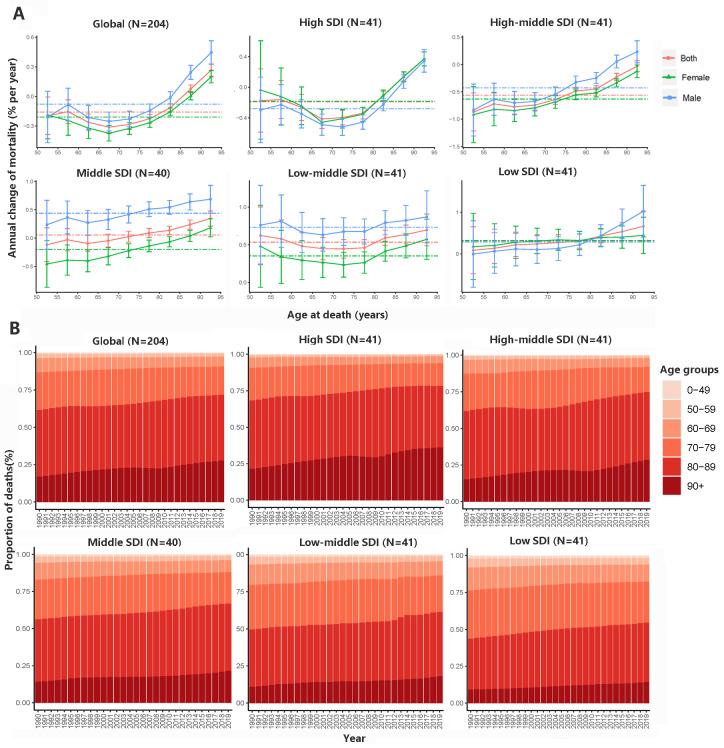
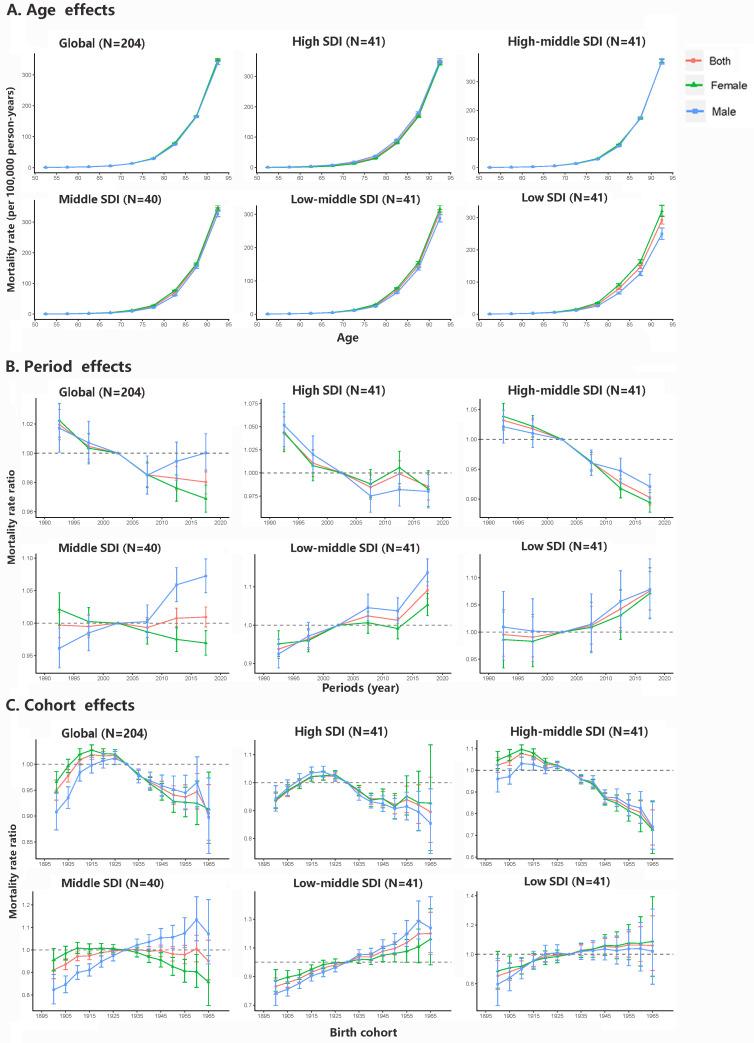
We derived cause-specific AF/AFL mortality and disability-adjusted life-year (DALY) estimates from the GBD 2019 study data. We used an age-period-cohort (APC) model to predict annual changes in mortality (net drifts), annual percentage changes from 50-55 to 90-95 years (local drifts), and period and cohort relative risks (period and cohort effects) between 1990 and 2019 by sex and sociodemographic index (SDI) quintiles. This allowed us to determine the impacts of age, period, and cohort on mortality and DALY trends and the inequities and treatment gaps in AF/AFL management.
RESULTS
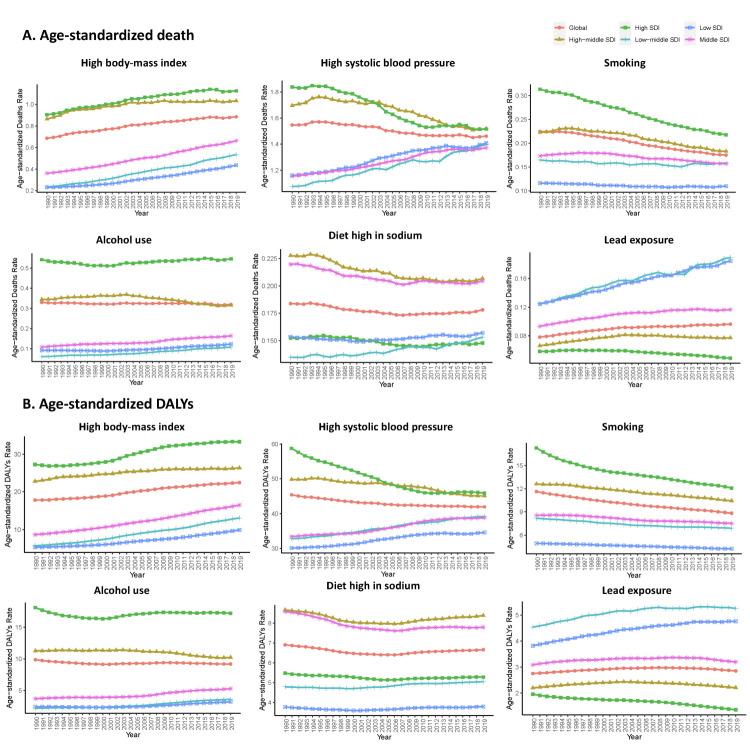
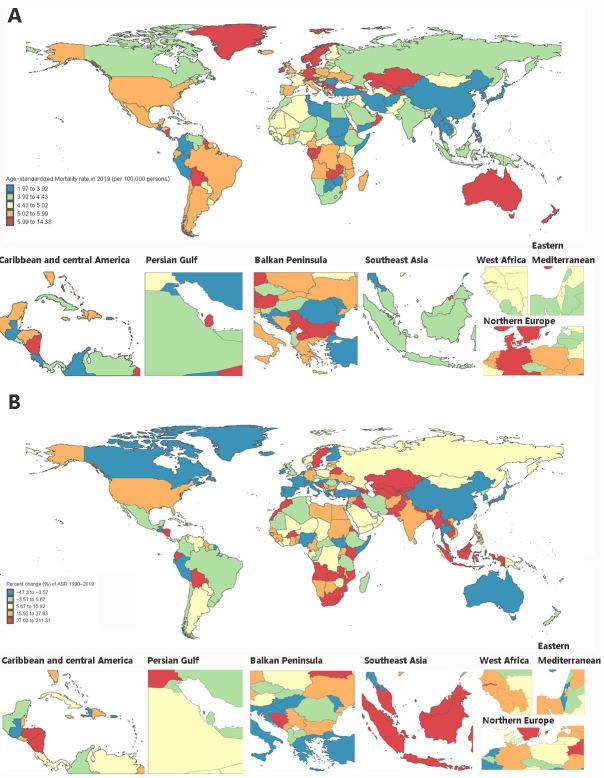
Based on GBD data, our estimates showed that 59.7 million cases of AF/AFL occurred worldwide in 2019, while the number of AF/AFL deaths rose from 117 000 to 315 000 (61.5% women). All-age mortality and DALYs increased considerably from 1990 to 2019, and there was an increase in age risk and a shift in death and DALYs toward the older (>80) population. Although the global net drift mortality of AF/AFL decreased overall (-0.16%; 95% confidence interval (CI) = -0.20, 0.12 per year), we observed an opposite trend in the low-middle SDI (0.53%; 95% CI = 0.44, 0.63) and low SDI regions (0.32%; 95% CI = 0.18, 0.45). Compared with net drift among men (-0.08%; 95% CI = -0.14, -0.02), women had a greater downward trend or smaller upward trend of AF/AFL (-0.21%; 95% CI = -0.26, -0.16) in mortality in middle- and low-middle-SDI countries (P < 0.001). Uzbekistan had the largest net drift of mortality (4.21%; 95% CI = 3.51, 4.9) and DALYs (2.16%; 95% CI = 2.05, 2.27) among all countries. High body mass index, high blood pressure, smoking, and alcohol consumption were more prevalent in developed countries; nevertheless, lead exposure was more prominent in developing countries and regions.
CONCLUSIONS
The burden of AF/AFL in 2019 and its temporal evolution from 1990 to 2019 differed significantly across SDI quintiles, sexes, geographic locations, and countries, necessitating the prioritisation of health policies based on risk-differentiated, cost-effective AF/AFL management.
背景
心房颤动/扑动(AF/AFL)对不同收入水平的国家有显著影响。我们旨在利用全球疾病负担(GBD)研究的数据,呈现 1990 年至 2019 年全球对此病负担的估计。
方法
我们从 GBD 2019 研究数据中得出了特定病因的 AF/AFL 死亡率和残疾调整生命年(DALY)估计。我们使用年龄-时期-队列(APC)模型,预测了 1990 年至 2019 年期间男女两性和社会人口指数(SDI)五分位数中死亡率(净漂移)、50-55 岁至 90-95 岁之间的年百分比变化(局部漂移),以及时期和队列的相对风险(时期和队列效应)。这使我们能够确定年龄、时期和队列对死亡率和 DALY 趋势的影响,以及 AF/AFL 管理中的不平等和治疗差距。
结果
根据 GBD 数据,我们的估计显示,2019 年全球有 5970 万例 AF/AFL 病例,而 AF/AFL 死亡人数从 11.7 万人增加到 31.5 万人(61.5%为女性)。所有年龄组的死亡率和 DALY 都在 1990 年至 2019 年间大幅上升,年龄风险增加,死亡和 DALY 向高龄(>80 岁)人群转移。尽管全球 AF/AFL 的净漂移死亡率总体呈下降趋势(-0.16%;95%置信区间(CI)为-0.20,0.12 每年),但我们观察到中低 SDI(0.53%;95%CI 为 0.44,0.63)和低 SDI 地区(0.32%;95%CI 为 0.18,0.45)呈相反趋势。与男性的净漂移(-0.08%;95%CI 为-0.14,-0.02)相比,中低 SDI 国家的女性死亡率(-0.21%;95%CI 为-0.26,-0.16)或呈更大的下降趋势或更小的上升趋势(P<0.001)。乌兹别克斯坦在所有国家中,死亡率的净漂移(4.21%;95%CI 为 3.51,4.9)和 DALY(2.16%;95%CI 为 2.05,2.27)最大。高体质指数、高血压、吸烟和饮酒在发达国家更为普遍;然而,铅暴露在发展中国家和地区更为突出。
结论
2019 年 AF/AFL 的负担及其从 1990 年至 2019 年的时间演变在 SDI 五分位数、性别、地理位置和国家之间存在显著差异,这需要根据风险差异化、具有成本效益的 AF/AFL 管理来制定卫生政策的优先级。

 Zotero 插件