
以酵母为模型探索致癌性癌组蛋白突变体的分子基础
Exploring the Molecular Underpinnings of Cancer-Causing Oncohistone Mutants Using Yeast as a Model.
作者信息
Zhang Xinran, Fawwal Dorelle V, Spangle Jennifer M, Corbett Anita H, Jones Celina Y
机构信息
Department of Biology, Emory University, Atlanta, GA 30322, USA.
Department of Radiation Oncology, Emory University School of Medicine, Atlanta, GA 30322, USA.
出版信息
J Fungi (Basel). 2023 Dec 11;9(12):1187. doi: 10.3390/jof9121187.
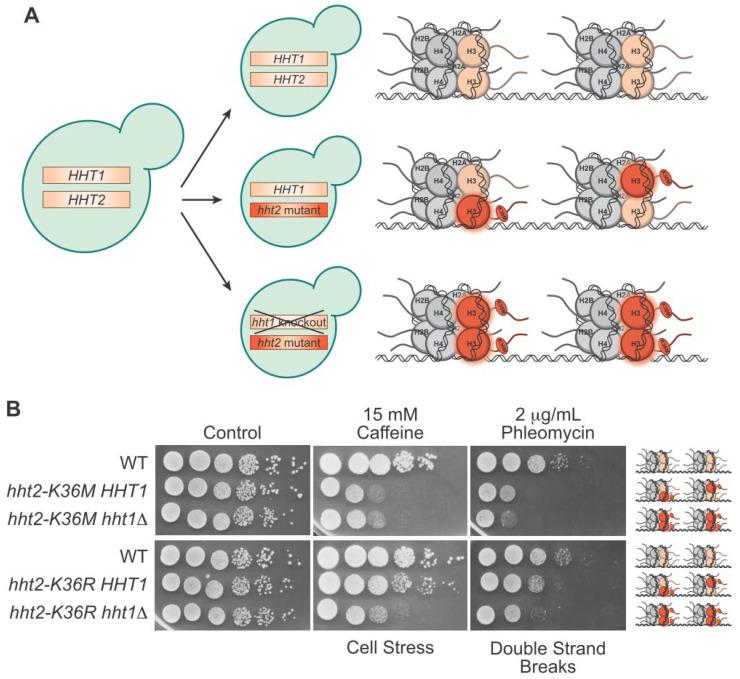
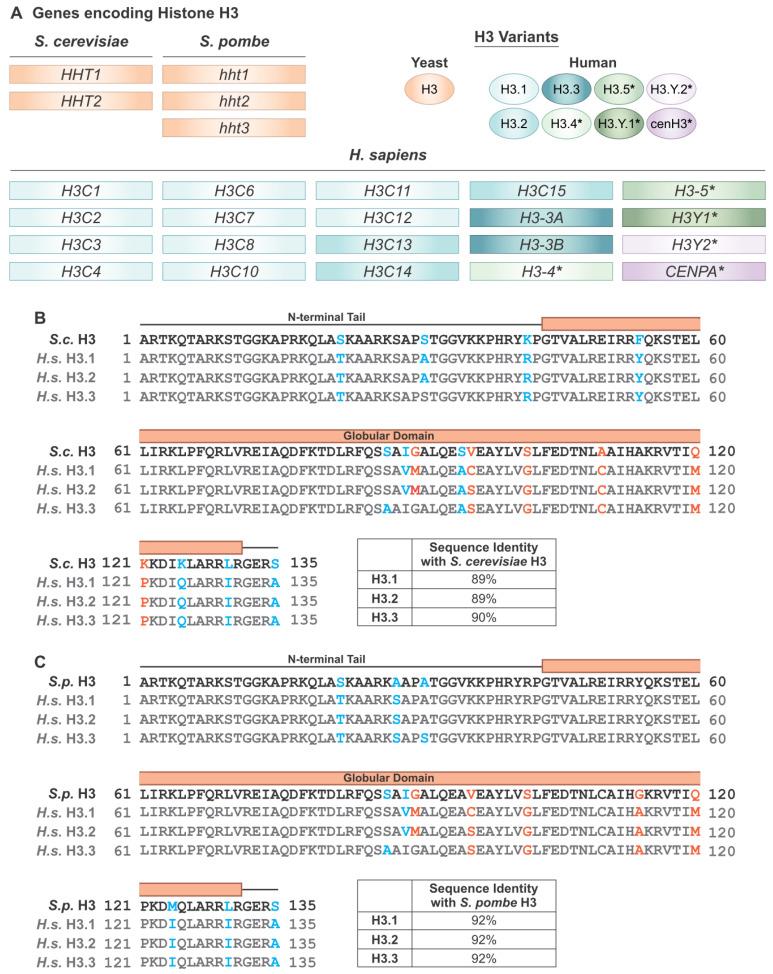
Understanding the molecular basis of cancer initiation and progression is critical in developing effective treatment strategies. Recently, mutations in genes encoding histone proteins that drive oncogenesis have been identified, converting these essential proteins into "oncohistones". Understanding how oncohistone mutants, which are commonly single missense mutations, subvert the normal function of histones to drive oncogenesis requires defining the functional consequences of such changes. Histones genes are present in multiple copies in the human genome with 15 genes encoding histone H3 isoforms, the histone for which the majority of oncohistone variants have been analyzed thus far. With so many wildtype histone proteins being expressed simultaneously within the oncohistone, it can be difficult to decipher the precise mechanistic consequences of the mutant protein. In contrast to humans, budding and fission yeast contain only two or three histone H3 genes, respectively. Furthermore, yeast histones share ~90% sequence identity with human H3 protein. Its genetic simplicity and evolutionary conservation make yeast an excellent model for characterizing oncohistones. The power of genetic approaches can also be exploited in yeast models to define cellular signaling pathways that could serve as actionable therapeutic targets. In this review, we focus on the value of yeast models to serve as a discovery tool that can provide mechanistic insights and inform subsequent translational studies in humans.
了解癌症发生和发展的分子基础对于制定有效的治疗策略至关重要。最近,已鉴定出驱动肿瘤发生的编码组蛋白的基因突变,将这些必需蛋白转化为“致癌组蛋白”。了解致癌组蛋白突变体(通常为单个错义突变)如何颠覆组蛋白的正常功能以驱动肿瘤发生,需要明确此类变化的功能后果。组蛋白基因在人类基因组中以多个拷贝存在,其中15个基因编码组蛋白H3亚型,迄今为止,大多数致癌组蛋白变体都是针对该组蛋白进行分析的。在致癌组蛋白中同时表达如此多的野生型组蛋白,可能难以解读突变蛋白的确切机制后果。与人类不同,芽殖酵母和裂殖酵母分别仅含有两个或三个组蛋白H3基因。此外,酵母组蛋白与人类H3蛋白具有约90%的序列同一性。其遗传简单性和进化保守性使酵母成为表征致癌组蛋白的优秀模型。遗传方法的优势也可在酵母模型中加以利用,以确定可作为可行治疗靶点的细胞信号通路。在本综述中,我们重点关注酵母模型作为一种发现工具的价值,它可以提供机制性见解,并为后续人类转化研究提供参考。

 Zotero 插件