
吉非替尼的共结晶通过破坏DNA损伤/修复平衡增强单剂量口服给药对肺癌的根除作用。
Cocrystallization of Gefitinib Potentiate Single-Dose Oral Administration for Lung Tumor Eradication via Unbalancing the DNA Damage/Repair.
作者信息
Inam Muhammad, Yang Yi, Hu Jialin, Zheng Jiena, Deng Wenxia, Zhou You, Qi Jialong, Xu Chuanshan, Chai Guihong, Dang Yuanye, Chen Wenjie
机构信息
Key Laboratory of Molecular Target & Clinical Pharmacology and the State & NMPA Key Laboratory of Respiratory Disease, School of Pharmaceutical Science, The Fifth Affiliated Hospital, Guangzhou Medical University, Guangzhou 511436, China.
Yunnan Digestive Endoscopy Clinical Medical Center, Department of Gastroenterology, The First People's Hospital of Yunnan Province, Kunming 650032, China.
出版信息
Pharmaceutics. 2023 Nov 30;15(12):2713. doi: 10.3390/pharmaceutics15122713.
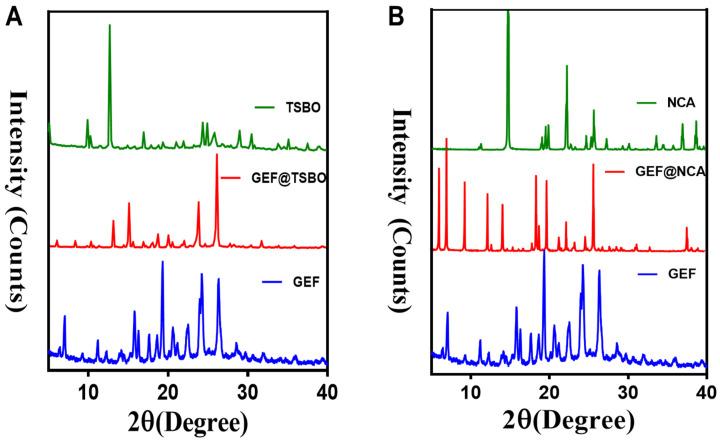
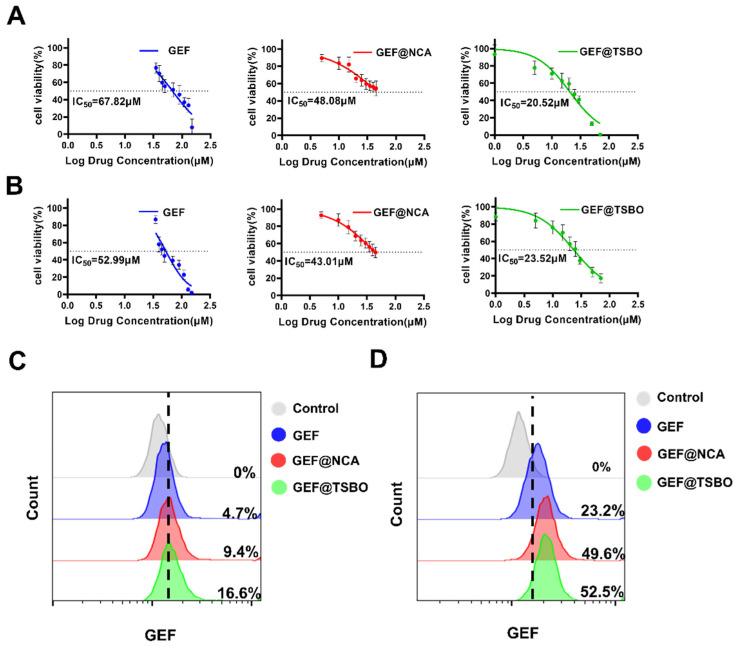
Gefitinib (GEF) is a clinical medication for the treatment of lung cancer targeting the epidermal growth factor receptor (EGFR). However, its efficacy is remarkably limited by low solubility and dissolution rates. In this study, two cocrystals of GEF with co-formers were successfully synthesized using the recrystallization method characterized via Powder X-ray Diffraction, Fourier Transform Infrared Spectroscopy, and 2D Nuclear Overhauser Effect Spectroscopy. The solubility and dissolution rates of cocrystals were found to be two times higher than those of free GEF. In vitro cytotoxicity studies revealed that the cocrystals enhanced the inhibition of cell proliferation and apoptosis in A549 and H1299 cells compared to free GEF. In mouse models, GEF@TSBO demonstrated targeted, safe, and effective antitumor activity with only one-dose administration. Mechanistically, the GEF cocrystals were shown to increase the cellular levels of damaged DNA, while potentially downregulating PARP, thereby impairing the DNA repair machinery and leading to an imbalance between DNA damage and restoration. These findings suggest that the cocrystallization of GEF could serve as a promising adjunct to significantly enhance the physicochemical and biopharmaceutical performance for lung cancer treatment, providing a facial strategy to improve GEF anticancer efficiency with high bioavailability that can be orally administrated with only one dose.
吉非替尼(GEF)是一种用于治疗肺癌的临床药物,靶向表皮生长因子受体(EGFR)。然而,其疗效因低溶解度和溶出速率而受到显著限制。在本研究中,通过重结晶法成功合成了两种GEF与共形成物的共晶体,并通过粉末X射线衍射、傅里叶变换红外光谱和二维核Overhauser效应光谱对其进行了表征。发现共晶体的溶解度和溶出速率比游离GEF高两倍。体外细胞毒性研究表明,与游离GEF相比,共晶体增强了对A549和H1299细胞增殖的抑制和凋亡作用。在小鼠模型中,GEF@TSBO仅单次给药就表现出靶向、安全且有效的抗肿瘤活性。从机制上讲,GEF共晶体显示出可增加受损DNA的细胞水平,同时可能下调PARP,从而损害DNA修复机制,导致DNA损伤与修复之间的失衡。这些发现表明,GEF的共结晶可作为一种有前景的辅助手段,显著提高肺癌治疗的物理化学和生物制药性能,提供一种可显著提高GEF抗癌效率的策略,具有高生物利用度,仅需单次口服给药。





 Zotero 插件