
mTOR 在细胞坏死性凋亡调控机制中的研究进展。
Advances in the regulatory mechanisms of mTOR in necroptosis.
机构信息
Department of Critical Care Medicine, Peking Union Medical College Hospital, Chinese Academy of Medical Science and Peking Union Medical College, Beijing, China.
Department of Critical Care Medicine, Beijing Jishuitan Hospital, Capital Medical University, Beijing, China.
出版信息
Front Immunol. 2023 Dec 18;14:1297408. doi: 10.3389/fimmu.2023.1297408. eCollection 2023.
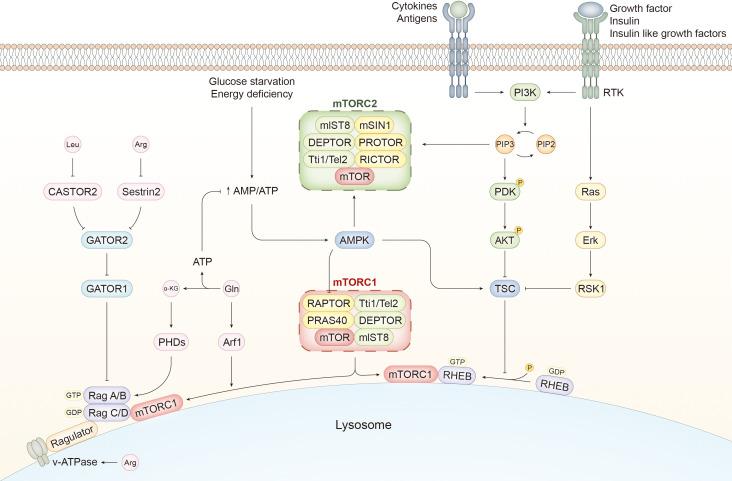
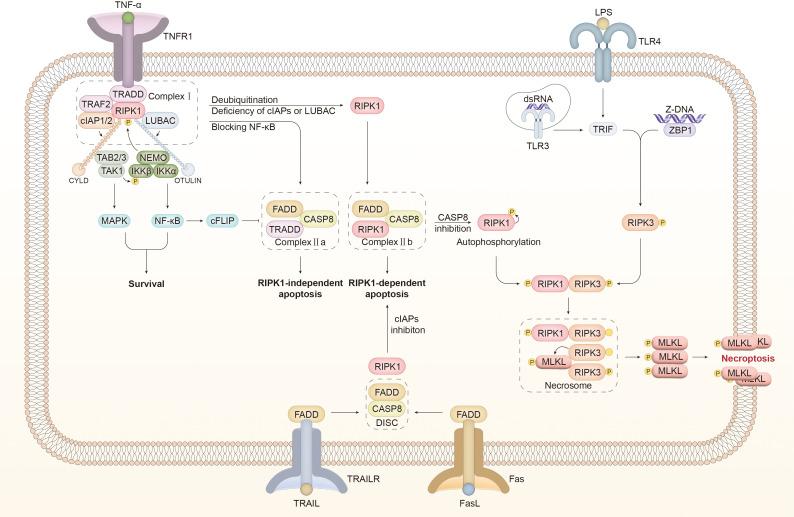
The mammalian target of rapamycin (mTOR), an evolutionarily highly conserved serine/threonine protein kinase, plays a prominent role in controlling gene expression, metabolism, and cell death. Programmed cell death (PCD) is indispensable for maintaining homeostasis by removing senescent, defective, or malignant cells. Necroptosis, a type of PCD, relies on the interplay between receptor-interacting serine-threonine kinases (RIPKs) and the membrane perforation by mixed lineage kinase domain-like protein (MLKL), which is distinguished from apoptosis. With the development of necroptosis-regulating mechanisms, the importance of mTOR in the complex network of intersecting signaling pathways that govern the process has become more evident. mTOR is directly responsible for the regulation of RIPKs. Autophagy is an indirect mechanism by which mTOR regulates the removal and interaction of RIPKs. Another necroptosis trigger is reactive oxygen species (ROS) produced by oxidative stress; mTOR regulates necroptosis by exploiting ROS. Considering the intricacy of the signal network, it is reasonable to assume that mTOR exerts a bifacial effect on necroptosis. However, additional research is necessary to elucidate the underlying mechanisms. In this review, we summarized the mechanisms underlying mTOR activation and necroptosis and highlighted the signaling pathway through which mTOR regulates necroptosis. The development of therapeutic targets for various diseases has been greatly advanced by the expanding knowledge of how mTOR regulates necroptosis.
哺乳动物雷帕霉素靶蛋白(mTOR)是一种进化上高度保守的丝氨酸/苏氨酸蛋白激酶,在控制基因表达、代谢和细胞死亡方面发挥着重要作用。程序性细胞死亡(PCD)对于通过去除衰老、有缺陷或恶性细胞来维持体内平衡是必不可少的。细胞坏死是一种 PCD 类型,依赖于受体相互作用丝氨酸/苏氨酸激酶(RIPK)与混合谱系激酶结构域样蛋白(MLKL)的膜穿孔之间的相互作用,这与细胞凋亡不同。随着坏死调节机制的发展,mTOR 在控制这一过程的交叉信号通路复杂网络中的重要性变得更加明显。mTOR 直接负责 RIPK 的调节。自噬是 mTOR 调节 RIPK 清除和相互作用的间接机制。另一种细胞坏死触发因素是氧化应激产生的活性氧(ROS);mTOR 通过利用 ROS 来调节细胞坏死。考虑到信号网络的复杂性,mTOR 对细胞坏死可能具有双面作用。然而,需要进一步的研究来阐明潜在的机制。在这篇综述中,我们总结了 mTOR 激活和细胞坏死的机制,并强调了 mTOR 调节细胞坏死的信号通路。mTOR 调节细胞坏死的知识不断扩展,为各种疾病的治疗靶点的开发提供了极大的帮助。

 Zotero 插件