
蓖麻毒素对肠道细胞的毒性导致由氧化应激介导的多种细胞死亡途径。
Ricin Toxicity to Intestinal Cells Leads to Multiple Cell Death Pathways Mediated by Oxidative Stress.
作者信息
Biscotti Francesco, Bortolotti Massimo, Falà Federica, Di Maro Antimo, Bolognesi Andrea, Polito Letizia
机构信息
Department of Medical and Surgical Sciences-DIMEC, Alma Mater Studiorum, University of Bologna, Via San Giacomo 14, 40126 Bologna, Italy.
Department of Environmental, Biological and Pharmaceutical Sciences and Technologies (DiSTABiF), University of Campania 'Luigi Vanvitelli', Via Vivaldi 43, 81100 Caserta, Italy.
出版信息
Toxins (Basel). 2025 Aug 9;17(8):400. doi: 10.3390/toxins17080400.
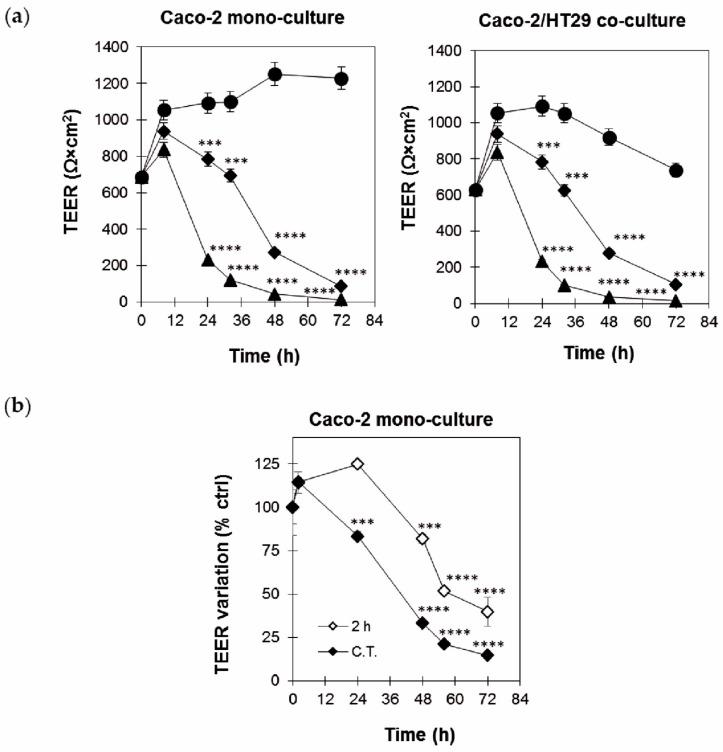
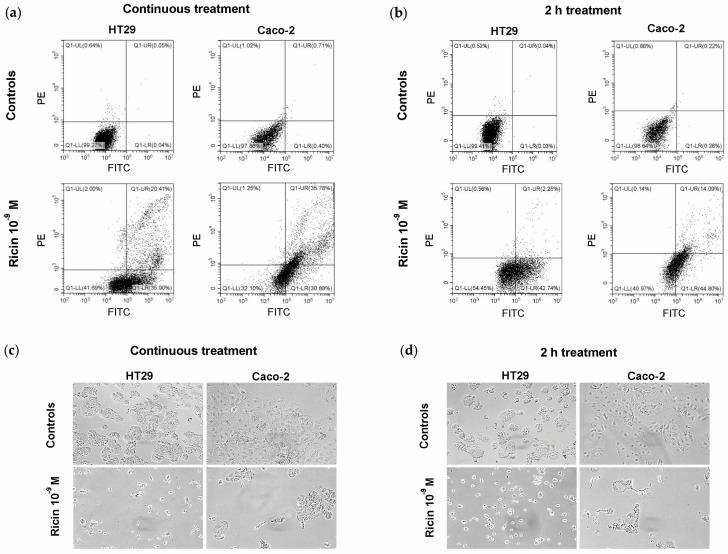
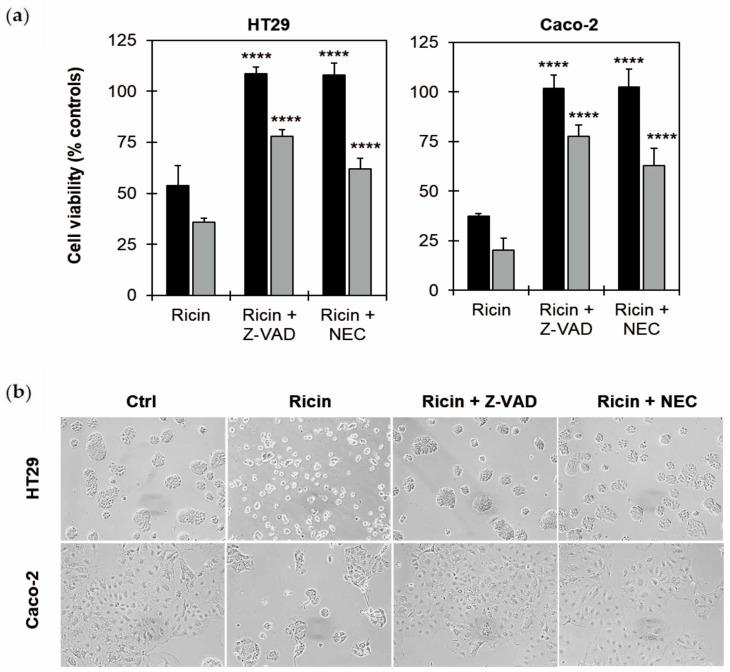
Ricin, a type 2 ribosome-inactivating protein, is a lethal toxin found in castor bean seeds. Although the systemic toxicity of ricin has been extensively studied, its localized effect on the gastrointestinal tract remains a critical concern, particularly in the case of oral ingestion. This study investigates the cytotoxic effects of ricin on human intestinal epithelial cell lines and its impact on epithelial barrier integrity. Ricin cytotoxicity was assessed on the intestinal-derived HT29 and Caco-2 cell lines using dose- and time-response assays, while the epithelial integrity was evaluated via Trans-Epithelial Electrical Resistance (TEER) measurements in Caco-2 monolayers. Cell death was determined through flow cytometry analysis, and the protective effects of cell death inhibitors and antioxidant scavengers were investigated on ricin-intoxicated cells. Ricin showed high cytotoxicity on HT29 and Caco-2 cells, with EC values in the nM range after 24-72 h of intoxication. Moreover, ricin strongly reduced TEER values in Caco-2 cells at 0.1-1 nM after 24 h of treatment. At a 1 nM concentration, ricin cytotoxicity can be significantly prevented by pre-incubating cells with the cell death inhibitors Z-VAD or necrostatin-1 and the antioxidant scavenger catalase, butylated hydroxyanisole or sodium pyruvate, demonstrating the involvement of apoptosis/necroptosis and oxidative stress in ricin cell death pathways and mechanisms.
蓖麻毒素是一种2型核糖体失活蛋白,是蓖麻籽中发现的一种致命毒素。尽管蓖麻毒素的全身毒性已得到广泛研究,但其对胃肠道的局部影响仍是一个关键问题,尤其是在口服摄入的情况下。本研究调查了蓖麻毒素对人肠道上皮细胞系的细胞毒性作用及其对上皮屏障完整性的影响。使用剂量和时间反应测定法评估蓖麻毒素对肠道来源的HT29和Caco-2细胞系的细胞毒性,同时通过测量Caco-2单层细胞的跨上皮电阻(TEER)来评估上皮完整性。通过流式细胞术分析确定细胞死亡,并研究细胞死亡抑制剂和抗氧化剂清除剂对蓖麻毒素中毒细胞的保护作用。蓖麻毒素对HT29和Caco-2细胞显示出高细胞毒性,中毒24至72小时后的EC值在纳摩尔范围内。此外,处理24小时后,蓖麻毒素在0.1至1 nM浓度下可显著降低Caco-2细胞的TEER值。在1 nM浓度下,通过用细胞死亡抑制剂Z-VAD或坏死抑制因子-1以及抗氧化剂清除剂过氧化氢酶、丁基羟基茴香醚或丙酮酸钠对细胞进行预孵育,可显著预防蓖麻毒素的细胞毒性,这表明细胞凋亡/坏死性凋亡和氧化应激参与了蓖麻毒素细胞死亡途径和机制。


 Zotero 插件