
罗莫单抗与特立帕肽治疗骨质疏松性椎体压缩骨折的疗效比较
Comparison of the Efficacy of Romosozumab and Teriparatide for the Management of Osteoporotic Vertebral Compression Fractures.
作者信息
Park Danbi, Kim Seo Eun, Shin Hong Kyung, Seo Junghan, Joo Jeong Kyun, Kim Chongman, Lee Sang Hyub, Park Jin Hoon
机构信息
Department of Neurological Surgery, Asan Medical Center, University of Ulsan College of Medicine, Seoul, Korea.
College of Nursing, Korea University, Seoul, Korea.
出版信息
Neurospine. 2023 Dec;20(4):1217-1223. doi: 10.14245/ns.2347030.515. Epub 2023 Dec 31.
OBJECTIVE
Romosozumab is increasingly employed to manage osteoporosis. However, no studies have analyzed its effects on recent osteoporotic vertebral compression fractures (OVCFs). Therefore, this study aimed to evaluate the efficacy of romosozumab compared with teriparatide in managing OVCFs.
METHODS
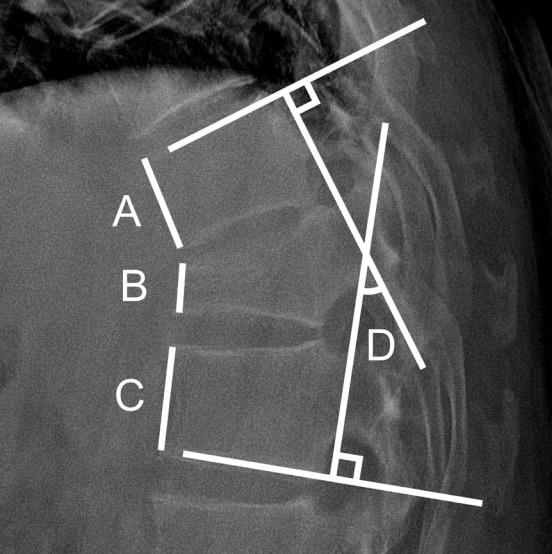
The electronic medical records of postmenopausal patients with recent OVCFs who were administered romosozumab or teriparatide for one year from March 2018 to August 2022 were retrospectively reviewed. We compared the 2 groups for demographics, radiological outcomes (compression ratio, Cobb angle, and bone mineral density [BMD]), and clinical outcomes (Numerical Rating Scale [NRS] for back pain).
RESULTS
Fifty-five patients with OVCFs, 32 patients treated with romosozumab and 23 with teriparatide, were included in this study. The change of BMD (g/cm2) values was significantly higher (p = 0.016) in the romosozumab (0.04 ± 0.06) than in the teriparatide group (0.00 ± 0.08) in the femur total. Furthermore, in subgroup analysis, the change of BMD (g/cm2) values in the lumbar spine was significantly higher (p = 0.016) in the romosozumab (0.12 ± 0.06) than in the teriparatide group (0.07 ± 0.06) in the lumbar spine. The decrease in NRS was significantly higher (p = 0.013) in the romosozumab (6.6 ± 2.0) than in the teriparatide group (5.5 ± 2.1). However, there was no significant difference in radiologic outcomes between the 2 groups.
CONCLUSION
Our findings suggest that romosozumab may be more effective than teriparatide in treating OVCFs in postmenopausal females, particularly in improving BMD and reducing back pain as measured by NRS.
目的
罗莫单抗越来越多地用于治疗骨质疏松症。然而,尚无研究分析其对近期骨质疏松性椎体压缩骨折(OVCFs)的影响。因此,本研究旨在评估罗莫单抗与特立帕肽相比在治疗OVCFs方面的疗效。
方法
回顾性分析2018年3月至2022年8月期间接受罗莫单抗或特立帕肽治疗一年的绝经后近期OVCFs患者的电子病历。我们比较了两组患者的人口统计学特征、放射学结果(压缩率、Cobb角和骨密度[BMD])以及临床结果(背痛数字评定量表[NRS])。
结果
本研究纳入了55例OVCFs患者,其中32例接受罗莫单抗治疗,23例接受特立帕肽治疗。罗莫单抗组(0.04±0.06)股骨总体骨密度(g/cm²)值的变化显著高于特立帕肽组(0.00±0.08)(p = 0.016)。此外,在亚组分析中,罗莫单抗组(0.12±0.06)腰椎骨密度(g/cm²)值的变化显著高于特立帕肽组(0.07±0.06)(p = 0.016)。罗莫单抗组(6.6±2.0)NRS的降低显著高于特立帕肽组(5.5±2.1)(p = 0.013)。然而,两组之间的放射学结果无显著差异。
结论
我们的研究结果表明,在治疗绝经后女性的OVCFs方面,罗莫单抗可能比特立帕肽更有效,特别是在改善骨密度和降低NRS测量的背痛方面。

 Zotero 插件