
应用 CAR-T 后 EHA/EBMT 分级评估 ICAHT:感染和死亡率的比较发生率和相关性。
Applying the EHA/EBMT grading for ICAHT after CAR-T: comparative incidence and association with infections and mortality.
机构信息
Department of Medicine III - Hematology/Oncology, University Hospital, LMU Munich, Munich, Germany.
Laboratory for Translational Cancer Immunology, LMU Gene Center, Munich, Germany.
出版信息
Blood Adv. 2024 Apr 23;8(8):1857-1868. doi: 10.1182/bloodadvances.2023011767.
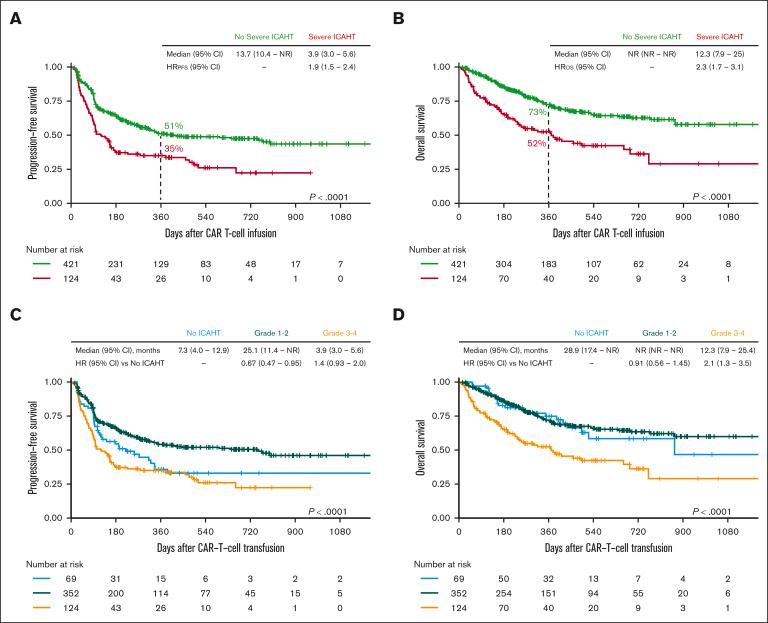
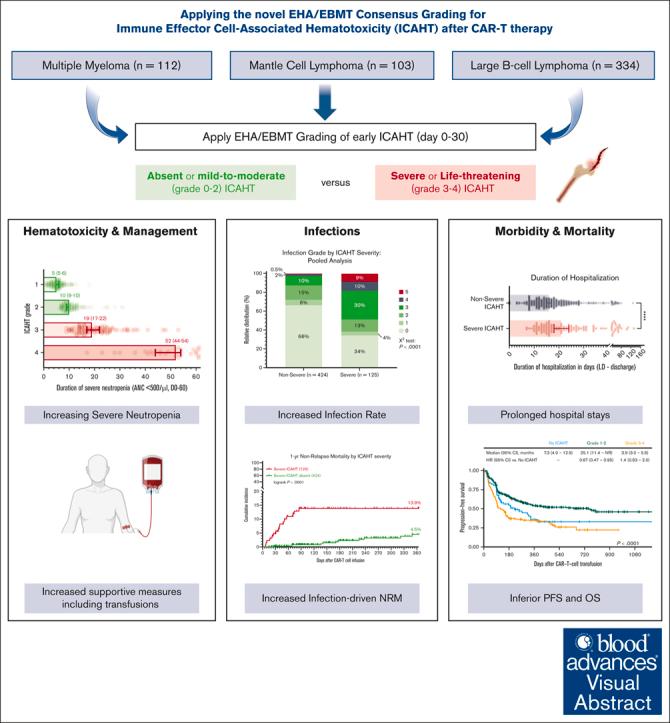
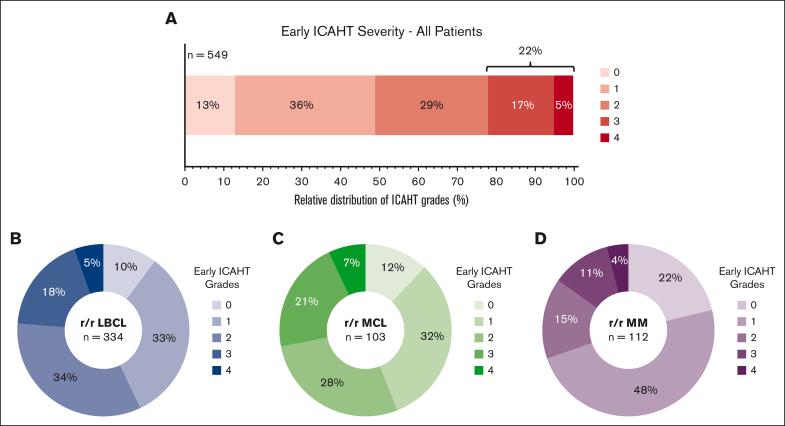
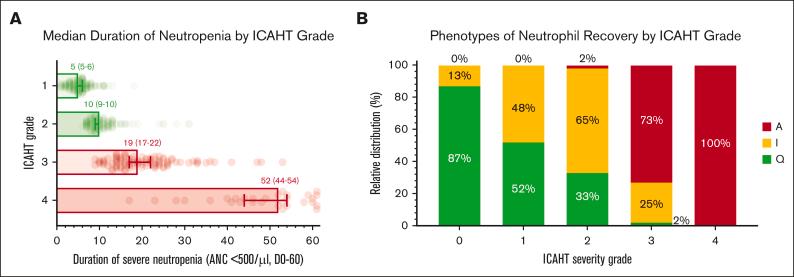
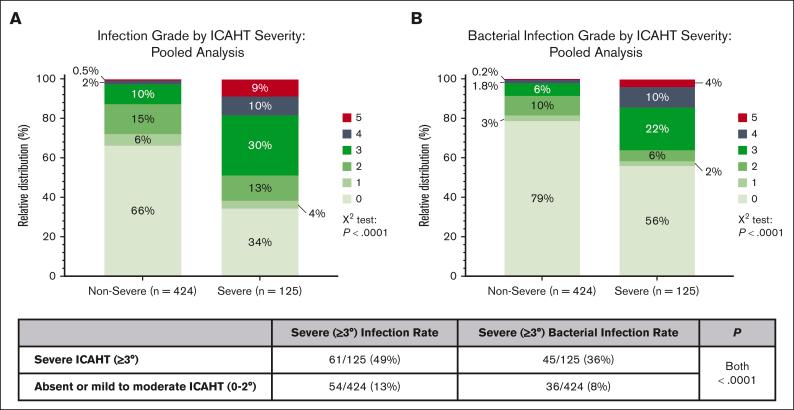
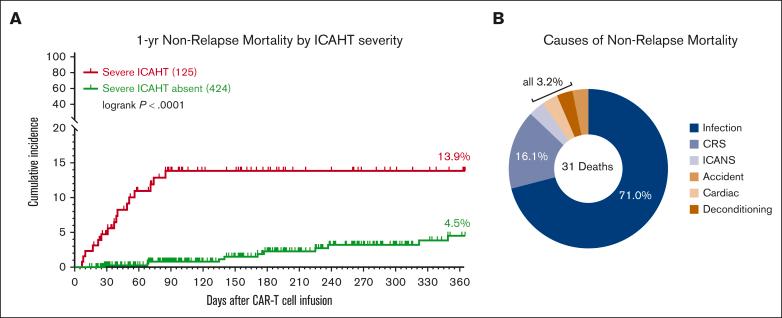
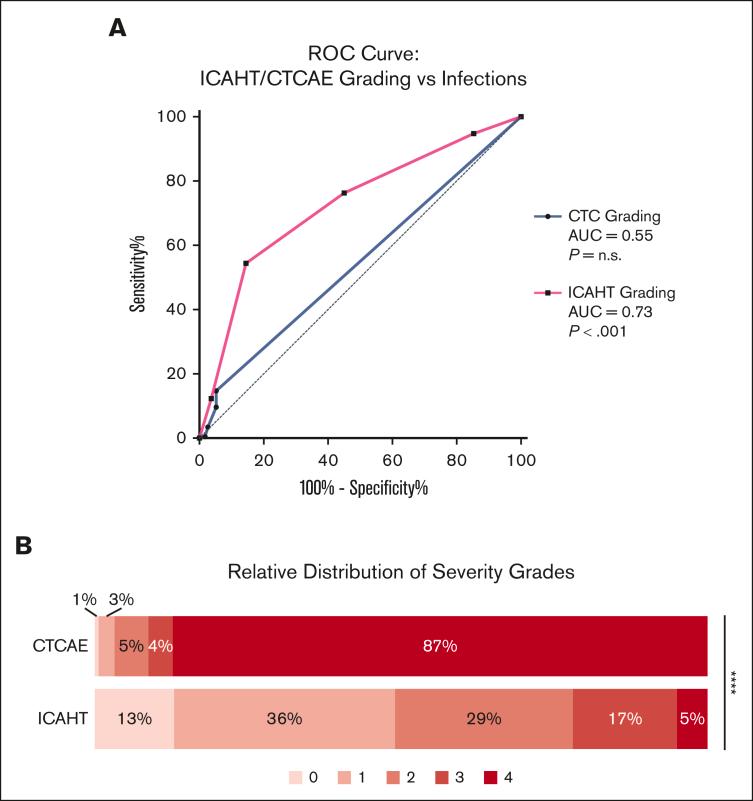
Cytopenias represent the most common side effect of CAR T-cell therapy (CAR-T) and can predispose for severe infectious complications. Current grading systems, such as the Common Terminology Criteria for Adverse Events (CTCAE), neither reflect the unique quality of post-CAR-T neutrophil recovery, nor do they reflect the inherent risk of infections due to protracted neutropenia. For this reason, a novel EHA/EBMT consensus grading was recently developed for Immune Effector Cell-Associated HematoToxicity (ICAHT). In this multicenter, observational study, we applied the grading system to a large real-world cohort of 549 patients treated with BCMA- or CD19-directed CAR-T for refractory B-cell malignancies (112 multiple myeloma [MM], 334 large B-cell lymphoma [LBCL], 103 mantle cell lymphoma [MCL]) and examined the clinical sequelae of severe (≥3°) ICAHT. The ICAHT grading was strongly associated with the cumulative duration of severe neutropenia (r = 0.92, P < .0001), the presence of multilineage cytopenias, and the use of platelet and red blood cell transfusions. We noted an increased rate of severe ICAHT in patients with MCL vs those with LBCL and MM (28% vs 23% vs 15%). Severe ICAHT was associated with a higher rate of severe infections (49% vs 13%, P < .0001), increased nonrelapse mortality (14% vs 4%, P < .0001), and inferior survival outcomes (1-year progression-free survival: 35% vs 51%, 1-year overall survival: 52% vs 73%, both P < .0001). Importantly, the ICAHT grading demonstrated superior capacity to predict severe infections compared with the CTCAE grading (c-index 0.73 vs 0.55, P < .0001 vs nonsignificant). Taken together, these data highlight the clinical relevance of the novel grading system and support the reporting of ICAHT severity in clinical trials evaluating CAR-T therapies.
细胞减少症是嵌合抗原受体 T 细胞疗法(CAR-T)最常见的副作用,可导致严重的感染并发症。目前的分级系统,如常见不良事件术语标准(CTCAE),既不能反映 CAR-T 后中性粒细胞恢复的独特质量,也不能反映由于中性粒细胞减少持续时间延长而导致感染的固有风险。出于这个原因,最近为免疫效应细胞相关血液学毒性(ICAHT)开发了一种新的 EHA/EBMT 共识分级。在这项多中心观察性研究中,我们将该分级系统应用于接受 BCMA 或 CD19 定向 CAR-T 治疗难治性 B 细胞恶性肿瘤的 549 例患者的大型真实队列中(112 例多发性骨髓瘤[MM],334 例大 B 细胞淋巴瘤[LBCL],103 例套细胞淋巴瘤[MCL]),并检查了严重(≥3 级)ICAHT 的临床后果。ICAHT 分级与严重中性粒细胞减少症的累积持续时间(r=0.92,P<.0001)、多系细胞减少症的存在以及血小板和红细胞输注的使用密切相关。我们注意到 MCL 患者的严重 ICAHT 发生率高于 LBCL 和 MM 患者(28%比 23%比 15%)。严重 ICAHT 与严重感染发生率较高相关(49%比 13%,P<.0001),非复发死亡率增加(14%比 4%,P<.0001),生存结果较差(1 年无进展生存率:35%比 51%,1 年总生存率:52%比 73%,均 P<.0001)。重要的是,与 CTCAE 分级相比,ICAHT 分级在预测严重感染方面具有更高的能力(C 指数 0.73 比 0.55,P<.0001 比无统计学意义)。综上所述,这些数据强调了新型分级系统的临床相关性,并支持在评估 CAR-T 疗法的临床试验中报告 ICAHT 严重程度。
 Zotero 插件