
索托拉西布是一种泛 RASG12C 抑制剂,能够驱动 NRASG12C 癌症的临床反应。
Sotorasib Is a Pan-RASG12C Inhibitor Capable of Driving Clinical Response in NRASG12C Cancers.
机构信息
Dana Farber Cancer Institute and Department of Medicine, Harvard Medical School, Boston, Massachusetts.
Massachusetts General Hospital Cancer Center and Department of Medicine, Harvard Medical School, Boston, Massachusetts.
出版信息
Cancer Discov. 2024 May 1;14(5):727-736. doi: 10.1158/2159-8290.CD-23-1138.
UNLABELLED
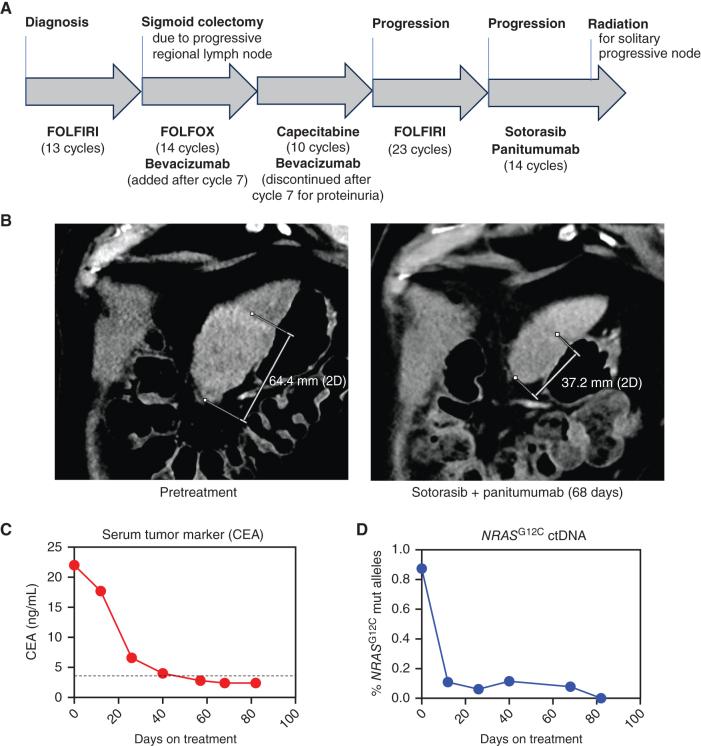
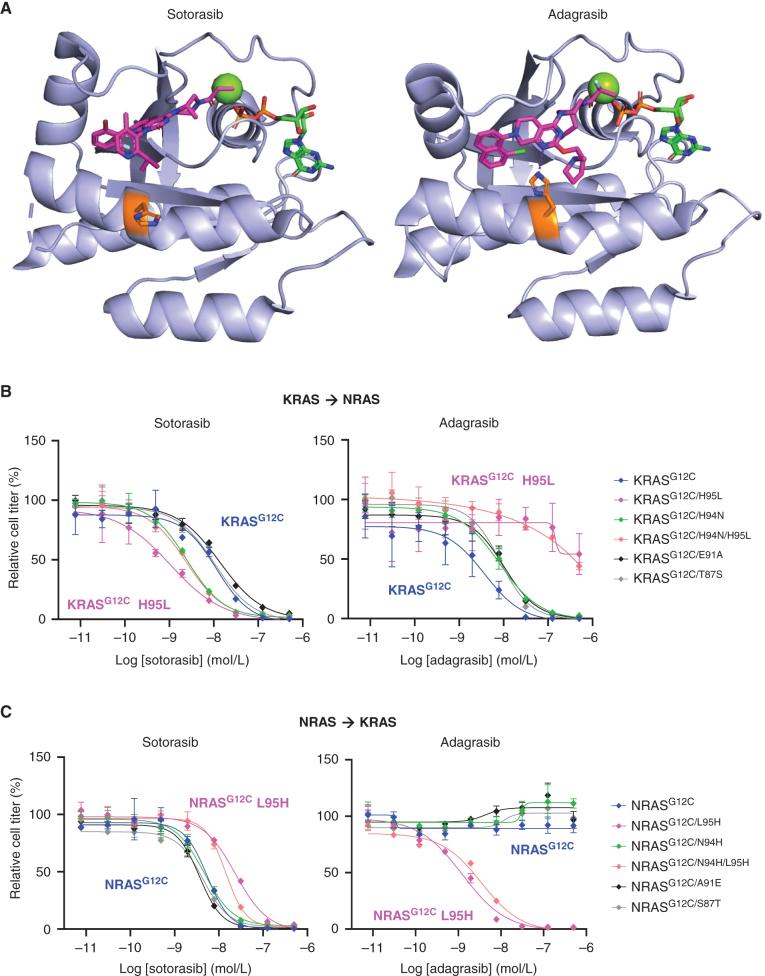
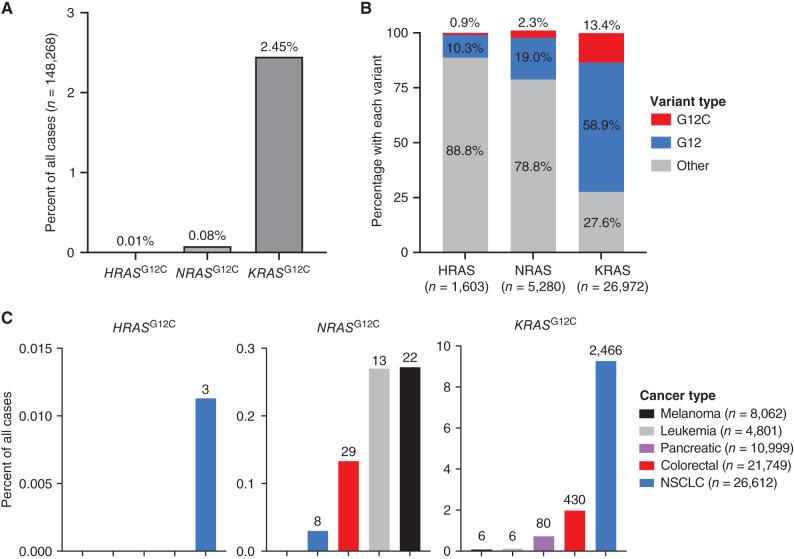
KRASG12C inhibitors, like sotorasib and adagrasib, potently and selectively inhibit KRASG12C through a covalent interaction with the mutant cysteine, driving clinical efficacy in KRASG12C tumors. Because amino acid sequences of the three main RAS isoforms-KRAS, NRAS, and HRAS-are highly similar, we hypothesized that some KRASG12C inhibitors might also target NRASG12C and/or HRASG12C, which are less common but critical oncogenic driver mutations in some tumors. Although some inhibitors, like adagrasib, were highly selective for KRASG12C, others also potently inhibited NRASG12C and/or HRASG12C. Notably, sotorasib was five-fold more potent against NRASG12C compared with KRASG12C or HRASG12C. Structural and reciprocal mutagenesis studies suggested that differences in isoform-specific binding are mediated by a single amino acid: Histidine-95 in KRAS (Leucine-95 in NRAS). A patient with NRASG12C colorectal cancer treated with sotorasib and the anti-EGFR antibody panitumumab achieved a marked tumor response, demonstrating that sotorasib can be clinically effective in NRASG12C-mutated tumors.
SIGNIFICANCE
These studies demonstrate that certain KRASG12C inhibitors effectively target all RASG12C mutations and that sotorasib specifically is a potent NRASG12C inhibitor capable of driving clinical responses. These findings have important implications for the treatment of patients with NRASG12C or HRASG12C cancers and could guide design of NRAS or HRAS inhibitors. See related commentary by Seale and Misale, p. 698. This article is featured in Selected Articles from This Issue, p. 695.
未加标注
KRASG12C 抑制剂,如索托拉西布和阿达格拉西布,通过与突变半胱氨酸的共价相互作用,强效且选择性地抑制 KRASG12C,从而在 KRASG12C 肿瘤中发挥临床疗效。由于三种主要 RAS 同工型-KRAS、NRAS 和 HRAS-的氨基酸序列高度相似,我们假设一些 KRASG12C 抑制剂也可能靶向 NRASG12C 和/或 HRASG12C,这些突变虽然不太常见,但在一些肿瘤中是关键的致癌驱动突变。虽然一些抑制剂,如阿达格拉西布,对 KRASG12C 具有高度选择性,但其他抑制剂也能强效抑制 NRASG12C 和/或 HRASG12C。值得注意的是,与 KRASG12C 或 HRASG12C 相比,索托拉西布对 NRASG12C 的抑制活性要强五倍。结构和相互突变研究表明,同工型特异性结合的差异是由单个氨基酸介导的:KRAS 中的组氨酸-95(NRAS 中的亮氨酸-95)。一名患有 NRASG12C 结直肠癌的患者接受了索托拉西布和抗 EGFR 抗体帕尼单抗治疗,取得了显著的肿瘤缓解,这表明索托拉西布在 NRASG12C 突变肿瘤中具有临床疗效。
意义
这些研究表明,某些 KRASG12C 抑制剂可有效靶向所有 RASG12C 突变,而索托拉西布是一种强效的 NRASG12C 抑制剂,能够驱动临床反应。这些发现对治疗 NRASG12C 或 HRASG12C 癌症的患者具有重要意义,并可能指导 NRAS 或 HRAS 抑制剂的设计。见本期相关评论,第 698 页。本文是本期精选文章的一部分,第 695 页。

 Zotero 插件