
空间多组学:研究心血管疾病复杂性的新工具。
Spatial multi-omics: novel tools to study the complexity of cardiovascular diseases.
机构信息
Department of Nephrology, Rheumatology, and Clinical Immunology, University Hospital RWTH Aachen, Aachen, Germany.
出版信息
Genome Med. 2024 Jan 18;16(1):14. doi: 10.1186/s13073-024-01282-y.
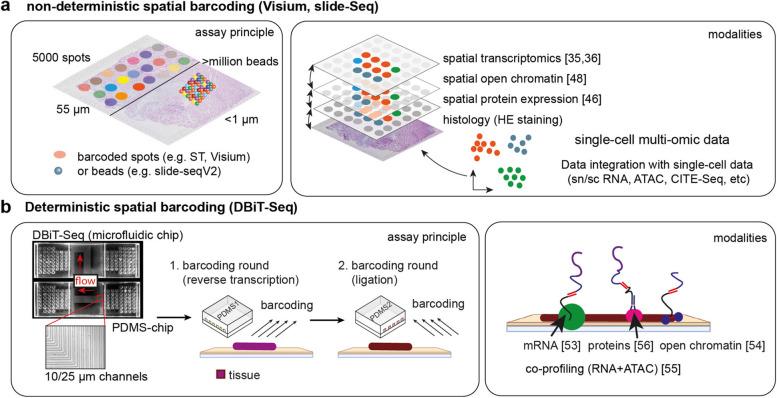
Spatial multi-omic studies have emerged as a promising approach to comprehensively analyze cells in tissues, enabling the joint analysis of multiple data modalities like transcriptome, epigenome, proteome, and metabolome in parallel or even the same tissue section. This review focuses on the recent advancements in spatial multi-omics technologies, including novel data modalities and computational approaches. We discuss the advancements in low-resolution and high-resolution spatial multi-omics methods which can resolve up to 10,000 of individual molecules at subcellular level. By applying and integrating these techniques, researchers have recently gained valuable insights into the molecular circuits and mechanisms which govern cell biology along the cardiovascular disease spectrum. We provide an overview of current data analysis approaches, with a focus on data integration of multi-omic datasets, highlighting strengths and weaknesses of various computational pipelines. These tools play a crucial role in analyzing and interpreting spatial multi-omics datasets, facilitating the discovery of new findings, and enhancing translational cardiovascular research. Despite nontrivial challenges, such as the need for standardization of experimental setups, data analysis, and improved computational tools, the application of spatial multi-omics holds tremendous potential in revolutionizing our understanding of human disease processes and the identification of novel biomarkers and therapeutic targets. Exciting opportunities lie ahead for the spatial multi-omics field and will likely contribute to the advancement of personalized medicine for cardiovascular diseases.
空间多组学研究已成为一种全面分析组织中细胞的有前途的方法,能够并行甚至在同一组织切片中联合分析多个数据模态,如转录组、表观基因组、蛋白质组和代谢组。本综述重点介绍了空间多组学技术的最新进展,包括新的数据模态和计算方法。我们讨论了低分辨率和高分辨率空间多组学方法的进展,这些方法可以在亚细胞水平上解析多达 10000 个单个分子。通过应用和整合这些技术,研究人员最近深入了解了沿心血管疾病谱控制细胞生物学的分子回路和机制。我们提供了当前数据分析方法的概述,重点是多组学数据集的整合,突出了各种计算管道的优缺点。这些工具在分析和解释空间多组学数据集方面发挥着关键作用,有助于发现新的发现,并增强转化心血管研究。尽管存在重大挑战,例如需要标准化实验设置、数据分析和改进计算工具,但空间多组学的应用在彻底改变我们对人类疾病过程的理解和鉴定新的生物标志物和治疗靶点方面具有巨大潜力。空间多组学领域充满了令人兴奋的机遇,有望为心血管疾病的个性化医疗做出贡献。


 Zotero 插件