
自噬标志物在阿尔茨海默病、路易体痴呆和额颞叶痴呆中发生改变。
Autophagy Markers Are Altered in Alzheimer's Disease, Dementia with Lewy Bodies and Frontotemporal Dementia.
机构信息
Molecular Markers Laboratory, IRCCS Istituto Centro San Giovanni di Dio Fatebenefratelli, 25125 Brescia, Italy.
Neurology 5/Neuropathology Unit, Fondazione IRCCS Istituto Neurologico Carlo Besta, 20133 Milan, Italy.
出版信息
Int J Mol Sci. 2024 Jan 17;25(2):1125. doi: 10.3390/ijms25021125.
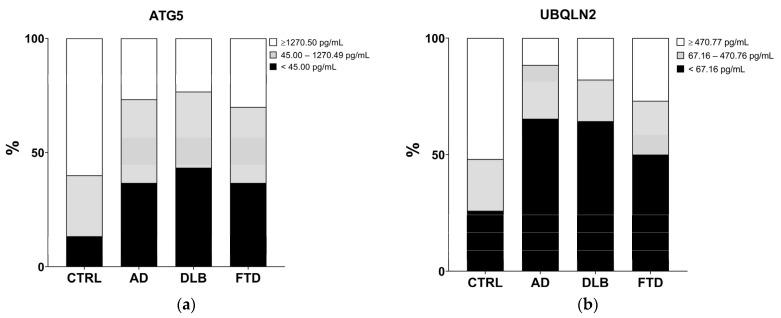
The accumulation of protein aggregates defines distinct, yet overlapping pathologies such as Alzheimer's disease (AD), dementia with Lewy bodies (DLB), and frontotemporal dementia (FTD). In this study, we investigated ATG5, UBQLN2, ULK1, and LC3 concentrations in 66 brain specimens and 120 plasma samples from AD, DLB, FTD, and control subjects (CTRL). Protein concentration was measured with ELISA kits in temporal, frontal, and occipital cortex specimens of 32 AD, 10 DLB, 10 FTD, and 14 CTRL, and in plasma samples of 30 AD, 30 DLB, 30 FTD, and 30 CTRL. We found alterations in ATG5, UBQLN2, ULK1, and LC3 levels in patients; ATG5 and UBQLN2 levels were decreased in both brain specimens and plasma samples of patients compared to those of the CTRL, while LC3 levels were increased in the frontal cortex of DLB and FTD patients. In this study, we demonstrate alterations in different steps related to ATG5, UBQLN2, and LC3 autophagy pathways in DLB and FTD patients. Molecular alterations in the autophagic processes could play a role in a shared pathway involved in the pathogenesis of neurodegeneration, supporting the hypothesis of a common molecular mechanism underlying major neurodegenerative dementias and suggesting different potential therapeutic targets in the autophagy pathway for these disorders.
蛋白质聚集体的积累定义了不同但重叠的病理学,如阿尔茨海默病(AD)、路易体痴呆(DLB)和额颞叶痴呆(FTD)。在这项研究中,我们研究了 66 个脑标本和 120 个 AD、DLB、FTD 和对照(CTRL)受试者的血浆样本中的 ATG5、UBQLN2、ULK1 和 LC3 浓度。使用 ELISA 试剂盒测量了 32 名 AD、10 名 DLB、10 名 FTD 和 14 名 CTRL 受试者颞叶、额叶和枕叶皮质标本以及 30 名 AD、30 名 DLB、30 名 FTD 和 30 名 CTRL 受试者血浆样本中的蛋白质浓度。我们发现患者的 ATG5、UBQLN2、ULK1 和 LC3 水平发生了变化;与 CTRL 相比,患者的脑标本和血浆样本中 ATG5 和 UBQLN2 水平降低,而 LC3 水平在 DLB 和 FTD 患者的额叶中升高。在这项研究中,我们证明了 DLB 和 FTD 患者中与 ATG5、UBQLN2 和 LC3 自噬途径相关的不同步骤发生了改变。自噬过程中的分子改变可能在神经退行性变发病机制中的共同途径中发挥作用,支持主要神经退行性痴呆症存在共同分子机制的假设,并为这些疾病的自噬途径提供了不同的潜在治疗靶点。

 Zotero 插件