
S-棕榈酰化在神经疾病中的作用:对zDHHC家族的影响
The role of s-palmitoylation in neurological diseases: implication for zDHHC family.
作者信息
Liao Dan, Huang Yutao, Liu Dan, Zhang Haofuzi, Shi Xinyu, Li Xin, Luo Peng
机构信息
Department of Neurosurgery, Xijing Hospital, Fourth Military Medical University, Xi'an, China.
School of Life Science, Northwest University, Xi'an, China.
出版信息
Front Pharmacol. 2024 Jan 16;14:1342830. doi: 10.3389/fphar.2023.1342830. eCollection 2023.
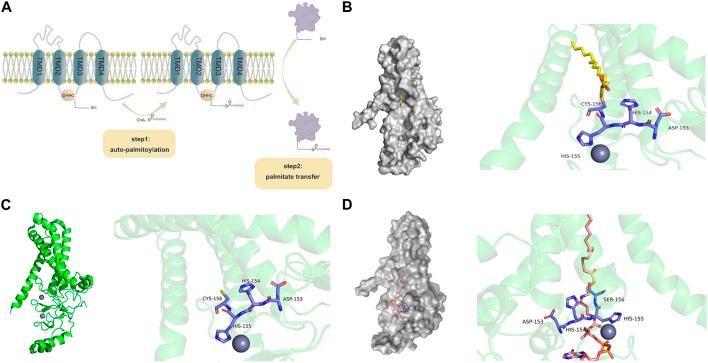
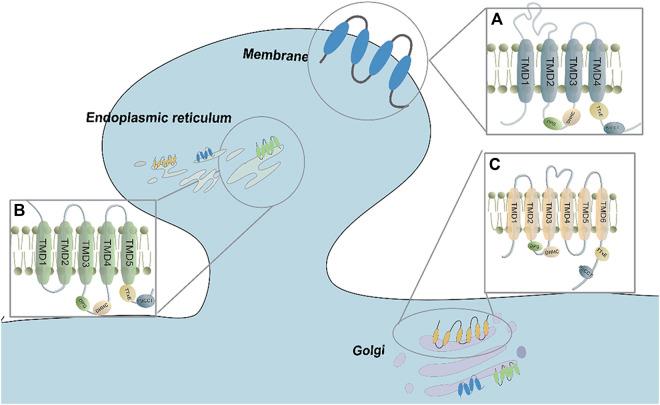
S-palmitoylation is a reversible posttranslational modification, and the palmitoylation reaction in human-derived cells is mediated by the zDHHC family, which is composed of S-acyltransferase enzymes that possess the DHHC (Asp-His-His-Cys) structural domain. zDHHC proteins form an autoacylation intermediate, which then attaches the fatty acid to cysteine a residue in the target protein. zDHHC proteins sublocalize in different neuronal structures and exert dif-ferential effects on neurons. In humans, many zDHHC proteins are closely related to human neu-rological disor-ders. This review focuses on a variety of neurological disorders, such as AD (Alz-heimer's disease), HD (Huntington's disease), SCZ (schizophrenia), XLID (X-linked intellectual disability), attention deficit hyperactivity disorder and glioma. In this paper, we will discuss and summarize the research progress regarding the role of zDHHC proteins in these neu-rological disorders.
S-棕榈酰化是一种可逆的翻译后修饰,人源细胞中的棕榈酰化反应由zDHHC家族介导,该家族由具有DHHC(天冬氨酸-组氨酸-组氨酸-半胱氨酸)结构域的S-酰基转移酶组成。zDHHC蛋白形成一种自酰化中间体,然后将脂肪酸连接到靶蛋白中的半胱氨酸残基上。zDHHC蛋白定位于不同的神经元结构,并对神经元产生不同的影响。在人类中,许多zDHHC蛋白与人类神经系统疾病密切相关。本综述聚焦于多种神经系统疾病,如阿尔茨海默病(AD)、亨廷顿舞蹈病(HD)、精神分裂症(SCZ)、X连锁智力障碍(XLID)、注意力缺陷多动障碍和胶质瘤。在本文中,我们将讨论并总结关于zDHHC蛋白在这些神经系统疾病中作用的研究进展。
 Zotero 插件