
SIRT3/6:在抗纤维化和抗衰老斗争中的惊人挑战与机遇。
SIRT3/6: an amazing challenge and opportunity in the fight against fibrosis and aging.
机构信息
School of Queen Mary, Nanchang University, Nanchang, 330031, China.
School of Basic Medicine, Fourth Military Medical University, Xi'an, 710032, China.
出版信息
Cell Mol Life Sci. 2024 Jan 31;81(1):69. doi: 10.1007/s00018-023-05093-z.
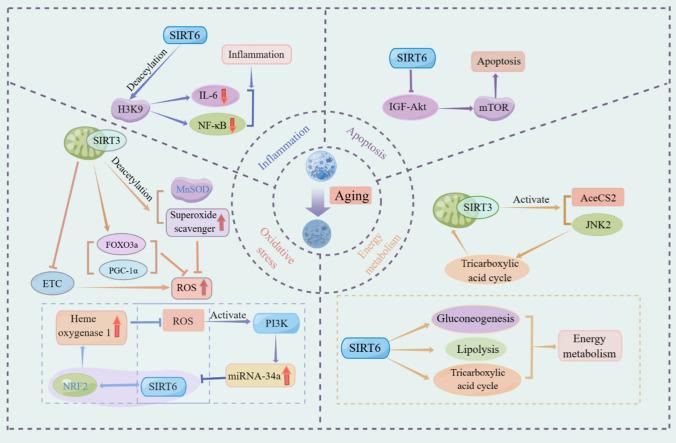
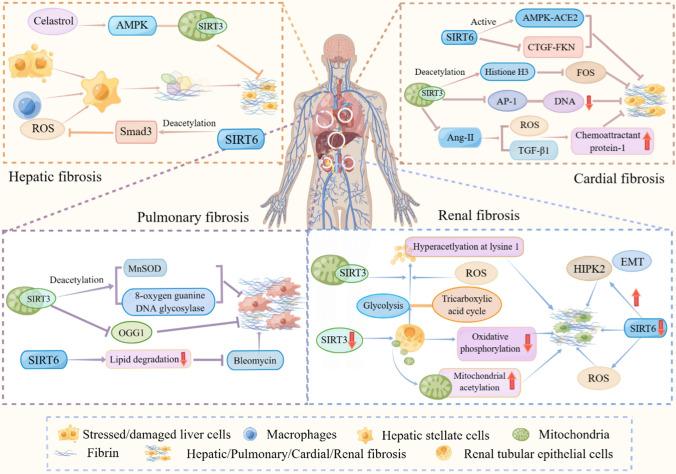
Fibrosis is a typical aging-related pathological process involving almost all organs, including the heart, kidney, liver, lung, and skin. Fibrogenesis is a highly orchestrated process defined by sequences of cellular response and molecular signals mechanisms underlying the disease. In pathophysiologic conditions associated with organ fibrosis, a variety of injurious stimuli such as metabolic disorders, epigenetic changes, and aging may induce the progression of fibrosis. Sirtuins protein is a kind of deacetylase which can regulate cell metabolism and participate in a variety of cell physiological functions. In this review, we outline our current understanding of common principles of fibrogenic mechanisms and the functional role of SIRT3/6 in aging-related fibrosis. In addition, sequences of novel protective strategies have been identified directly or indirectly according to these mechanisms. Here, we highlight the role and biological function of SIRT3/6 focus on aging fibrosis, as well as their inhibitors and activators as novel preventative or therapeutic interventions for aging-related tissue fibrosis.
纤维化是一种典型的与年龄相关的病理过程,几乎涉及所有器官,包括心脏、肾脏、肝脏、肺和皮肤。纤维发生是一个高度协调的过程,由细胞反应和分子信号机制的序列定义,这些机制是疾病的基础。在与器官纤维化相关的病理生理条件下,代谢紊乱、表观遗传改变和衰老等多种损伤性刺激可能会导致纤维化的进展。Sirtuins 蛋白是一种去乙酰化酶,可调节细胞代谢并参与多种细胞生理功能。在这篇综述中,我们概述了我们对纤维化机制的常见原理和 SIRT3/6 在与年龄相关的纤维化中的功能作用的理解。此外,还根据这些机制确定了直接或间接的新型保护策略序列。在这里,我们重点介绍 SIRT3/6 在衰老纤维化中的作用和生物学功能,以及它们的抑制剂和激活剂作为预防或治疗与年龄相关的组织纤维化的新型干预措施。
 Zotero 插件