
靶向M2样肿瘤相关巨噬细胞是克服抗肿瘤耐药性的一种潜在治疗方法。
Targeting M2-like tumor-associated macrophages is a potential therapeutic approach to overcome antitumor drug resistance.
作者信息
Wang Shujing, Wang Jingrui, Chen Zhiqiang, Luo Jiamin, Guo Wei, Sun Lingling, Lin Lizhu
机构信息
The First Clinical Medical School of Guangzhou University of Chinese Medicine, Guangzhou, China.
The First Affiliated Hospital of Guangzhou University of Chinese Medicine, Guangzhou, China.
出版信息
NPJ Precis Oncol. 2024 Feb 10;8(1):31. doi: 10.1038/s41698-024-00522-z.
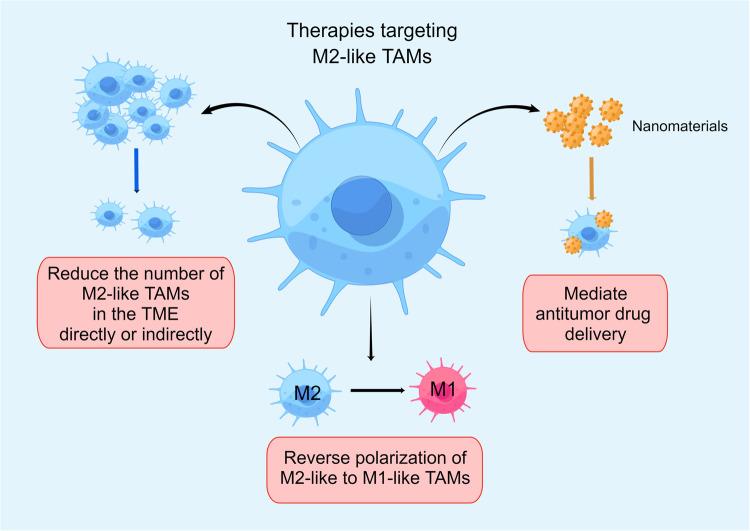
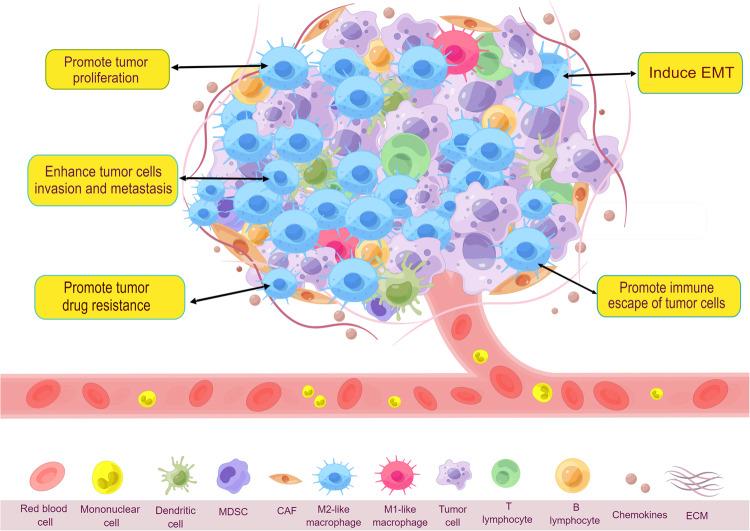
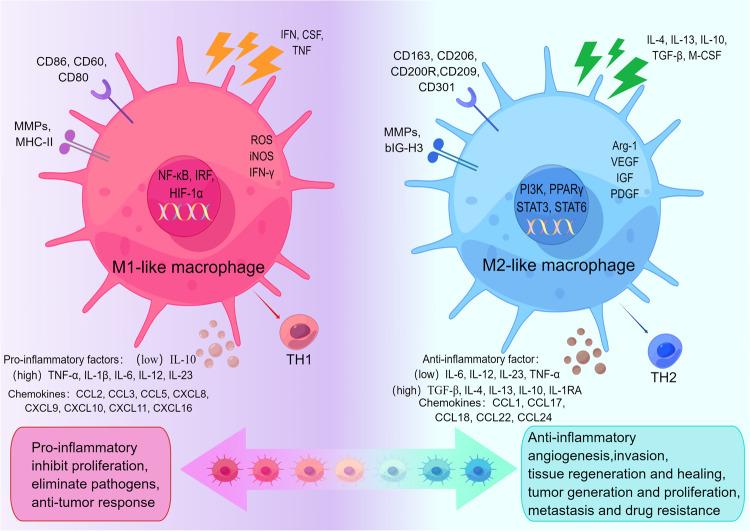
Tumor drug resistance emerges from the interaction of two critical factors: tumor cellular heterogeneity and the immunosuppressive nature of the tumor microenvironment (TME). Tumor-associated macrophages (TAMs) constitute essential components of the TME. M2-like TAMs are essential in facilitating tumor metastasis as well as augmenting the drug resistance of tumors. This review encapsulates the mechanisms that M2-like TAMs use to promote tumor drug resistance. We also describe the emerging therapeutic strategies that are currently targeting M2-like TAMs in combination with other antitumor drugs, with some still undergoing clinical trial evaluation. Furthermore, we summarize and analyze various existing approaches for developing novel drugs that target M2-like TAMs to overcome tumor resistance, highlighting how targeting M2-like TAMs can effectively stop tumor growth, metastasis, and overcome tumor drug resistance.
肿瘤耐药性源于两个关键因素的相互作用
肿瘤细胞异质性和肿瘤微环境(TME)的免疫抑制特性。肿瘤相关巨噬细胞(TAM)是TME的重要组成部分。M2样TAM在促进肿瘤转移以及增强肿瘤耐药性方面至关重要。本综述总结了M2样TAM用于促进肿瘤耐药性的机制。我们还描述了目前针对M2样TAM与其他抗肿瘤药物联合使用的新兴治疗策略,其中一些仍在进行临床试验评估。此外,我们总结并分析了开发靶向M2样TAM以克服肿瘤耐药性的新型药物的各种现有方法,强调了靶向M2样TAM如何有效地阻止肿瘤生长、转移并克服肿瘤耐药性。
 Zotero 插件