
原发性人 M2 巨噬细胞亚型可通过水性代谢物谱区分。
Primary Human M2 Macrophage Subtypes Are Distinguishable by Aqueous Metabolite Profiles.
机构信息
Department of Chemistry and Biochemistry, Montana State University, Bozeman, MT 59717, USA.
出版信息
Int J Mol Sci. 2024 Feb 18;25(4):2407. doi: 10.3390/ijms25042407.
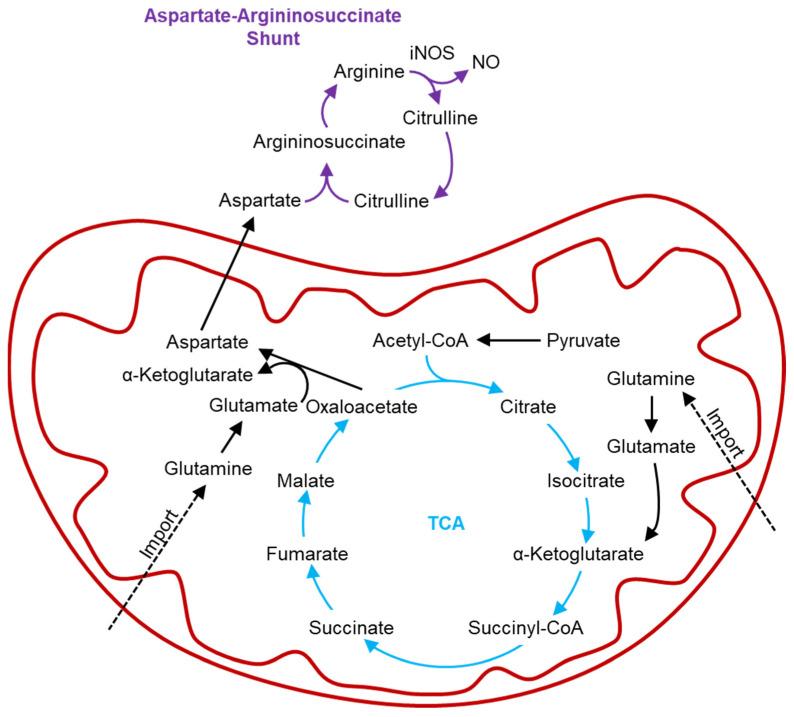
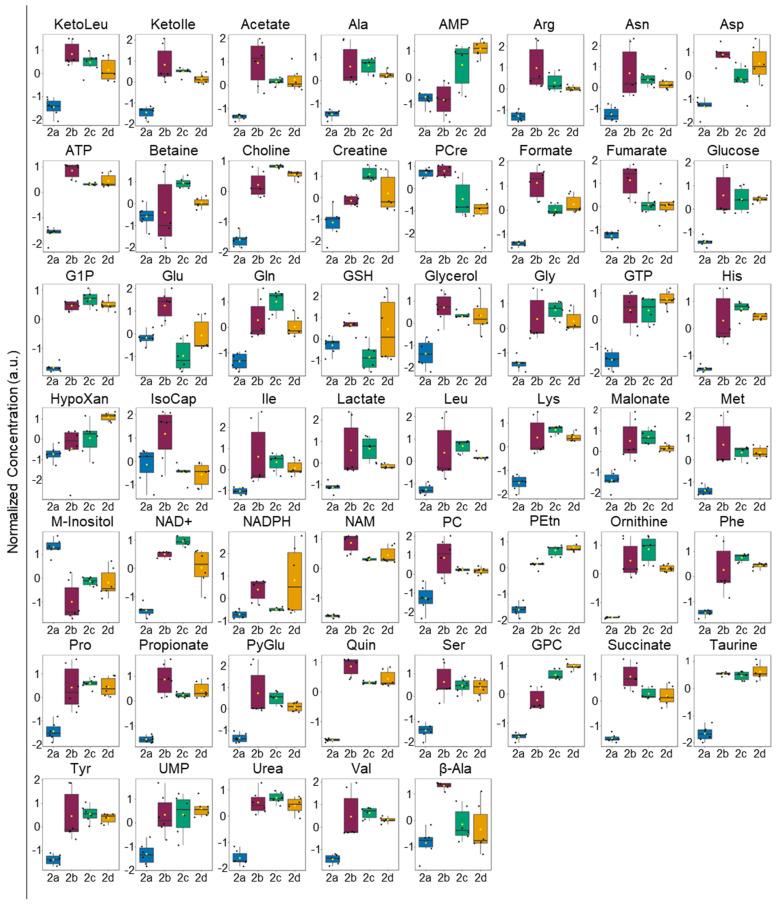
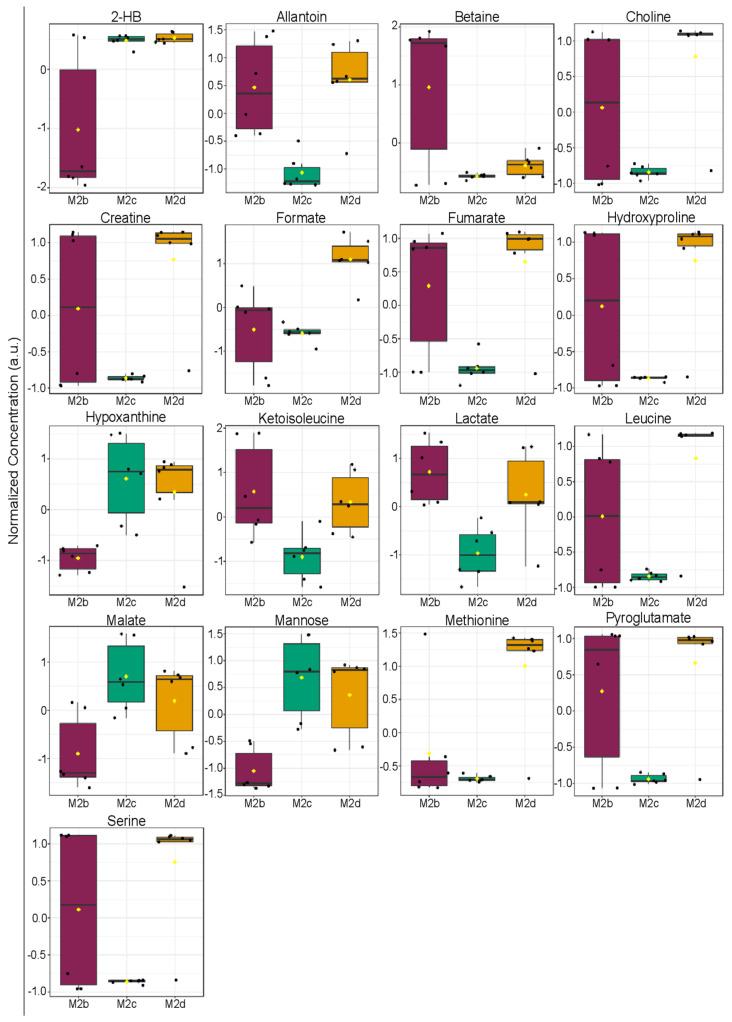
The complexity of macrophage (MΦ) plasticity and polarization states, which include classically activated pro-inflammatory (M1) and alternatively activated anti-inflammatory (M2) MΦ phenotypes, is becoming increasingly appreciated. Within the M2 MΦ polarization state, M2a, M2b, M2c, and M2d MΦ subcategories have been defined based on their expression of specific cell surface receptors, secreted cytokines, and specialized immune effector functions. The importance of immunometabolic networks in mediating the function and regulation of MΦ immune responses is also being increasingly recognized, although the exact mechanisms and extent of metabolic modulation of MΦ subtype phenotypes and functions remain incompletely understood. In this study, proton (H) nuclear magnetic resonance (NMR) metabolomics was employed to determine the polar metabolomes of M2 MΦ subtypes and to investigate the relationship between aqueous metabolite profiles and M2 MΦ functional phenotypes. Results from this study demonstrate that M2a MΦs are most distinct from M2b, M2c, and M2d MΦ subtypes, and that M2b MΦs display several metabolic traits associated with an M1-like MΦ phenotype. The significance of metabolome differences for metabolites implicated in glycolysis, the tricarboxylic acid (TCA) cycle, phospholipid metabolism, and creatine-phosphocreatine cycling is discussed. Altogether, this study provides biochemical insights into the role of metabolism in mediating the specialized effector functions of distinct M2 MΦ subtypes and supports the concept of a continuum of macrophage activation states rather than two well-separated and functionally distinct M1/M2 MΦ classes, as originally proposed within a classical M1/M2 MΦ framework.
巨噬细胞(MΦ)可塑性和极化状态的复杂性日益受到关注,其中包括经典激活的促炎(M1)和替代激活的抗炎(M2)MΦ表型。在 M2 MΦ极化状态中,根据其表达的特定细胞表面受体、分泌的细胞因子和特化的免疫效应功能,已经定义了 M2a、M2b、M2c 和 M2d MΦ亚型。免疫代谢网络在介导 MΦ免疫反应的功能和调节中的重要性也越来越受到重视,尽管代谢调节 MΦ亚型表型和功能的确切机制和程度仍不完全清楚。在这项研究中,质子(H)核磁共振(NMR)代谢组学被用于确定 M2 MΦ亚型的极性代谢组,并研究水相代谢物谱与 M2 MΦ功能表型之间的关系。该研究的结果表明,M2a MΦ与 M2b、M2c 和 M2d MΦ亚型最为不同,而 M2b MΦ表现出与 M1 样 MΦ表型相关的几种代谢特征。讨论了与糖酵解、三羧酸(TCA)循环、磷脂代谢和磷酸肌酸循环相关的代谢物在代谢组差异中的意义。总的来说,这项研究为代谢在介导不同 M2 MΦ亚型的特化效应功能中的作用提供了生化见解,并支持了一种巨噬细胞激活状态的连续体而不是最初在经典 M1/M2 MΦ框架中提出的两个截然分开且功能不同的 M1/M2 MΦ 类别的概念。





 Zotero 插件