
靶向代谢重编程调控巨噬细胞极化治疗狼疮性肾炎。
Regulation of macrophage polarization by targeted metabolic reprogramming for the treatment of lupus nephritis.
机构信息
The Fifth Clinical Medical College of Shanxi Medical University, Xinjian South Road No. 56, Yingze District, Taiyuan, Shanxi, 030001, China.
The Third Clinical College, Shanxi University of Chinese Medicine, Jinzhong, Shanxi, 030619, China.
出版信息
Mol Med. 2024 Jun 25;30(1):96. doi: 10.1186/s10020-024-00866-z.
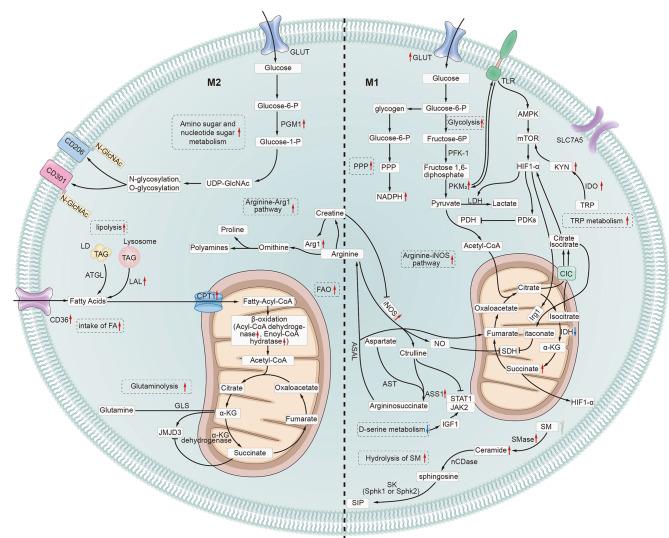
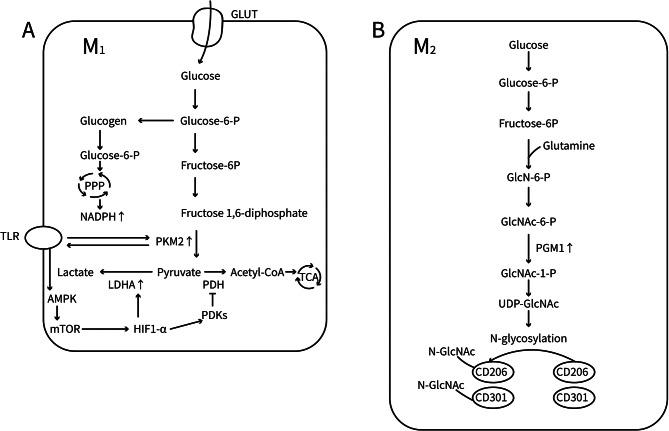
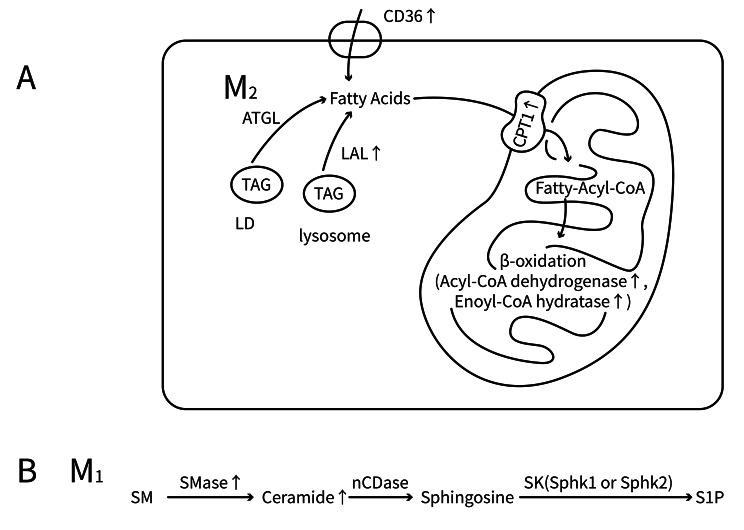
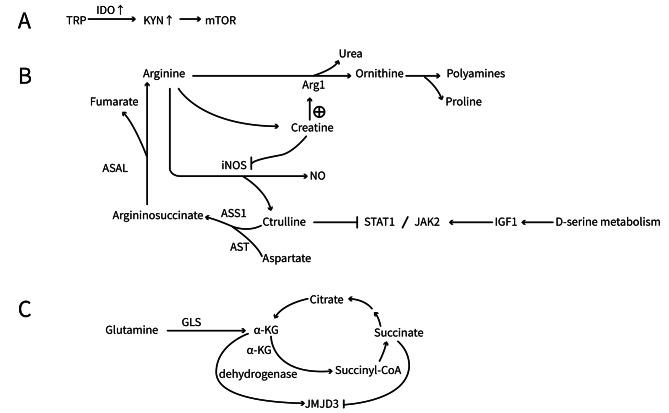
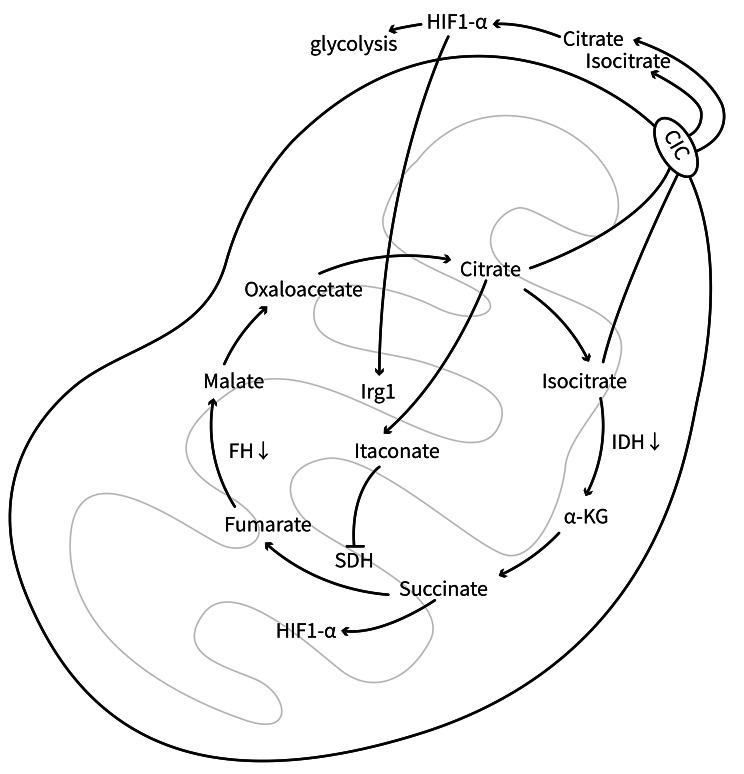
Lupus nephritis (LN) is a severe and common manifestation of systemic lupus erythematosus (SLE) that is frequently identified with a poor prognosis. Macrophages play an important role in its pathogenesis. Different macrophage subtypes have different effects on lupus-affected kidneys. Based on their origin, macrophages can be divided into monocyte-derived macrophages (MoMacs) and tissue-resident macrophages (TrMacs). During nephritis, TrMacs develop a hybrid pro-inflammatory and anti-inflammatory functional phenotype, as they do not secrete arginase or nitric oxide (NO) when stimulated by cytokines. The infiltration of these mixed-phenotype macrophages is related to the continuous damage caused by immune complexes and exposure to circulating inflammatory mediators, which is an indication of the failure to resolve inflammation. On the other hand, MoMacs differentiate into M1 or M2 cells under cytokine stimulation. M1 macrophages are pro-inflammatory and secrete pro-inflammatory cytokines, while the M2 main phenotype is essentially anti-inflammatory and promotes tissue repair. Conversely, MoMacs undergo differentiation into M1 or M2 cells in response to cytokine stimulation. M1 macrophages are considered pro-inflammatory cells and secrete pro-inflammatory mediators, whereas the M2 main phenotype is primarily anti-inflammatory and promotes tissue repair. Moreover, based on cytokine expression, M2 macrophages can be further divided into M2a, M2b, and M2c phenotypes. M2a and M2c have anti-inflammatory effects and participate in tissue repair, while M2b cells have immunoregulatory and pro-inflammatory properties. Further, memory macrophages also have a role in the advancement of LN. Studies have demonstrated that the polarization of macrophages is controlled by multiple metabolic pathways, such as glycolysis, the pentose phosphate pathway, fatty acid oxidation, sphingolipid metabolism, the tricarboxylic acid cycle, and arginine metabolism. The changes in these metabolic pathways can be regulated by substances such as fish oil, polyenylphosphatidylcholine, taurine, fumaric acid, metformin, and salbutamol, which inhibit M1 polarization of macrophages and promote M2 polarization, thereby alleviating LN.
狼疮性肾炎(LN)是系统性红斑狼疮(SLE)的一种严重且常见的表现,常伴有不良预后。巨噬细胞在其发病机制中起重要作用。不同的巨噬细胞亚型对狼疮性肾脏有不同的影响。根据其起源,巨噬细胞可分为单核细胞衍生的巨噬细胞(MoMacs)和组织驻留巨噬细胞(TrMacs)。在肾炎期间,TrMacs 表现出混合的促炎和抗炎功能表型,因为它们在受到细胞因子刺激时不分泌精氨酸酶或一氧化氮(NO)。这些混合表型巨噬细胞的浸润与免疫复合物引起的持续损伤以及循环炎症介质的暴露有关,这表明炎症无法得到解决。另一方面,MoMacs 在细胞因子刺激下分化为 M1 或 M2 细胞。M1 巨噬细胞是促炎的,并分泌促炎细胞因子,而 M2 主要表型本质上是抗炎的,并促进组织修复。相反,MoMacs 在细胞因子刺激下分化为 M1 或 M2 细胞。M1 巨噬细胞被认为是促炎细胞,分泌促炎介质,而 M2 主要表型主要是抗炎的,并促进组织修复。此外,根据细胞因子表达,M2 巨噬细胞可以进一步分为 M2a、M2b 和 M2c 表型。M2a 和 M2c 具有抗炎作用并参与组织修复,而 M2b 细胞具有免疫调节和促炎特性。此外,记忆巨噬细胞在 LN 的进展中也发挥作用。研究表明,巨噬细胞的极化受多种代谢途径的控制,如糖酵解、戊糖磷酸途径、脂肪酸氧化、鞘脂代谢、三羧酸循环和精氨酸代谢。这些代谢途径的变化可以通过鱼油、多烯磷脂酰胆碱、牛磺酸、富马酸、二甲双胍和沙丁胺醇等物质来调节,这些物质抑制巨噬细胞的 M1 极化并促进 M2 极化,从而缓解 LN。


 Zotero 插件