
关于处理新冠肺炎的集成学习方法的简要综述与科学计量分析
A brief review and scientometric analysis on ensemble learning methods for handling COVID-19.
作者信息
Shayegan Mohammad Javad
机构信息
Department of Computer Engineering, University of Science and Culture, Tehran, Iran.
出版信息
Heliyon. 2024 Feb 20;10(4):e26694. doi: 10.1016/j.heliyon.2024.e26694. eCollection 2024 Feb 29.
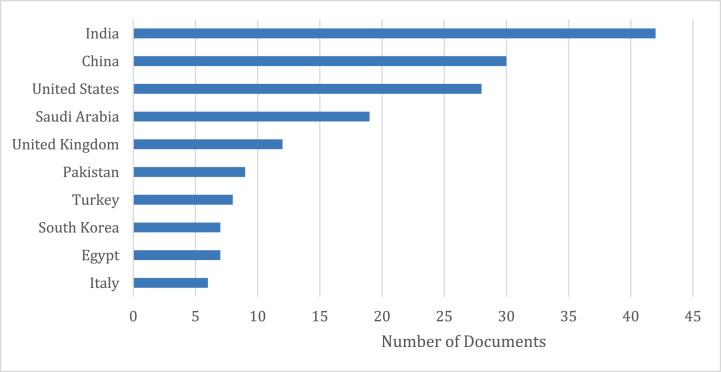
Numerous efforts and research have been conducted worldwide to combat the coronavirus disease 2019 (COVID-19) pandemic. In this regard, some researchers have focused on deep and machine-learning approaches to discover more about this disease. There have been many articles on using ensemble learning methods for COVID-19 detection. Still, there seems to be no scientometric analysis or a brief review of these researches. Hence, a combined method of scientometric analysis and brief review was used to study the published articles that employed an ensemble learning approach to detect COVID-19. This research used both methods to overcome their limitations, leading to enhanced and reliable outcomes. The related articles were retrieved from the Scopus database. Then a two-step procedure was employed. A concise review of the collected articles was conducted. Then they underwent scientometric and bibliometric analyses. The findings revealed that convolutional neural network (CNN) is the mostly employed algorithm, while support vector machine (SVM), random forest, Resnet, DenseNet, and visual geometry group (VGG) were also frequently used. Additionally, China has had a significant presence in the numerous top-ranking categories of this field of research. Both study phases yielded valuable results and rankings.
全球范围内为抗击2019冠状病毒病(COVID-19)大流行做出了诸多努力并开展了大量研究。在这方面,一些研究人员专注于采用深度学习和机器学习方法来更深入地了解这种疾病。关于使用集成学习方法进行COVID-19检测的文章众多。然而,似乎尚无对这些研究的科学计量分析或简要综述。因此,本研究采用科学计量分析与简要综述相结合的方法,对采用集成学习方法检测COVID-19的已发表文章进行研究。本研究运用这两种方法以克服其局限性,从而得出更完善且可靠的结果。相关文章从Scopus数据库中检索获得。随后采用两步程序。首先对收集到的文章进行简要综述。然后对其进行科学计量和文献计量分析。研究结果表明,卷积神经网络(CNN)是最常使用的算法,同时支持向量机(SVM)、随机森林、残差网络(Resnet)、密集连接网络(DenseNet)和视觉几何组(VGG)也被频繁使用。此外,中国在该研究领域的众多顶级类别中占据重要地位。两个研究阶段均产生了有价值的结果和排名。





 Zotero 插件