
上海多中心重症或危重症 COVID-19 病例队列中抗 I 型干扰素中和自身抗体的流行情况
Prevalence of Neutralizing Autoantibodies Against Type I Interferon in a Multicenter Cohort of Severe or Critical COVID-19 Cases in Shanghai.
作者信息
Shi Dongling, Chen Jie, Zhao Meng, Tang Yuanjia, Zhao Chen, Jin Yinpeng, Tian Di, Liao Yixin, Wang Xuebi, Wang Wei, Fan Xiaohong, Yi Zhigang, Chen Xiaohua, Ling Yun
机构信息
Department of Infectious Diseases, Shanghai Public Health Clinical Center, Fudan University, Shanghai, China.
Scientific Research Center, Shanghai Public Health Clinical Center, Fudan University, Shanghai, China.
出版信息
J Clin Immunol. 2024 Mar 10;44(3):80. doi: 10.1007/s10875-024-01683-z.
OBJECTIVE
We sought to explore the prevalence of type I interferon-neutralizing antibodies in a Chinese cohort and its clinical implications during the Omicron variant wave of SARS-CoV-2.
METHODS
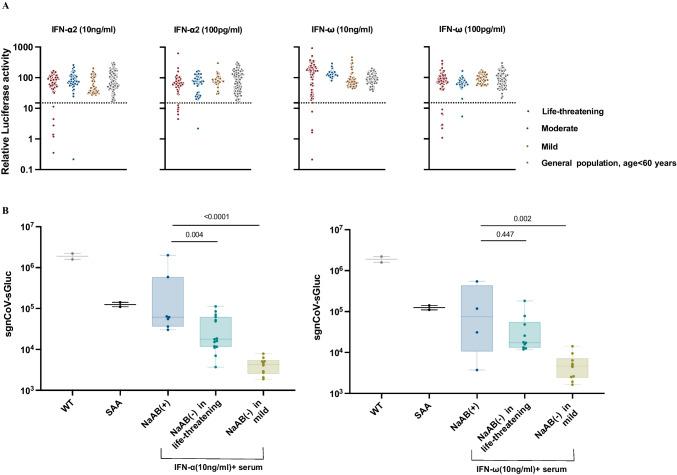
Type I interferon (IFN) autoantibodies possessing neutralizing capabilities were identified using luciferase assays. The capacity of the autoantibodies for in vitro interference with antiviral activity of IFN was assessed by using a SARS-CoV-2 replicon system. An analysis of the demographic and clinical profiles of patients exhibiting neutralizing antibodies was also conducted.
RESULTS
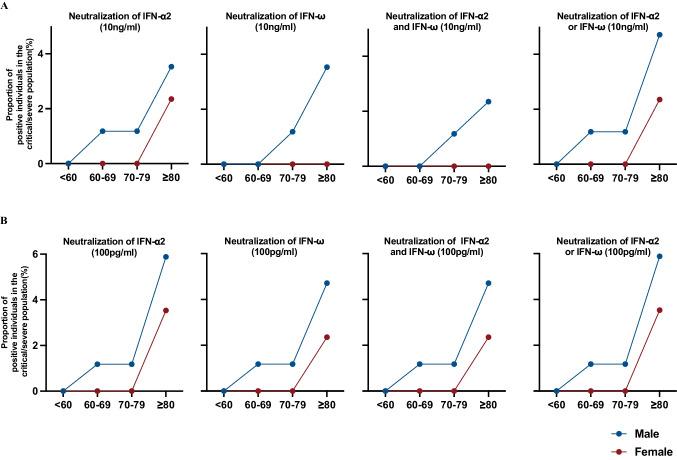
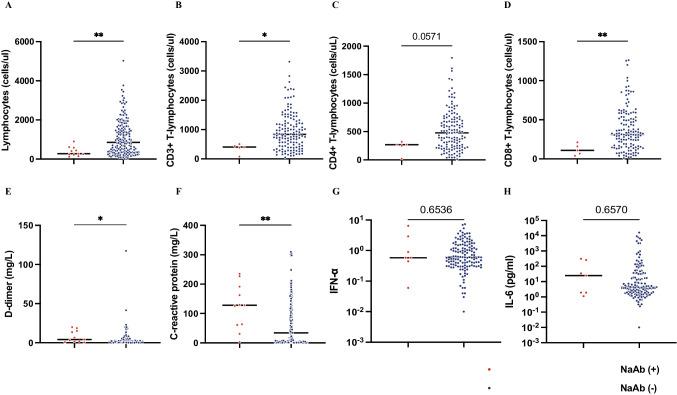
In this cohort, 11.8% of severe/critical cases exhibited the existence of type I IFN-neutralizing antibodies, specifically targeting IFN-α2, IFN-ω, or both, with an elderly male patient tendency. Notably, these antibodies exerted a pronounced inhibitory effect on the antiviral activity of IFN against SARS-CoV-2 under controlled in vitro conditions. Furthermore, a noteworthy correlation was discerned between the presence of these neutralizing antibodies and critical clinical parameters, including C-reactive protein (CRP) levels, D-dimer levels, and lymphocyte counts.
CONCLUSION
The presence of type I IFN-neutralizing antibodies is a pervasive risk factor for severe/critical COVID-19 in the Chinese population.
目的
我们试图在中国队列中探索I型干扰素中和抗体的流行率及其在新冠病毒奥密克戎变异株流行期间的临床意义。
方法
使用荧光素酶测定法鉴定具有中和能力的I型干扰素(IFN)自身抗体。通过使用新冠病毒复制子系统评估自身抗体体外干扰IFN抗病毒活性的能力。还对出现中和抗体的患者的人口统计学和临床特征进行了分析。
结果
在该队列中,11.8%的重症/危重症病例存在I型干扰素中和抗体,这些抗体特异性靶向IFN-α2、IFN-ω或两者,且有老年男性患者倾向。值得注意的是,在体外可控条件下,这些抗体对IFN抗新冠病毒的抗病毒活性有明显抑制作用。此外,在这些中和抗体与关键临床参数之间发现了显著相关性,包括C反应蛋白(CRP)水平、D-二聚体水平和淋巴细胞计数。
结论
I型干扰素中和抗体的存在是中国人群中重症/危重症新冠病毒感染的普遍危险因素。

 Zotero 插件