
阿尔茨海默病小鼠模型的最新进展。
Updates on mouse models of Alzheimer's disease.
作者信息
Zhong Michael Z, Peng Thomas, Duarte Mariana Lemos, Wang Minghui, Cai Dongming
机构信息
Department of Neurology, Icahn School of Medicine at Mount Sinai, New York, NY, 10029, USA.
Department of Genetics and Genomic Sciences, Icahn School of Medicine at Mount Sinai, New York, NY, 10029, USA.
出版信息
Mol Neurodegener. 2024 Mar 11;19(1):23. doi: 10.1186/s13024-024-00712-0.
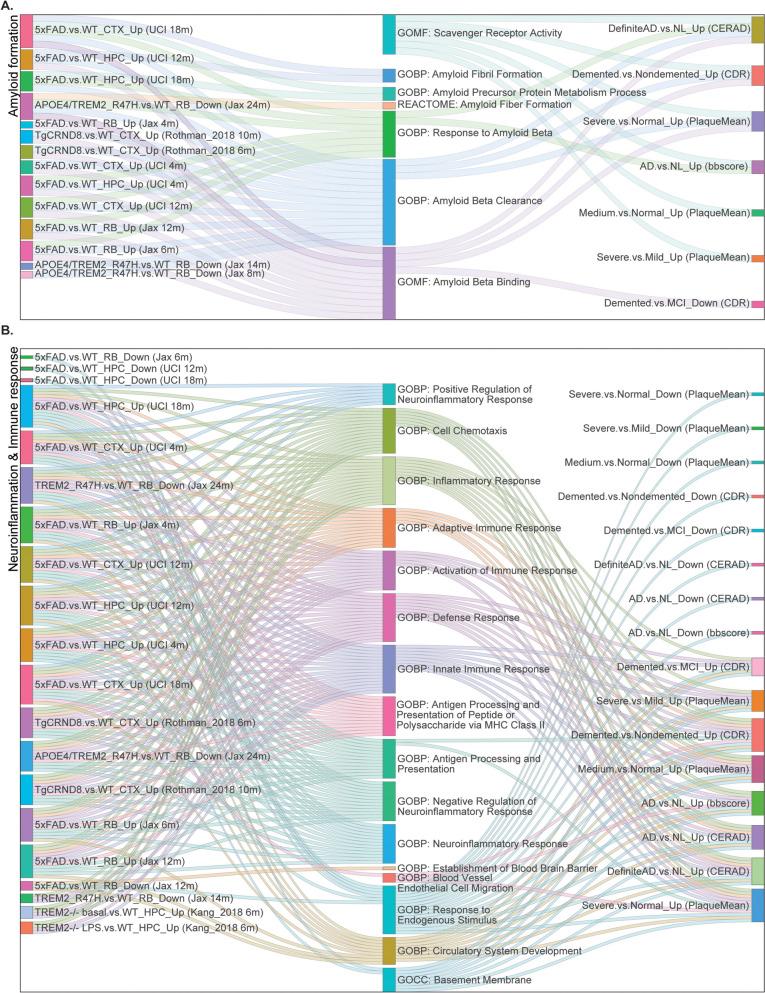
Alzheimer's disease (AD) is the most common neurodegenerative disease in the United States (US). Animal models, specifically mouse models have been developed to better elucidate disease mechanisms and test therapeutic strategies for AD. A large portion of effort in the field was focused on developing transgenic (Tg) mouse models through over-expression of genetic mutations associated with familial AD (FAD) patients. Newer generations of mouse models through knock-in (KI)/knock-out (KO) or CRISPR gene editing technologies, have been developed for both familial and sporadic AD risk genes with the hope to more accurately model proteinopathies without over-expression of human AD genes in mouse brains. In this review, we summarized the phenotypes of a few commonly used as well as newly developed mouse models in translational research laboratories including the presence or absence of key pathological features of AD such as amyloid and tau pathology, synaptic and neuronal degeneration as well as cognitive and behavior deficits. In addition, advantages and limitations of these AD mouse models have been elaborated along with discussions of any sex-specific features. More importantly, the omics data from available AD mouse models have been analyzed to categorize molecular signatures of each model reminiscent of human AD brain changes, with the hope to guide future selection of most suitable models for specific research questions to be addressed in the AD field.
阿尔茨海默病(AD)是美国最常见的神经退行性疾病。已经开发了动物模型,特别是小鼠模型,以更好地阐明疾病机制并测试AD的治疗策略。该领域的大部分工作都集中在通过过表达与家族性AD(FAD)患者相关的基因突变来开发转基因(Tg)小鼠模型。通过敲入(KI)/敲除(KO)或CRISPR基因编辑技术,已经为家族性和散发性AD风险基因开发了新一代小鼠模型,希望能更准确地模拟蛋白病,而不会在小鼠大脑中过度表达人类AD基因。在这篇综述中,我们总结了转化研究实验室中一些常用的以及新开发的小鼠模型的表型,包括AD关键病理特征的存在与否,如淀粉样蛋白和tau病理、突触和神经元变性以及认知和行为缺陷。此外,还阐述了这些AD小鼠模型的优点和局限性,并讨论了任何性别特异性特征。更重要的是,对现有AD小鼠模型的组学数据进行了分析,以对每个模型的分子特征进行分类,这些特征让人联想到人类AD大脑的变化,希望能为未来针对AD领域特定研究问题选择最合适的模型提供指导。


 Zotero 插件