
不同体型犬只的大肠营养和物理化学参数重塑犬肠道微生物群结构和功能。
Large intestinal nutritional and physicochemical parameters from different dog sizes reshape canine microbiota structure and functions .
机构信息
Université Clermont Auvergne, UMR 454 MEDIS UCA-INRAE, Clermont-Ferrand, Puy-de-Dôme, France.
Lallemand Animal Nutrition, Blagnac Cedex, Haute-Garonne, France.
出版信息
Bioengineered. 2024 Dec;15(1):2325713. doi: 10.1080/21655979.2024.2325713. Epub 2024 Mar 12.
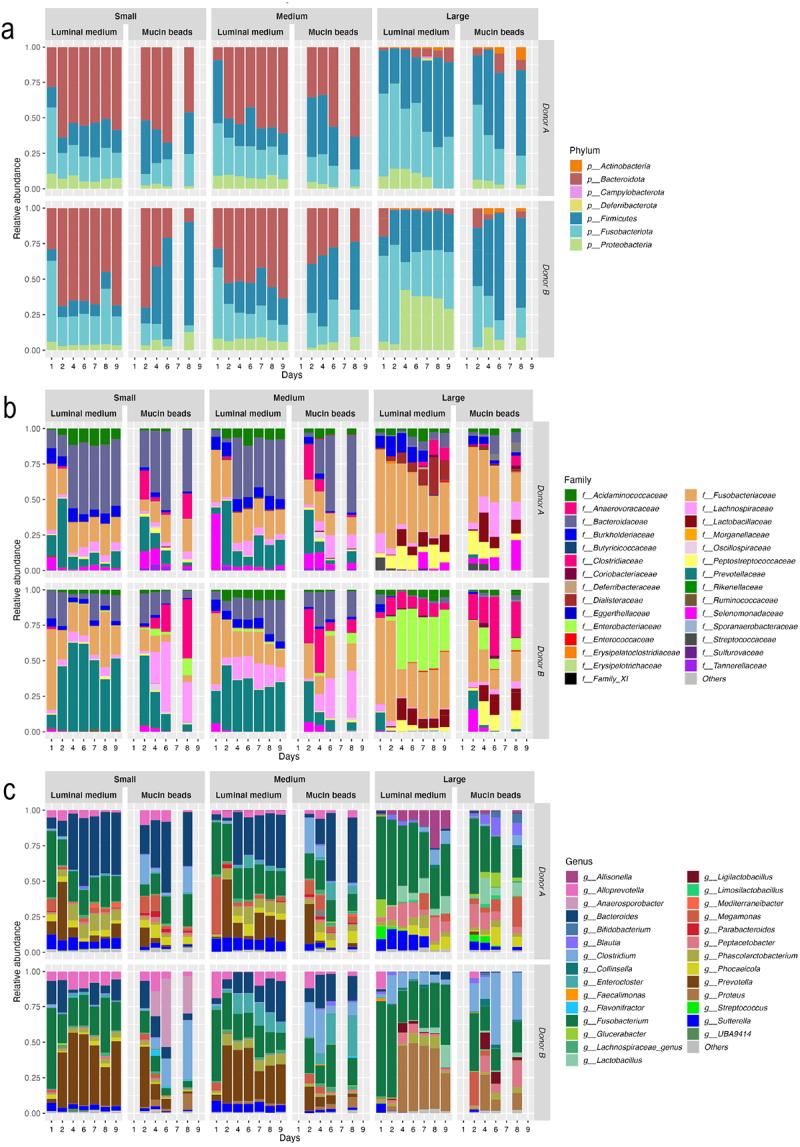
Different dog sizes are associated with variations in large intestinal physiology including gut microbiota, which plays a key role in animal health. This study aims to evaluate, using the CANIM-ARCOL (Canine Mucosal Artificial Colon), the relative importance of gut microbes physicochemical and nutritional parameters of the canine colonic environment in shaping microbiota structure and functions. CANIM-ARCOL was set up to reproduce nutrient availability, bile acid profiles, colonic pH, and transit time from small, medium, or large dogs according to data, while bioreactors were all inoculated with a fecal sample collected from medium size dogs ( = 2). Applying different dog size parameters resulted in a positive association between size and gas or SCFA production, as well as distinct microbiota profiles as revealed by 16S Metabarcoding. Comparisons with data from canine stools and previous results obtained when CANIM-ARCOL was inoculated with fecal samples from three dog sizes revealed that environmental colonic parameters were sufficient to drive microbiota functions. However, size-related fecal microbes were necessary to accurately reproduce the colonic ecosystem of small, medium, and large dogs. For the first time, this study provides mechanistic insights on which parameters from colonic ecosystem mainly drive canine microbiota in relation to dog size. The CANIM-ARCOL can be used as a relevant platform to unravel interactions between food or pharma compounds and canine colonic microbiota, under different dog size conditions. The potential of the model will be extended soon to diseased situations (e.g. chronic enteropathies or obesity).
不同犬只体型与大肠生理学的变化有关,包括在动物健康中起关键作用的肠道微生物群。本研究旨在使用 CANIM-ARCOL(犬类黏膜人工结肠)评估肠道微生物群结构和功能,评估犬结肠环境中微生物理化和营养参数的相对重要性。CANIM-ARCOL 的设置是根据数据来模拟营养物质的可利用性、胆汁酸谱、结肠 pH 值以及从小型、中型或大型犬的传输时间,而生物反应器均接种来自中型犬的粪便样本( = 2)。应用不同犬只体型参数的结果表明,体型与气体或 SCFA 产生之间呈正相关,16S Metabarcoding 揭示了独特的微生物群谱。与犬粪便数据和 CANIM-ARCOL 接种来自三种犬只体型的粪便样本时获得的先前结果进行比较表明,环境结肠参数足以驱动微生物群功能。然而,与体型相关的粪便微生物对于准确再现小型、中型和大型犬的结肠生态系统是必要的。本研究首次提供了机制上的见解,即哪些来自结肠生态系统的参数主要与犬只体型相关,从而驱动犬类微生物群。CANIM-ARCOL 可以用作相关平台,以在不同犬只体型条件下,研究食物或药物化合物与犬类结肠微生物群之间的相互作用。该模型的潜力将很快扩展到患病情况(例如慢性肠病或肥胖症)。




 Zotero 插件