
腐殖聚电解质促进适用于伤口愈合应用的银纳米颗粒的快速微波合成。
Humic Polyelectrolytes Facilitate Rapid Microwave Synthesis of Silver Nanoparticles Suitable for Wound-Healing Applications.
作者信息
Zhang Yu, Larionov Konstantin S, Zhang Simeng, Sobolev Nikita A, Konstantinov Andrey I, Volkov Dmitry S, Suslova Evgeniya V, Chernov Vladimir E, Poloskov Anton I, Glushakov Ruslan I, Perminova Irina V
机构信息
Department of Chemistry, Lomonosov Moscow State University, Leninskie Gory 1-3, 119991 Moscow, Russia.
Kirov Military Medical Academy, Academician Lebedev Street 6, 194044 Saint Petersburg, Russia.
出版信息
Polymers (Basel). 2024 Feb 21;16(5):587. doi: 10.3390/polym16050587.
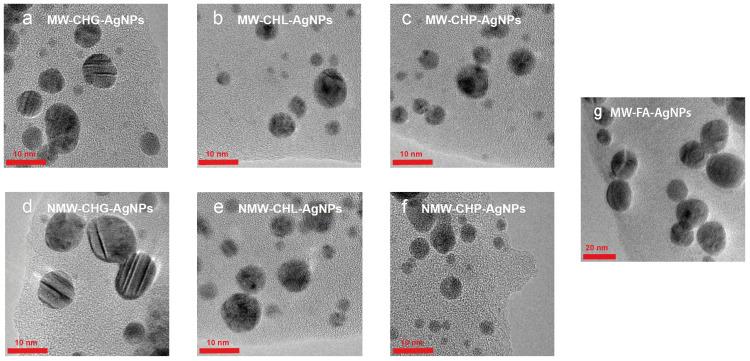
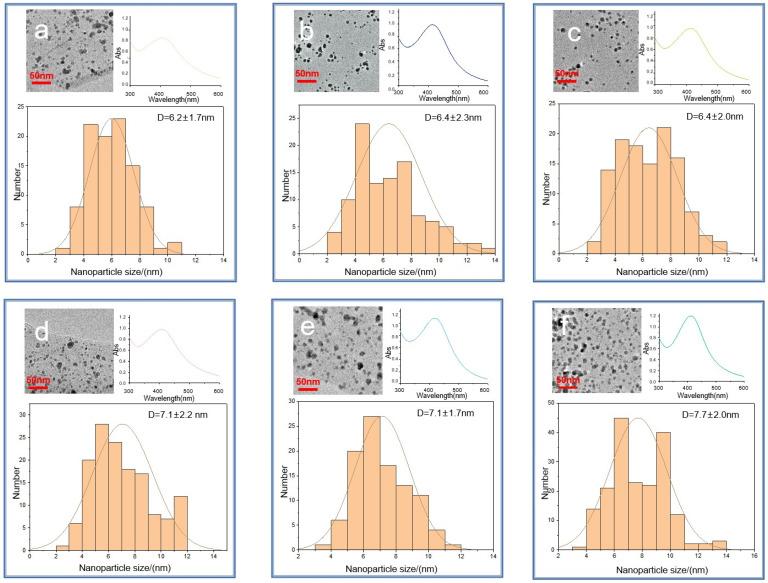
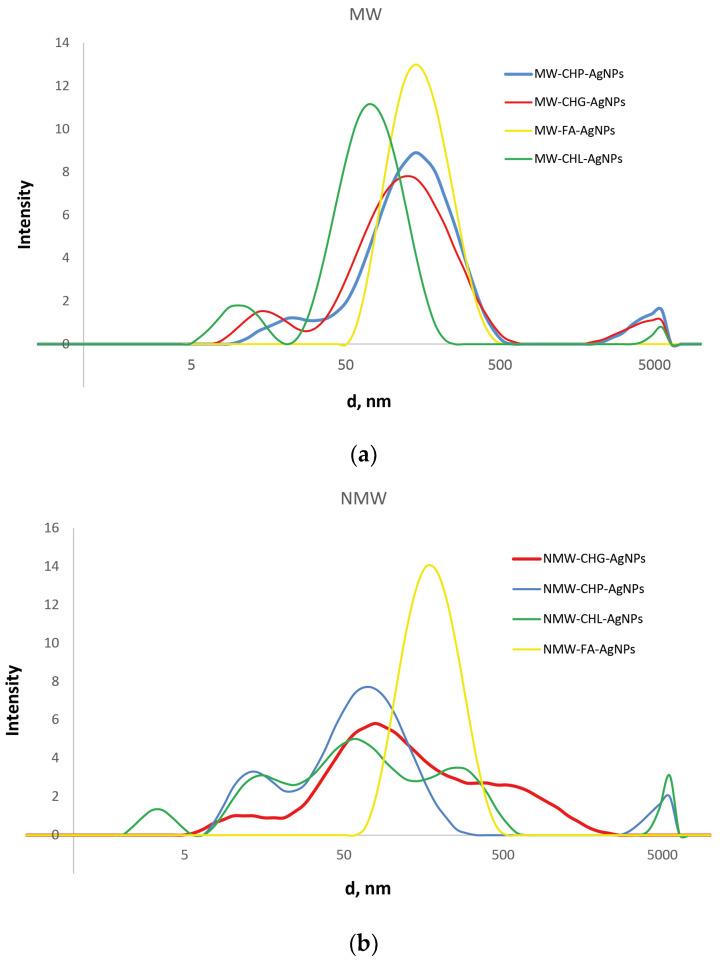
This article describes the one-pot microwave synthesis of silver nanoparticles (AgNPs) assisted with natural polyelectrolytes-humic substances (HS). The humic polyelectrolytes served both as chemical reductants for silver ions and as end-capping agents for AgNPs. Three commercially available sodium humates extracted from lignites and leonardite and one sodium fulvate isolated from natural brown water seeped through peat deposits were used in this study. The dynamics of the growth rate of AgNPs was characterised by UV-VIS spectroscopy by measuring the intensity of surface plasmon resonance at 420 nm. Transmission electron microscopy was used to characterise the size and morphology of AgNPs. Dynamic light scattering was used to determine size distributions of the synthesised AgNPs in the solutions. It was established that both conventional and microwave syntheses assisted with the coal humates produced small-size AgNPs in the range from 4 to 14 nm, with the maximum share of particles with sizes of (6 ± 2) nm by TEM estimates. The peat fulvate yielded much larger NPs with sizes from 10 to 50 nm by TEM estimates. DLS measurements revealed multimodal distributions of AgNPs stabilised with HS, which included both single NPs with the sizes from 5 to 15 nm, as well as their dominating aggregates with sizes from 20 to 200 nm and a smaller portion of extra-large aggregates up to 1000 nm. The given aggregates were loosely bound by humic polyelectrolyte, which prevented the coalescence of AgNPs into larger particles, as can be seen in the TEM images. The significant acceleration in the reaction time-a factor of 60 to 70-was achieved with the use of MW irradiation: from 240 min down to 210-240 s. The coal humate stabilised AgNPs showed antimicrobial properties in relation to A conclusion was made regarding the substantial advantages of microwave synthesis in the context of time and scaling up for the large-scale production of AgNP-HS preparations with antimicrobial properties suitable for external wound-healing applications.
本文描述了在天然聚电解质——腐殖质(HS)辅助下一锅法微波合成银纳米颗粒(AgNP)的过程。腐殖聚电解质既作为银离子的化学还原剂,又作为AgNP的封端剂。本研究使用了从褐煤和泥炭褐煤中提取的三种市售腐殖酸钠以及从渗透过泥炭沉积物的天然褐水中分离出的一种富里酸钠。通过紫外可见光谱法测量420nm处表面等离子体共振的强度来表征AgNP的生长速率动态。透射电子显微镜用于表征AgNP的尺寸和形态。动态光散射用于确定合成的AgNP在溶液中的尺寸分布。结果表明,传统合成法和煤腐殖酸辅助的微波合成法均能产生尺寸在4至14nm范围内的小尺寸AgNP,通过透射电镜估计,尺寸为(6±2)nm的颗粒所占比例最大。泥炭富里酸产生的纳米颗粒尺寸要大得多,通过透射电镜估计,其尺寸在10至50nm之间。动态光散射测量揭示了由HS稳定的AgNP的多峰分布,其中包括尺寸为5至15nm的单个纳米颗粒,以及尺寸为20至200nm的主要聚集体和一小部分尺寸达1000nm的超大聚集体。如透射电镜图像所示,这些聚集体通过腐殖聚电解质松散结合,从而防止了AgNP聚结成更大的颗粒。使用微波辐射可使反应时间显著加快60至70倍,从240分钟降至210 - 240秒。煤腐殖酸稳定的AgNP对……显示出抗菌性能。得出了关于微波合成在时间方面的显著优势以及扩大规模以大规模生产具有抗菌性能、适用于外部伤口愈合应用的AgNP - HS制剂的结论。


 Zotero 插件