
神经胰腺学:胰腺疾病中的神经系统与疼痛管理
Neuropancreatology: The Nervous System and Pain Management in Pancreatic Diseases.
作者信息
Nicoletti Alberto, Vitale Federica, Paratore Mattia, Quero Giuseppe, Negri Marcantonio, Nista Enrico Celestino, Alfieri Sergio, Gasbarrini Antonio, Zileri Dal Verme Lorenzo
机构信息
Pancreas Unit, CEMAD Centro Malattie dell'Apparato Digerente, Medicina Interna e Gastroenterologia, Dipartimento di Medicina e Chirurgia Traslazionale, Università Cattolica del Sacro Cuore, Fondazione Policlinico Universitario "A. Gemelli" IRCCS, 00168 Rome, Italy.
Centro Pancreas, Chirurgia Digestiva, Dipartimento di Medicina e Chirurgia Traslazionale, Università Cattolica del Sacro Cuore, Fondazione Policlinico Universitario "A. Gemelli" IRCCS, 00168 Rome, Italy.
出版信息
Life (Basel). 2024 Feb 23;14(3):299. doi: 10.3390/life14030299.
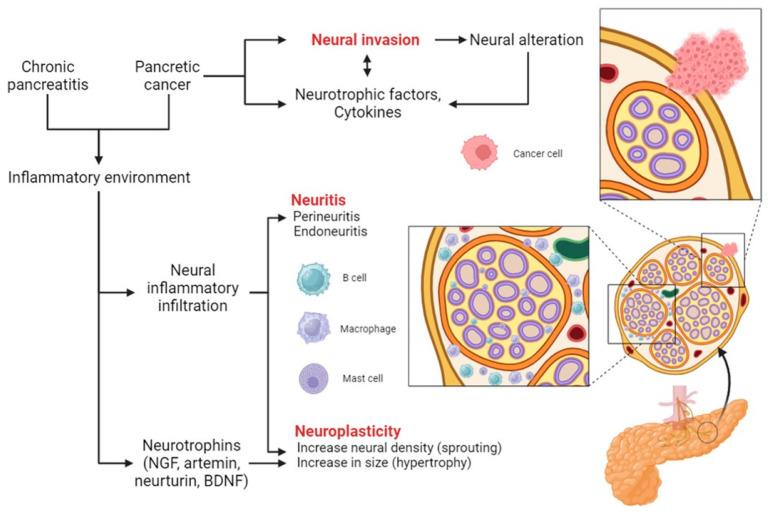
The intricate network of the pancreatic nervous system plays a fundamental role in physiologic functions of the endocrine and exocrine pancreas. Several pancreatic diseases affect the normal functionality of the pancreatic nervous system. This chronic derangement leads to anatomical alterations, such as neural hypertrophy and increased nerve density. Perineural invasion is a prominent feature of pancreatic cancer, contributing to cancer progression and metastasis. Despite the fact that these pathogenic mechanisms are still incompletely studied and understood, the constant occurrence of these alterations highlights their importance in the pathophysiology of the pancreatic diseases. The occurrence of anatomical changes is strictly linked to the appearance of pain. Pancreatic pain has peculiar features, and its management is complex in clinical practice. In the present review, the evidence on lifestyle, pharmacological and interventional approaches for the management of pancreatic pain is presented. Analgesic therapy is the cornerstone of pain treatment. However, it is important to identify the individual characteristic of the patients and personalize the approach to pain management. Nevertheless, the incomplete efficacy of these strategies makes this field an area of unmet needs. The study of neuroplasticity is crucial to understand the mechanisms that regulate the pathophysiology of pancreatic diseases. Several trials testing new drugs with specific neuromodulatory effects are ongoing. However, further studies are needed to investigate crucial targets to develop novel therapies for the modulation of the nervous system and the prevention of complications of pancreatic diseases. This comprehensive review summarizes the importance of the nervous system in pancreatic diseases with a special focus on its anatomy and physiology, its pathophysiological features and clinical relevance in pancreatic disease, the treatment of pancreatic pain, and the identification of future trends of research.
胰腺神经系统的复杂网络在内分泌和外分泌胰腺的生理功能中起着重要作用。几种胰腺疾病会影响胰腺神经系统的正常功能。这种慢性紊乱会导致解剖学改变,如神经肥大和神经密度增加。神经周围浸润是胰腺癌的一个显著特征,促进癌症进展和转移。尽管这些致病机制仍未得到充分研究和理解,但这些改变的持续发生凸显了它们在胰腺疾病病理生理学中的重要性。解剖学变化的发生与疼痛的出现密切相关。胰腺疼痛具有独特的特征,其管理在临床实践中很复杂。在本综述中,介绍了关于胰腺疼痛管理的生活方式、药物和介入方法的证据。镇痛治疗是疼痛治疗的基石。然而,识别患者的个体特征并使疼痛管理方法个性化很重要。尽管如此,这些策略的不完全有效性使该领域成为一个未满足需求的领域。神经可塑性的研究对于理解调节胰腺疾病病理生理学的机制至关重要。几项测试具有特定神经调节作用的新药的试验正在进行。然而,需要进一步研究以调查关键靶点,以开发用于调节神经系统和预防胰腺疾病并发症的新疗法。这篇综述总结了神经系统在胰腺疾病中的重要性,特别关注其解剖学和生理学、其在胰腺疾病中的病理生理特征和临床相关性、胰腺疼痛的治疗以及未来研究趋势的确定。

 Zotero 插件