
鲁比卡丁的上市后安全性评估:基于FAERS数据库的药物警戒分析
Post-marketing safety evaluation of lurbinectedin: a pharmacovigilance analysis based on the FAERS database.
作者信息
Li Zhao, Guo Changying, Liu Xingfei, Qiu Zhengzhou, Zhang Ruilin
机构信息
Department of Thoracic Surgery, Jiangxi Cancer Hospital, The Second Affiliated Hospital of Nanchang Medical College, Jiangxi Cancer Institute, Nanchang, China.
Jiangxi Medical College, Nanchang University, NanChang, China.
出版信息
Front Pharmacol. 2024 Mar 14;15:1368763. doi: 10.3389/fphar.2024.1368763. eCollection 2024.
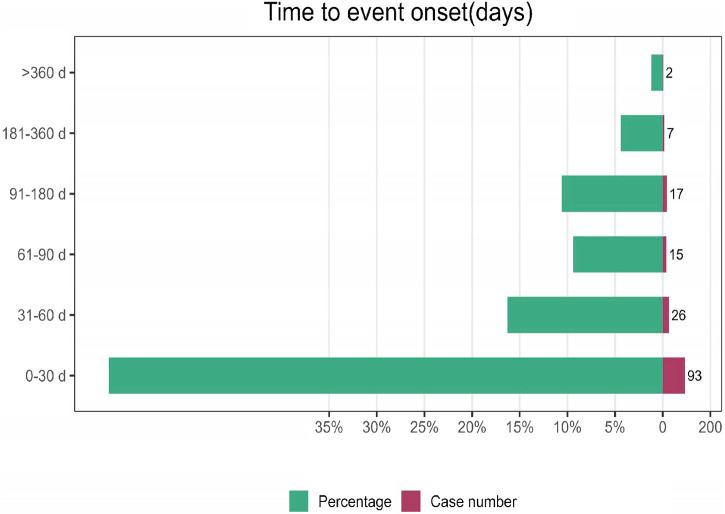
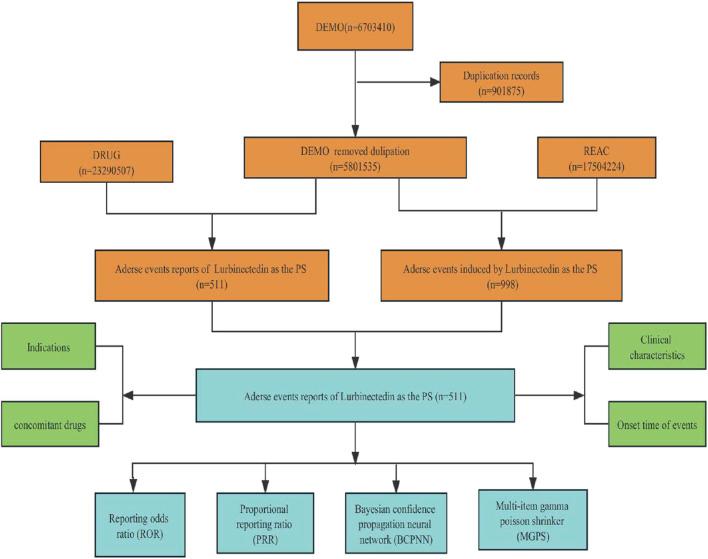
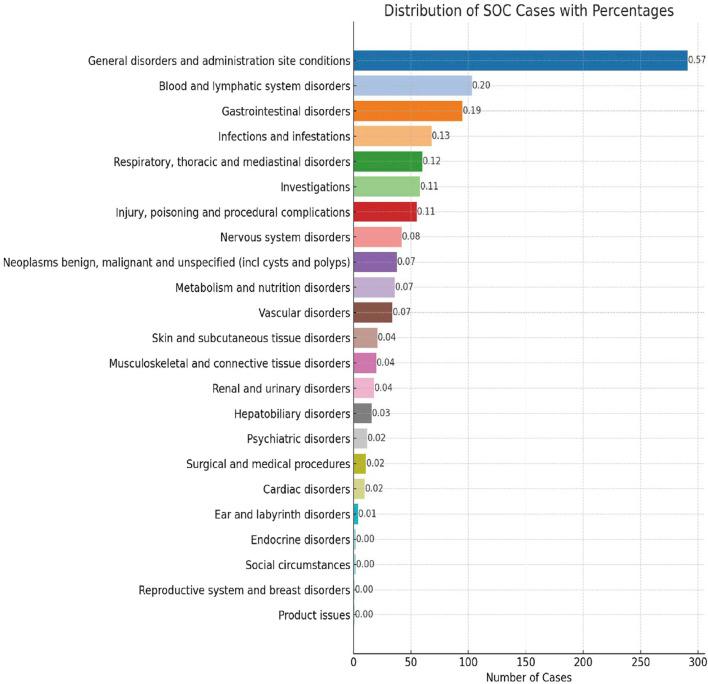
On 15 June 2020, the United States Food and Drug Administration (FDA) approved lurbinectedin for treating adult patients with metastatic small-cell lung cancer whose disease has progressed despite prior platinum-based chemotherapy. Following its market approval, safety data on lurbinectedin in large populations is currently lacking. Therefore, this study aims to evaluate adverse events (AEs) associated with lurbinectedin using the FDA's Adverse Event Reporting System (FAERS)database. Data concerning lurbinectedin from the FAERS database were extracted for the period from June 2020 to September 2023. Four disproportionality analysis algorithms were utilized to assess potential AEs linked to lurbinectedin: reporting odds ratio (ROR), proportional reporting ratio, disproportionate multi-item gamma Poisson shrinker, and Bayesian confidence propagation neural network. These algorithms were applied to quantify signals of lurbinectedin-related AEs. A total of 5,801,535 AE reports were retrieved from the FAERS database, with 511 related to lurbinectedin. These lurbinectedin-induced AEs were observed in 23 system organ classes (SOCs). After simultaneously applying the four algorithms, 47 lurbinectedin-induced AE signals were detected in 23 SOCs. At the SOC level, blood and lymphatic system disorders (ROR, 6.70; 95% confidence interval [CI]: 5.47-8.22) were the only SOC that met all four algorithms. Lurbinectedin's most frequent adverse event was death (ROR: 6.11%, 95% CI: 4.86-7.68), while extravasation exhibited the strongest signal intensity in the ROR algorithm (ROR: 326.37%, 95% CI: 191.66-555.75). Notably, we identified a novel signals: tumor lysis syndrome (ROR: 63.22%, 95% CI: 33.87-117.99). The mean time of onset of AEs was 66 days, the median time of onset was 25 days (interquartile range: 8-64 days), and most AEs occurred within the first month of lurbinectedin treatment. Our study provided a comprehensive evaluation of lurbinectedin's safety profile in the post-marketing setting. In addition to the adverse events consistent with the existing clinical trials and labeling information, we have also identified an unreported signal related to tumor lysis syndrome. This finding will better guide the clinical practice of lurbinectedin and provide valuable evidence for future research.
2020年6月15日,美国食品药品监督管理局(FDA)批准鲁比卡丁用于治疗转移性小细胞肺癌成年患者,这些患者的疾病在接受过铂类化疗后仍有进展。在其获得市场批准后,目前缺乏大量人群中鲁比卡丁的安全性数据。因此,本研究旨在使用FDA不良事件报告系统(FAERS)数据库评估与鲁比卡丁相关的不良事件(AE)。提取了FAERS数据库中2020年6月至2023年9月期间有关鲁比卡丁的数据。使用四种不成比例分析算法来评估与鲁比卡丁相关的潜在AE:报告比值比(ROR)、比例报告比、不成比例多项目伽马泊松收缩器和贝叶斯置信传播神经网络。这些算法用于量化鲁比卡丁相关AE的信号。从FAERS数据库中检索到总共5,801,535份AE报告,其中511份与鲁比卡丁有关。这些由鲁比卡丁引起的AE在23个系统器官类别(SOC)中被观察到。同时应用这四种算法后,在23个SOC中检测到47个由鲁比卡丁引起的AE信号。在SOC层面,血液和淋巴系统疾病(ROR,6.70;95%置信区间[CI]:5.47 - 8.22)是唯一符合所有四种算法的SOC。鲁比卡丁最常见的不良事件是死亡(ROR:6.11%,95% CI:4.86 - 7.68),而外渗在ROR算法中表现出最强的信号强度(ROR:326.37%,95% CI:191.66 - 555.75)。值得注意的是,我们发现了一个新信号:肿瘤溶解综合征(ROR:63.22%,95% CI:33.87 - 117.99)。AE的平均发病时间为66天,中位发病时间为25天(四分位间距:8 - 64天),大多数AE发生在鲁比卡丁治疗的第一个月内。我们的研究对鲁比卡丁上市后环境中的安全性概况进行了全面评估。除了与现有临床试验和标签信息一致的不良事件外,我们还发现了一个与肿瘤溶解综合征相关的未报告信号。这一发现将更好地指导鲁比卡丁的临床实践,并为未来研究提供有价值的证据。


 Zotero 插件