
与新冠疫情相关的非药物干预措施对孟加拉国人员流动和事故的影响
Impacts of COVID-19-Related Non-Pharmaceutical Interventions on Mobility and Accidents in Bangladesh.
作者信息
Enam Annesha, Rahman Sheikh Mokhlesur, Mahmud S M Sohel, Wadud Zia
机构信息
Department of Civil Engineering, Bangladesh University of Engineering and Technology, Dhaka, Bangladesh.
Accident Research Institute, Bangladesh University of Engineering and Technology, Dhaka, Bangladesh.
出版信息
Transp Res Rec. 2023 Apr;2677(4):917-933. doi: 10.1177/03611981221118532. Epub 2022 Sep 4.
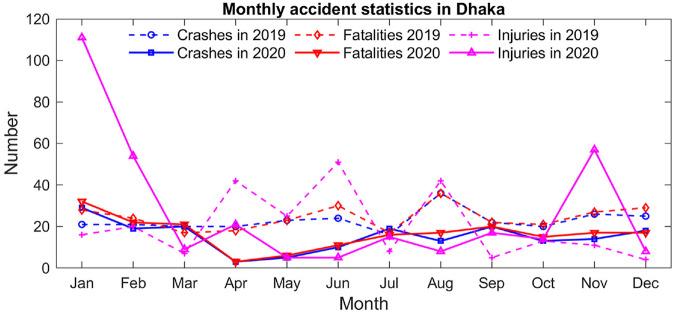
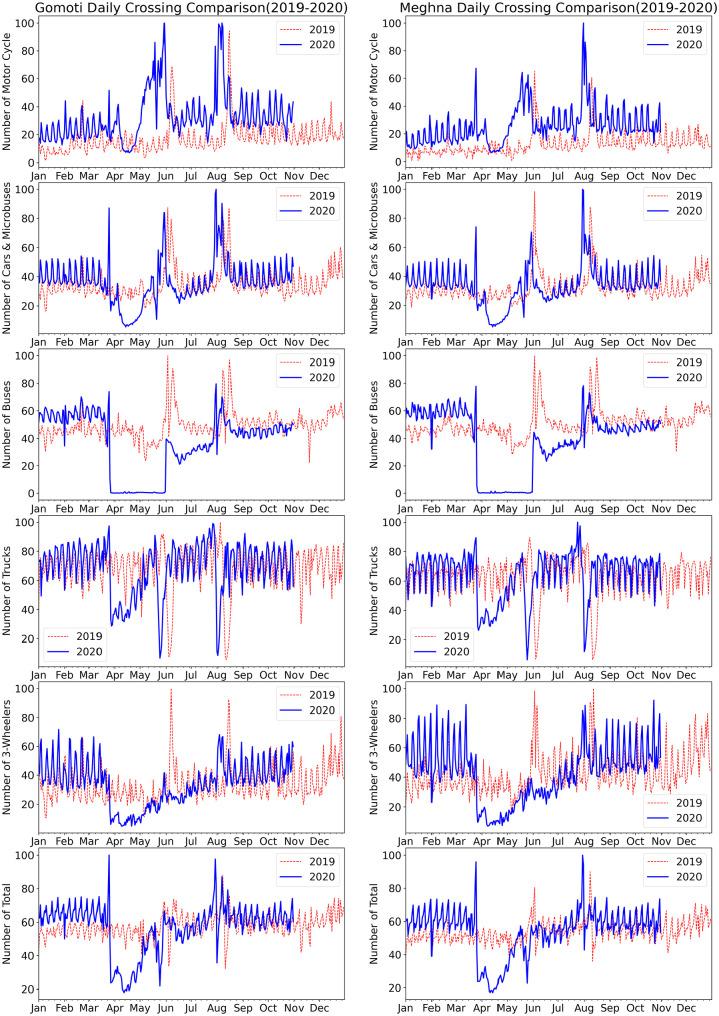
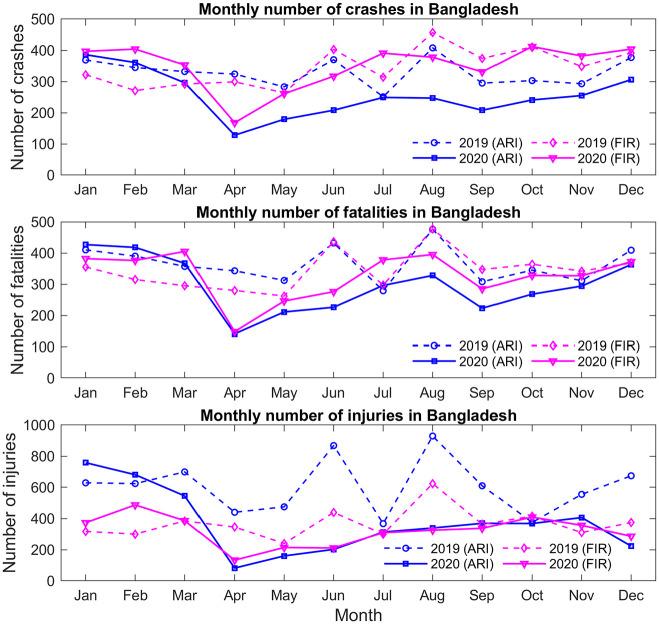
Transport plays a major role in spreading contagious diseases such as COVID-19 by facilitating social contacts. The standard response to fighting COVID-19 in most countries has been imposing a lockdown-including on the transport sector-to slow down the spread. Though the Government of Bangladesh also imposed a lockdown quite early, it was forced to relax the lockdown for economic reasons. This motivates this study to assess the interaction between various non-pharmaceutical intervention (NPI) policies and transport sector outcomes, such as mobility and accidents, in Bangladesh. The study explores the effect of NPIs on both intra- and inter-regional mobility. Intra-regional mobility is captured using Google mobility reports which provide information about the number of visitors at different activity locations. Inter-regional, or long-distance, mobility is captured using vehicle count information from toll booths on a major bridge. Modeling shows that, in most cases, the policy interventions had the desired impact on people's mobility patterns. Closure of education institutes, offices, public transport, and shopping malls reduced mobility at most locations. The closure of garment factories reduced mobility for work and at transit stations only. Mobility was increased at all places except at residential locations, after the wearing of masks was made mandatory. Reduced traffic because of policy interventions resulted in a lower number of accidents (crashes) and related fatalities. However, mobility-normalized crashes and fatalities increased nationally. The outcomes of the study are especially useful in understanding the differential impacts of various policy measures on transport, and thus would help future evidence-based decision-making.
交通运输通过促进社会接触,在传播COVID-19等传染病方面发挥着重要作用。大多数国家抗击COVID-19的标准应对措施是实施封锁,包括对交通运输部门,以减缓疫情传播。尽管孟加拉国政府也很早就实施了封锁,但由于经济原因,被迫放松了封锁。这促使本研究评估孟加拉国各种非药物干预(NPI)政策与交通运输部门成果之间的相互作用,如出行和事故情况。该研究探讨了非药物干预对区域内和区域间出行的影响。区域内出行情况通过谷歌出行报告来获取,该报告提供不同活动地点的访客数量信息。区域间或长途出行情况则通过一座主要桥梁收费站的车辆计数信息来获取。模型显示,在大多数情况下,政策干预对人们的出行模式产生了预期影响。教育机构、办公室、公共交通和购物中心的关闭使大多数地点的出行量减少。服装厂的关闭仅使工作出行量和交通枢纽的出行量减少。强制佩戴口罩后,除居民区外,所有地方的出行量都有所增加。政策干预导致的交通流量减少,使得事故(碰撞)数量和相关死亡人数降低。然而,全国范围内出行量归一化后的碰撞事故和死亡人数有所增加。该研究结果对于理解各种政策措施对交通运输的不同影响特别有用,从而有助于未来基于证据的决策制定。


 Zotero 插件