
调节昼夜节律和氧化应激作为改善血管性痴呆的分子靶点:药理学视角
Modulation of the Circadian Rhythm and Oxidative Stress as Molecular Targets to Improve Vascular Dementia: A Pharmacological Perspective.
作者信息
Trujillo-Rangel Walter Ángel, Acuña-Vaca Sofía, Padilla-Ponce Danna Jocelyn, García-Mercado Florencia Guillermina, Torres-Mendoza Blanca Miriam, Pacheco-Moises Fermín P, Escoto-Delgadillo Martha, García-Benavides Leonel, Delgado-Lara Daniela L C
机构信息
Departamento de Ciencias Biomédicas, Centro Universitario de Tonalá, Universidad de Guadalajara, Av. Nuevo Periférico No. 555, Ejido San José Tateposco, Tonalá 45425, Jalisco, Mexico.
Departamento de Formación Universitaria Ciencias de la Salud, Universidad Autónoma de Guadalajara, Av. Patria 1201, Lomas del Valle, Zapopan 45129, Jalisco, Mexico.
出版信息
Int J Mol Sci. 2024 Apr 16;25(8):4401. doi: 10.3390/ijms25084401.
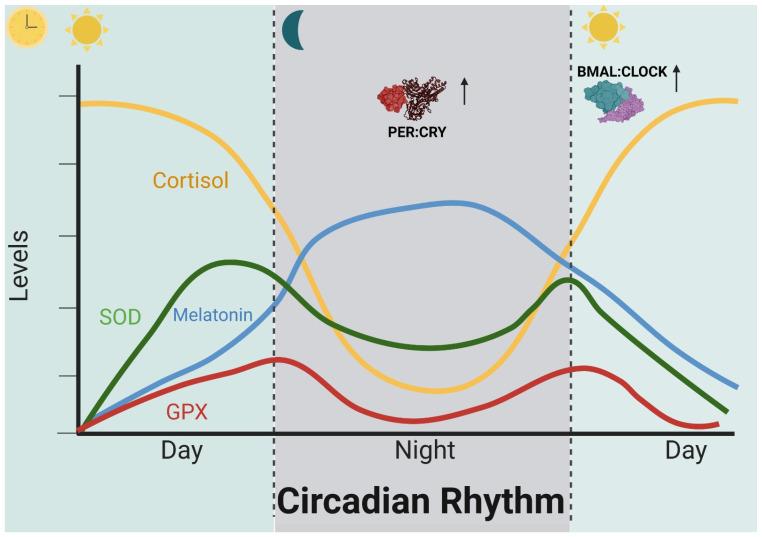
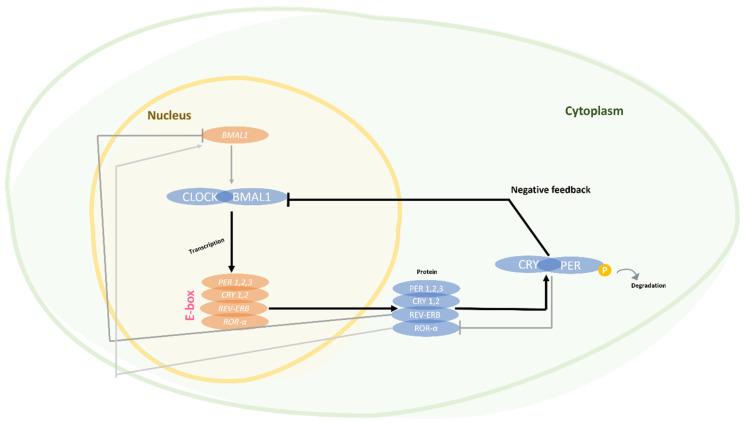
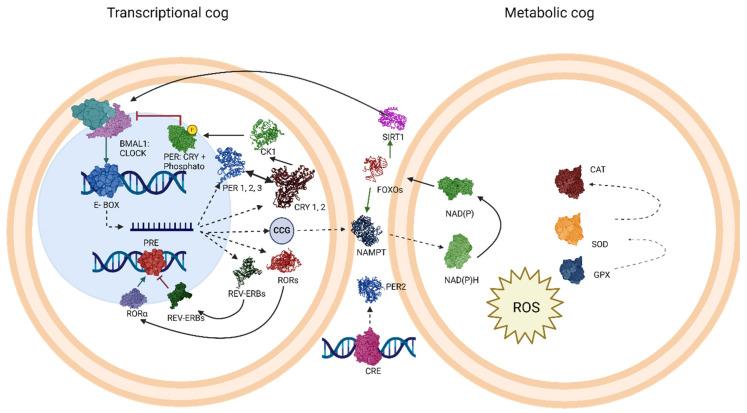
The circadian rhythms generated by the master biological clock located in the brain's hypothalamus influence central physiological processes. At the molecular level, a core set of clock genes interact to form transcription-translation feedback loops that provide the molecular basis of the circadian rhythm. In animal models of disease, a desynchronization of clock genes in peripheral tissues with the central master clock has been detected. Interestingly, patients with vascular dementia have sleep disorders and irregular sleep patterns. These alterations in circadian rhythms impact hormonal levels, cardiovascular health (including blood pressure regulation and blood vessel function), and the pattern of expression and activity of antioxidant enzymes. Additionally, oxidative stress in vascular dementia can arise from ischemia-reperfusion injury, amyloid-beta production, the abnormal phosphorylation of tau protein, and alterations in neurotransmitters, among others. Several signaling pathways are involved in the pathogenesis of vascular dementia. While the precise mechanisms linking circadian rhythms and vascular dementia are still being studied, there is evidence to suggest that maintaining healthy sleep patterns and supporting proper circadian rhythm function may be important for reducing the risk of vascular dementia. Here, we reviewed the main mechanisms of action of molecular targets related to the circadian cycle and oxidative stress in vascular dementia.
位于大脑下丘脑的主生物钟产生的昼夜节律影响着中枢生理过程。在分子水平上,一组核心的时钟基因相互作用,形成转录-翻译反馈环,为昼夜节律提供分子基础。在疾病动物模型中,已检测到外周组织中的时钟基因与中枢主生物钟不同步。有趣的是,血管性痴呆患者存在睡眠障碍和不规律的睡眠模式。这些昼夜节律的改变会影响激素水平、心血管健康(包括血压调节和血管功能)以及抗氧化酶的表达和活性模式。此外,血管性痴呆中的氧化应激可源于缺血-再灌注损伤、淀粉样β蛋白生成、tau蛋白异常磷酸化以及神经递质改变等。几种信号通路参与了血管性痴呆的发病机制。虽然昼夜节律与血管性痴呆之间的确切机制仍在研究中,但有证据表明,维持健康的睡眠模式和支持正常的昼夜节律功能可能对降低血管性痴呆风险很重要。在此,我们综述了血管性痴呆中与昼夜节律周期和氧化应激相关的分子靶点的主要作用机制。
 Zotero 插件