
神经炎症在神经退行性疾病中的作用:当前认识与未来治疗靶点
The role of neuroinflammation in neurodegenerative diseases: current understanding and future therapeutic targets.
作者信息
Adamu Alhamdu, Li Shuo, Gao Fankai, Xue Guofang
机构信息
Department of Neurology, The Second Affiliated Hospital of Shanxi Medical University, Taiyuan, China.
出版信息
Front Aging Neurosci. 2024 Apr 12;16:1347987. doi: 10.3389/fnagi.2024.1347987. eCollection 2024.
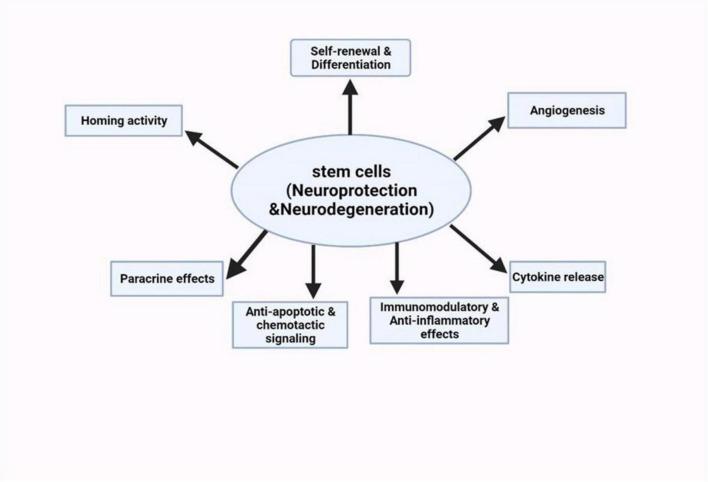
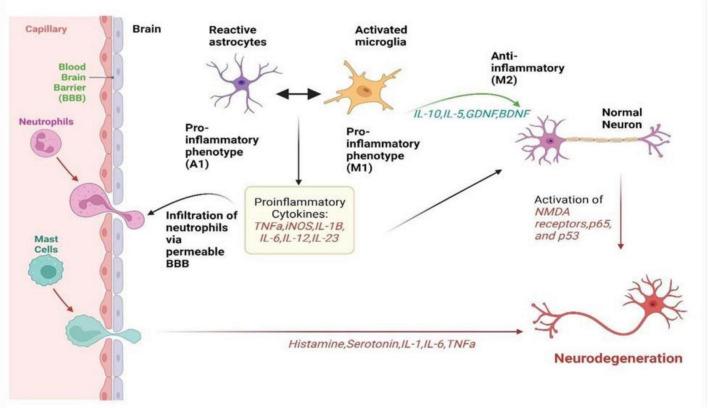
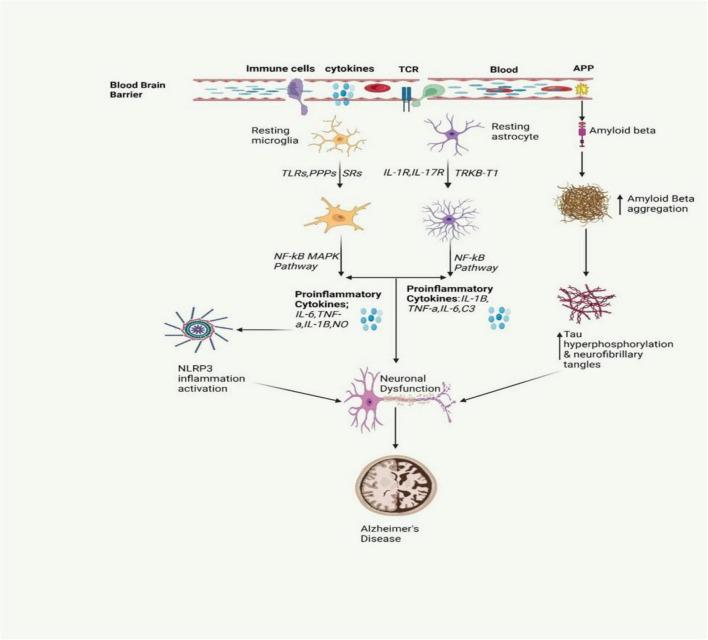
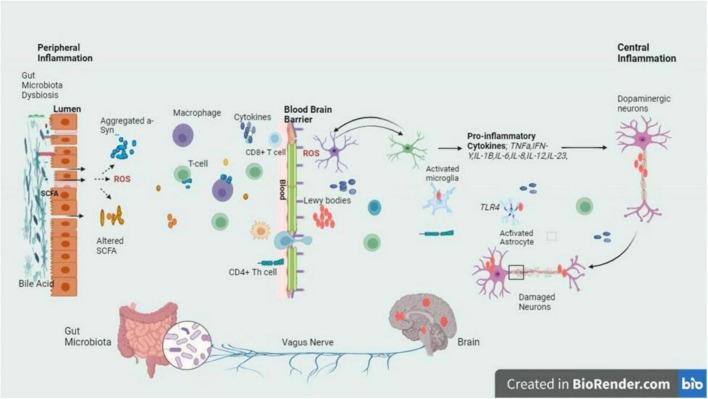
Neuroinflammation refers to a highly complicated reaction of the central nervous system (CNS) to certain stimuli such as trauma, infection, and neurodegenerative diseases. This is a cellular immune response whereby glial cells are activated, inflammatory mediators are liberated and reactive oxygen and nitrogen species are synthesized. Neuroinflammation is a key process that helps protect the brain from pathogens, but inappropriate, or protracted inflammation yields pathological states such as Parkinson's disease, Alzheimer's, Multiple Sclerosis, and other neurodegenerative disorders that showcase various pathways of neurodegeneration distributed in various parts of the CNS. This review reveals the major neuroinflammatory signaling pathways associated with neurodegeneration. Additionally, it explores promising therapeutic avenues, such as stem cell therapy, genetic intervention, and nanoparticles, aiming to regulate neuroinflammation and potentially impede or decelerate the advancement of these conditions. A comprehensive understanding of the intricate connection between neuroinflammation and these diseases is pivotal for the development of future treatment strategies that can alleviate the burden imposed by these devastating disorders.
神经炎症是指中枢神经系统(CNS)对创伤、感染和神经退行性疾病等特定刺激产生的高度复杂反应。这是一种细胞免疫反应,在此过程中胶质细胞被激活,炎症介质被释放,活性氧和氮物质被合成。神经炎症是帮助保护大脑免受病原体侵害的关键过程,但不适当或长期的炎症会导致病理状态,如帕金森病、阿尔茨海默病、多发性硬化症以及其他神经退行性疾病,这些疾病展示了分布在中枢神经系统各个部位的各种神经退行性变途径。本综述揭示了与神经退行性变相关的主要神经炎症信号通路。此外,它还探索了有前景的治疗途径,如干细胞疗法、基因干预和纳米颗粒,旨在调节神经炎症并潜在地阻碍或减缓这些疾病的进展。全面了解神经炎症与这些疾病之间的复杂联系对于制定未来治疗策略至关重要,这些策略可以减轻这些毁灭性疾病所带来的负担。

 Zotero 插件