
脂多糖诱导的炎症消退后,小鼠海马体中DNA甲基化水平降低且四氢生物蝶呤生物合成增加
Resolution of Lipopolysaccharide-Induced Inflammation Followed by DNA Hypomethylation and Increased Tetrahydrobiopterin Biosynthesis in Mouse Hippocampus.
作者信息
Souza Jennyffer, da Luz Scheffer Debora, Solano Alexandre Francisco, Veloso Samantha, Cruz Luisa, Foganholi-Silva Rodrigo, Latini Alexandra
机构信息
Laboratory of Bioenergetics and Oxidative Stress (LABOX), Department of Biochemistry, Federal University of Santa Catarina, Florianópolis 88037-100, Brazil.
Epigenetic Study Center and Gene Regulation, Program in Environmental and Experimental Pathology, Paulista University, São Paulo 01310-100, Brazil.
出版信息
Brain Sci. 2025 Aug 18;15(8):880. doi: 10.3390/brainsci15080880.
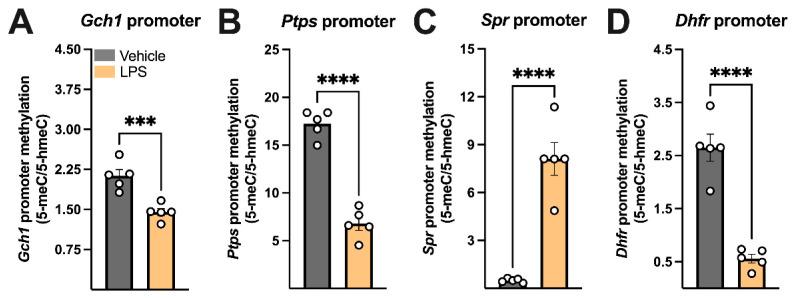
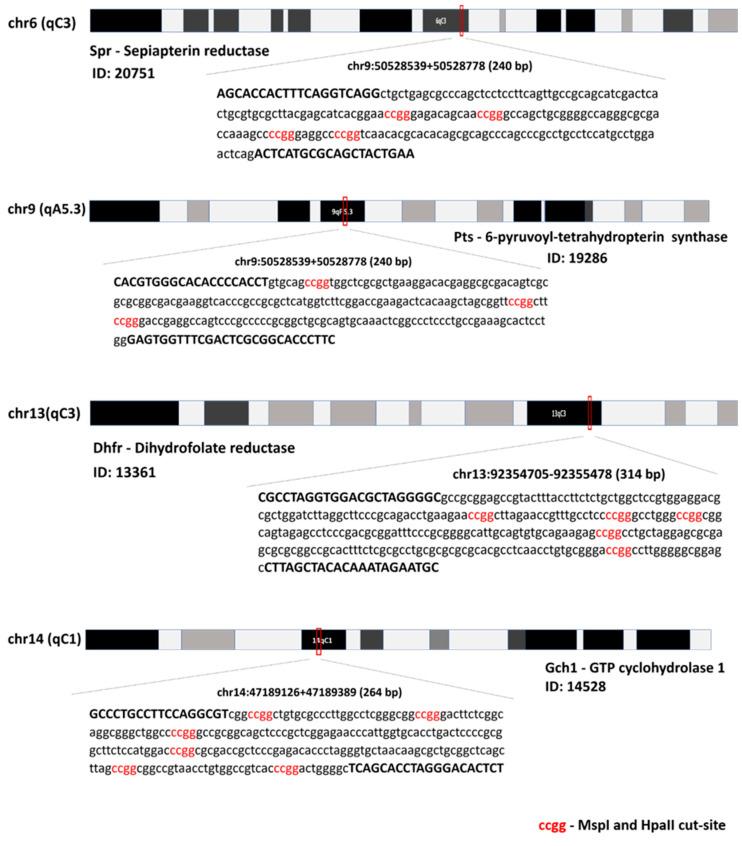
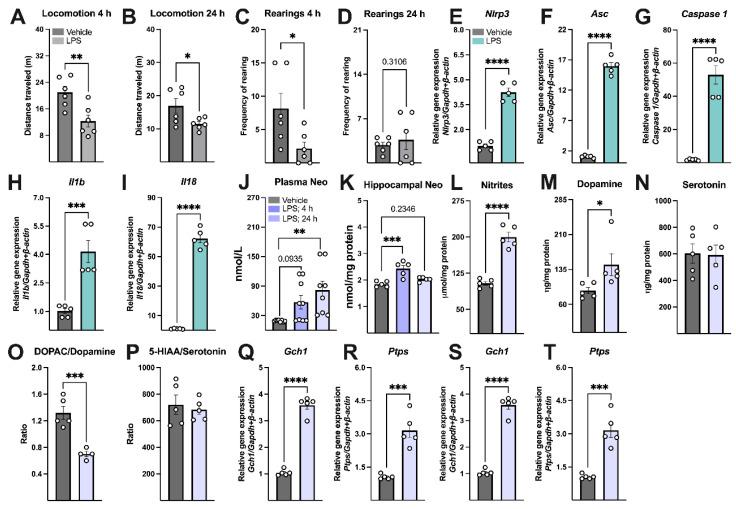
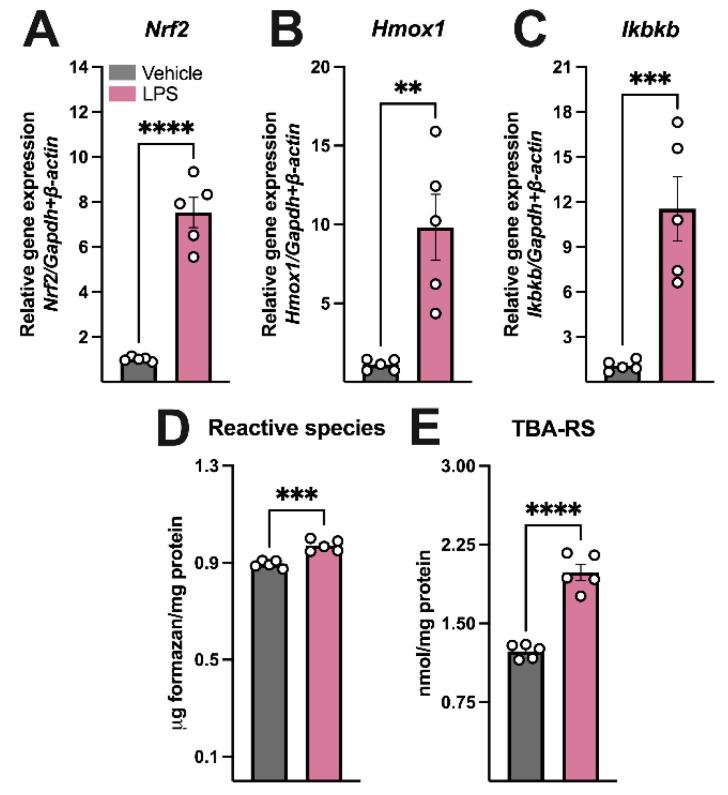
: Robust evidence supports the role of tetrahydrobiopterin (BH4) metabolism in sustaining inflammation; however, the mechanisms underlying the persistent upregulation of the BH4 pathway remain incompletely understood. This study investigated the epigenetic regulation of BH4 metabolism following a single injection of lipopolysaccharide (LPS) in the mouse hippocampus. : Male C57BL/6J mice received either saline or LPS (0.33 mg/kg, i.p.) and were sacrificed at 4 h or 24 h post injection. Behavioral assessments and analyses of hippocampal neurotransmitter metabolism, DNA methylation profile, oxidative stress, and inflammasome activation were performed. Neopterin levels, a marker of immune system activation, were measured in both the plasma and hippocampus. : LPS-treated mice exhibited sickness behavior, including reduced locomotor and exploratory activity at both 4 and 24 h. While exploratory behavior showed partial recovery by 24 h, locomotor activity remained impaired. Neopterin levels increased in both the plasma and hippocampus following LPS administration but returned to baseline in the hippocampus by 24 h. Despite the normalization of neopterin, a persistent pro-inflammatory state in the hippocampus was evident at 24 h, as shown by increased expression of Ikbkb and components of the NLRP3 inflammasome, along with elevated oxidative stress markers. Upregulation of and suggested activation of a protective antioxidant response. Dopaminergic metabolism was disrupted, indicating impaired BH4-dependent dopamine turnover. Epigenetic analysis revealed increased expression of DNA methyltransferases (, , ) and , along with reduced expression of and . Promoter hypomethylation of and was observed, correlating with increased hippocampal expression and potentially elevated BH4 levels. : Together, these findings show that a single LPS challenge was sufficient to induce the activation of the BH4 synthesis pathway during the late acute inflammatory phase, both systemically and in the hippocampus, potentially driven by epigenetic modifications such as promoter hypomethylation. This may contribute to the perpetuation of neuroinflammation.
强有力的证据支持四氢生物蝶呤(BH4)代谢在维持炎症中的作用;然而,BH4途径持续上调的潜在机制仍未完全明确。本研究调查了小鼠海马体单次注射脂多糖(LPS)后BH4代谢的表观遗传调控。:雄性C57BL/6J小鼠接受生理盐水或LPS(0.33mg/kg,腹腔注射),并在注射后4小时或24小时处死。进行行为评估以及海马体神经递质代谢、DNA甲基化谱、氧化应激和炎性小体激活的分析。在血浆和海马体中测量免疫系统激活标志物新蝶呤水平。:LPS处理的小鼠表现出疾病行为,包括在4小时和24小时时运动和探索活动减少。虽然探索行为在24小时时显示部分恢复,但运动活动仍受损。LPS给药后血浆和海马体中的新蝶呤水平均升高,但海马体中的新蝶呤水平在24小时时恢复到基线。尽管新蝶呤恢复正常,但在24小时时海马体中明显存在持续的促炎状态,表现为Ikbkb和NLRP3炎性小体成分的表达增加,以及氧化应激标志物升高。 和 的上调表明保护性抗氧化反应的激活。多巴胺能代谢受到破坏,表明依赖BH4的多巴胺周转受损。表观遗传分析显示DNA甲基转移酶( 、 、 )和 的表达增加,以及 和 的表达减少。观察到 和 的启动子低甲基化,与海马体表达增加以及潜在的BH4水平升高相关。:总之,这些发现表明单次LPS刺激足以在急性炎症后期系统性地和在海马体中诱导BH4合成途径的激活,这可能由启动子低甲基化等表观遗传修饰驱动。这可能导致神经炎症的持续存在。

 Zotero 插件