
免疫效应细胞相关神经毒性综合征的早期神经学指标。
An Early Neurological Indicator of Immune Effector Cell-Associated Neurotoxicity Syndrome.
作者信息
Yorichika Yasufumi, Neshige Shuichiro, Edahiro Taro, Aoki Shiro, Maruyama Hirofumi
机构信息
Department of Clinical Neuroscience and Therapeutics, Hiroshima University Graduate School of Biomedical and Health Sciences, Hiroshima, JPN.
Department of Hematology, Hiroshima University Graduate School of Biomedical and Health Sciences, Hiroshima, JPN.
出版信息
Cureus. 2024 Mar 30;16(3):e57298. doi: 10.7759/cureus.57298. eCollection 2024 Mar.
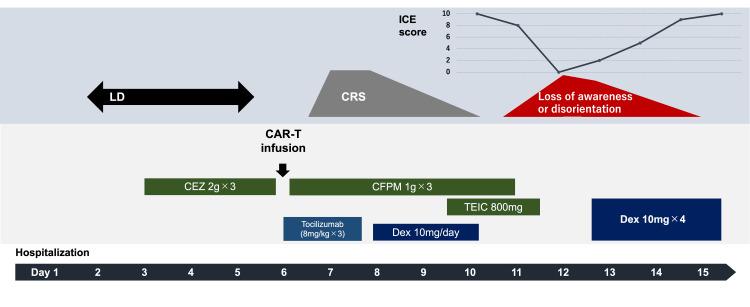
We herein report a 58-year-old female patient undergoing chimeric antigen receptor T-cell (CAR-T) therapy for refractory diffuse large B-cell lymphoma (DLBCL). Following the CAR-T infusion, the patient experienced Cytokine Release Syndrome (CRS), which was subsequently remitted. However, aphasia was observed five days post-infusion, and a loss of consciousness occurred on the sixth day. Brain MRI revealed a possibly high signal intensity in the mesial temporal region. The patient was diagnosed with immune effector cell-associated neurotoxicity syndrome (ICANS) secondary to CRS and received treatment with dexamethasone, which promptly improved her consciousness. As the diagnosis of ICANS was confirmed following the emergence of aphasia, vigilant cognitive monitoring of cognitive function is crucial in patients following CAR-T therapy.
我们在此报告一名58岁女性患者,其因难治性弥漫性大B细胞淋巴瘤(DLBCL)正在接受嵌合抗原受体T细胞(CAR-T)治疗。在输注CAR-T后,患者出现了细胞因子释放综合征(CRS),随后该综合征得到缓解。然而,在输注后第五天观察到失语,第六天出现意识丧失。脑部MRI显示内侧颞叶区域可能存在高信号强度。该患者被诊断为继发于CRS的免疫效应细胞相关神经毒性综合征(ICANS),并接受了地塞米松治疗,这迅速改善了她的意识。由于在失语出现后确诊了ICANS,因此在CAR-T治疗后的患者中,对认知功能进行警惕的认知监测至关重要。

 Zotero 插件