
解析C1GALT1在异常糖基化和结直肠癌进展中的作用。
Unraveling the role of C1GALT1 in abnormal glycosylation and colorectal cancer progression.
作者信息
Tian Hong, Yu Jia-Li, Chu Xiaoli, Guan Qi, Liu Juan, Liu Ying
机构信息
Department of Oncology, Fourth People's Hospital in Shenyang, China Medical University, Shenyang, China.
Department of Gastroenterology, The First Affiliated Hospital of Dalian Medical University, Dalian Medical University, Dalian, China.
出版信息
Front Oncol. 2024 Apr 18;14:1389713. doi: 10.3389/fonc.2024.1389713. eCollection 2024.
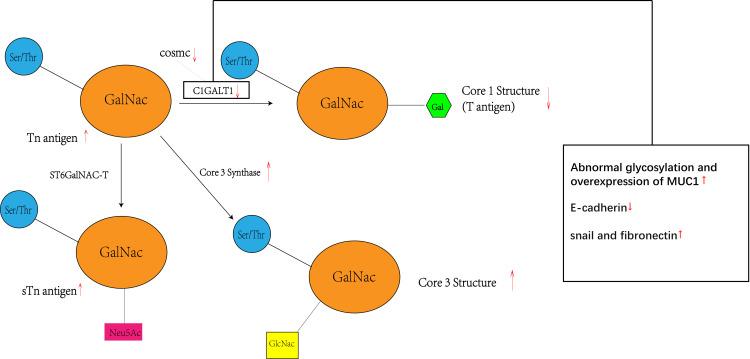
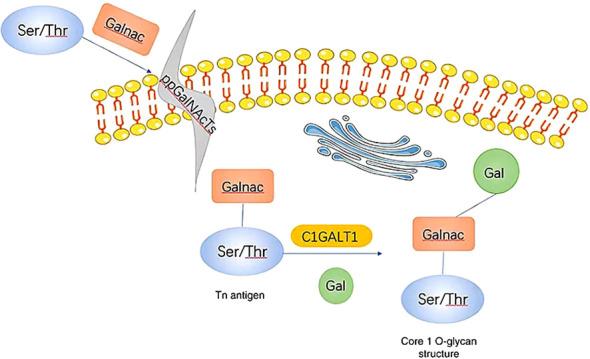
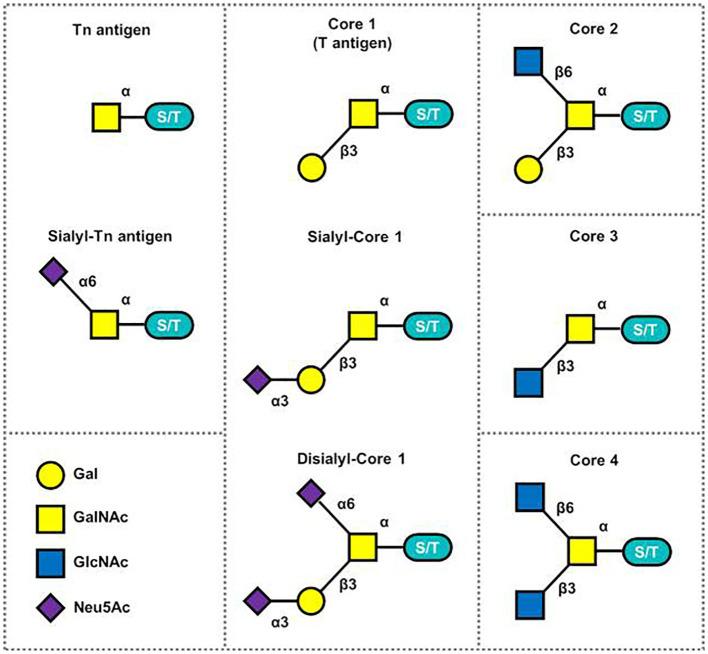
C1GALT1 plays a pivotal role in colorectal cancer (CRC) development and progression through its involvement in various molecular mechanisms. This enzyme is central to the O-glycosylation process, producing tumor-associated carbohydrate antigens (TACA) like Tn and sTn, which are linked to cancer metastasis and poor prognosis. The interaction between C1GALT1 and core 3 synthase is crucial for the synthesis of core 3 O-glycans, essential for gastrointestinal health and mucosal barrier integrity. Aberrations in this pathway can lead to CRC development. Furthermore, C1GALT1's function is significantly influenced by its molecular chaperone, Cosmc, which is necessary for the proper folding of T-synthase. Dysregulation in this complex interaction contributes to abnormal O-glycan regulation, facilitating cancer progression. Moreover, C1GALT1 affects downstream signaling pathways and cellular behaviors, such as the epithelial-mesenchymal transition (EMT), by modifying O-glycans on key receptors like FGFR2, enhancing cancer cell invasiveness and metastatic potential. Additionally, the enzyme's relationship with MUC1, a mucin protein with abnormal glycosylation in CRC, highlights its role in cancer cell immune evasion and metastasis. Given these insights, targeting C1GALT1 presents a promising therapeutic strategy for CRC, necessitating further research to develop targeted inhibitors or activators. Future efforts should also explore C1GALT1's potential as a biomarker for early diagnosis, prognosis, and treatment response monitoring in CRC, alongside investigating combination therapies to improve patient outcomes.
C1GALT1 通过参与多种分子机制,在结直肠癌(CRC)的发生和发展中起关键作用。这种酶是 O-糖基化过程的核心,可产生如 Tn 和 sTn 等肿瘤相关碳水化合物抗原(TACA),这些抗原与癌症转移和不良预后相关。C1GALT1 与核心 3 合酶之间的相互作用对于核心 3 O-聚糖的合成至关重要,而核心 3 O-聚糖对胃肠道健康和黏膜屏障完整性必不可少。该途径的异常可导致 CRC 的发生。此外,C1GALT1 的功能受其分子伴侣 Cosmc 的显著影响,Cosmc 是 T 合酶正确折叠所必需的。这种复杂相互作用的失调会导致 O-聚糖调节异常,促进癌症进展。此外,C1GALT1 通过修饰 FGFR2 等关键受体上的 O-聚糖,影响下游信号通路和细胞行为,如上皮-间质转化(EMT),增强癌细胞的侵袭性和转移潜能。此外,该酶与 MUC1(一种在 CRC 中糖基化异常的粘蛋白)的关系,突出了其在癌细胞免疫逃逸和转移中的作用。鉴于这些见解,靶向 C1GALT1 为 CRC 提供了一种有前景的治疗策略,需要进一步研究以开发靶向抑制剂或激活剂。未来的工作还应探索 C1GALT1 作为 CRC 早期诊断、预后和治疗反应监测生物标志物的潜力,同时研究联合疗法以改善患者预后。


 Zotero 插件