
孟加拉国一所寄宿制大学队列中同源和异源初免-加强新冠疫苗接种后的抗体反应
Antibody Response after Homologous and Heterologous Prime-Boost COVID-19 Vaccination in a Bangladeshi Residential University Cohort.
作者信息
Adnan Nihad, Haq Md Ahsanul, Akter Salma, Sajal S M Shafiul Alam, Islam Md Fokhrul, Mou Taslin Jahan, Jamiruddin Mohd Raeed, Jubyda Fatema Tuz, Islam Md Salequl, Tuli Jamsheda Ferdous, Liza Syeda Moriam, Hossain Sharif, Islam Zinia, Ahmed Sohel, Khandker Shahad Saif, Hossain Rubel, Ahmed Md Firoz, Khondoker Mohib Ullah, Azmuda Nafisa, Parvez Md Anowar Khasru
机构信息
Department of Microbiology, Jahangirnagar University, Savar, Dhaka 1342, Bangladesh.
RNA Biotech Limited, Dhaka 1209, Bangladesh.
出版信息
Vaccines (Basel). 2024 Apr 30;12(5):482. doi: 10.3390/vaccines12050482.
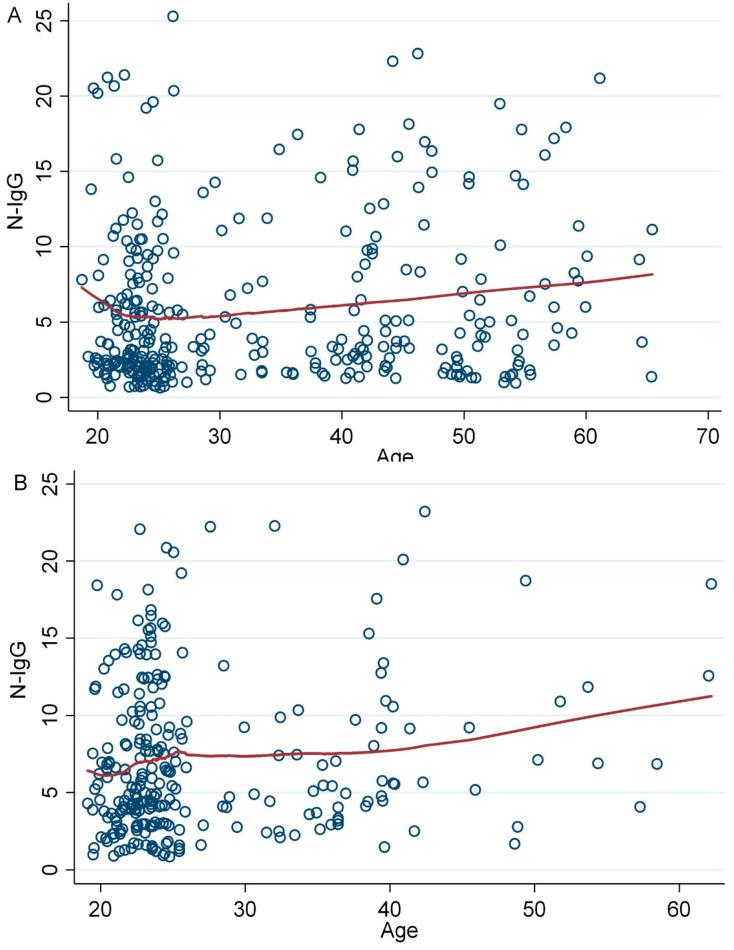
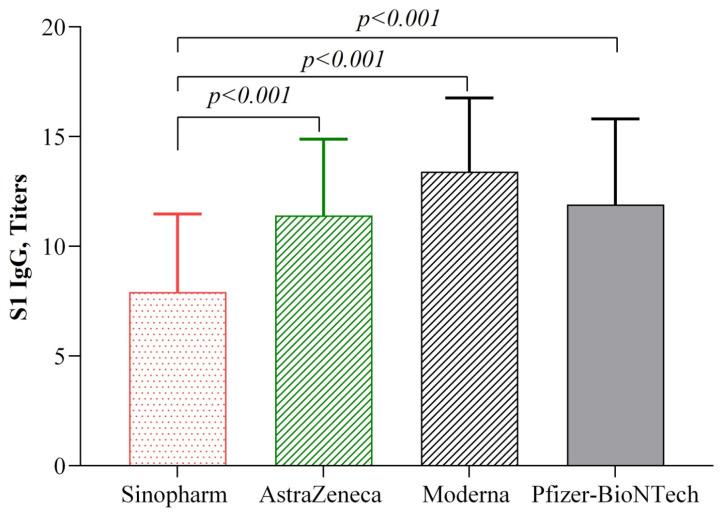
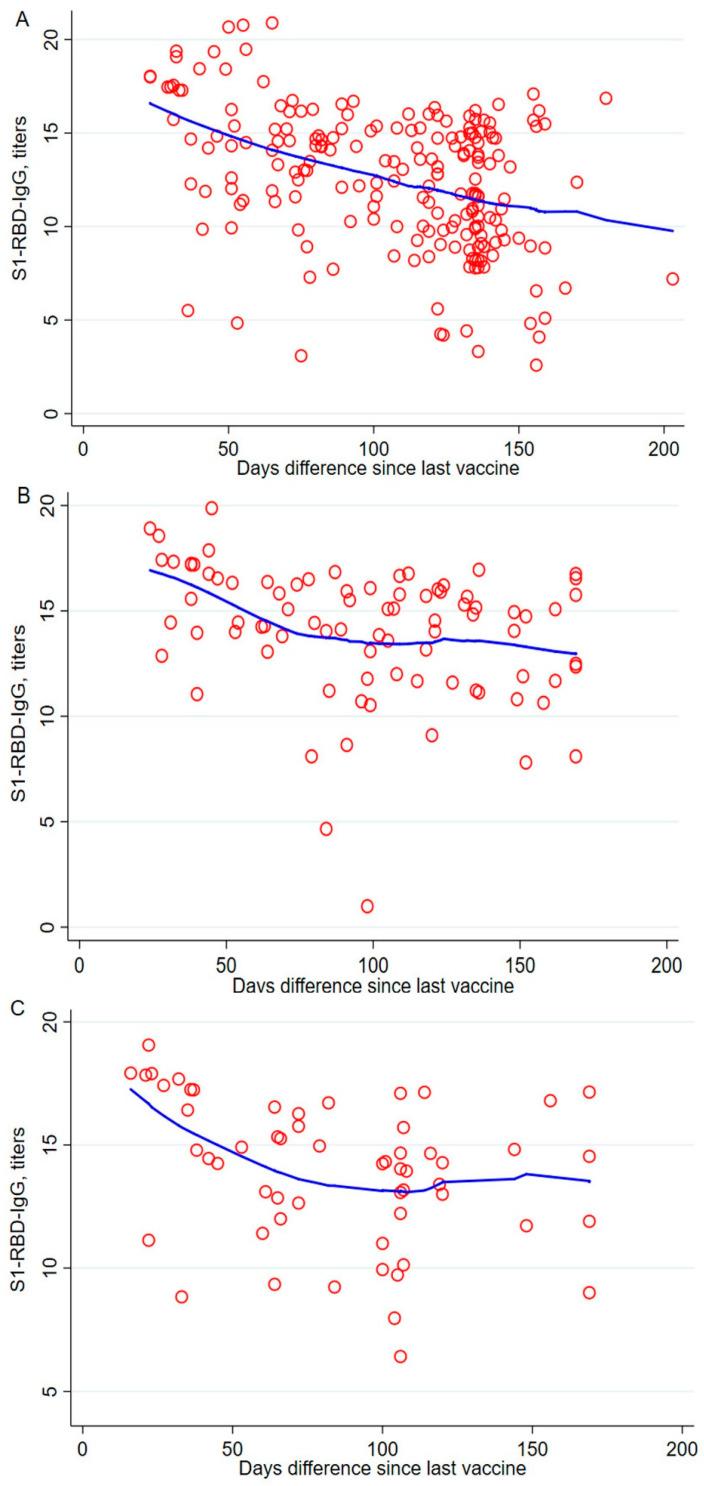
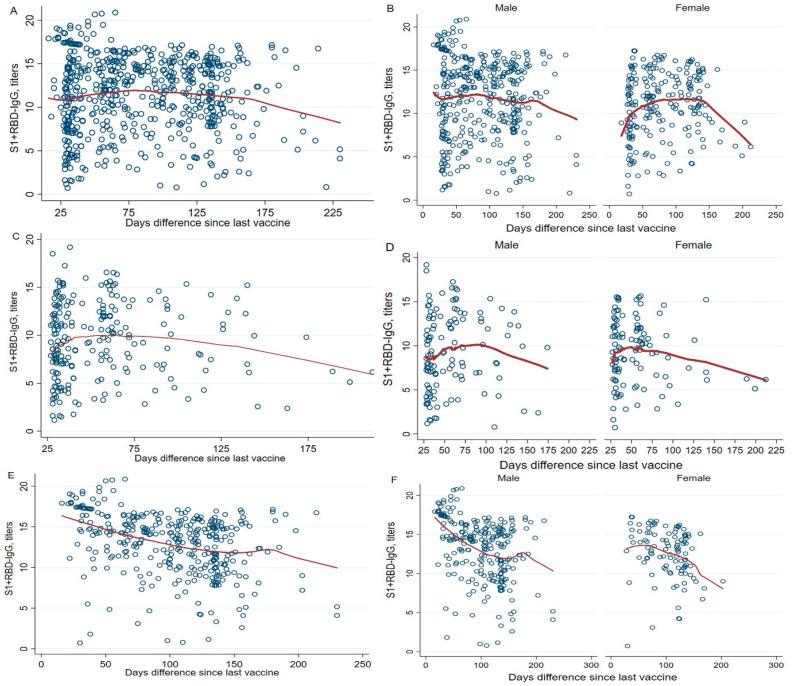
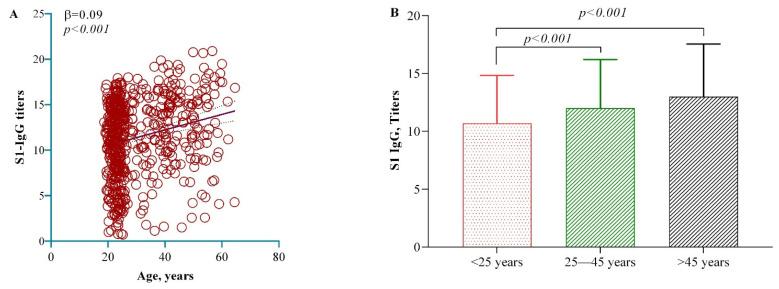
COVID-19 vaccination strategies, including heterologous prime-boost regimens and additional booster doses, aim to optimize immune responses. However, seroepidemiological studies on immune responses to different COVID-19 vaccine types and schedules remain limited. This study investigated antibody levels following homologous and heterologous prime-and-boost COVID-19 vaccination in Bangladesh. In a cohort of 606 participants who received first/second/booster doses of vaccines (AstraZeneca, Moderna, Pfizer-BioNTech, and Sinopharm), anti-spike IgG and anti-nucleocapsid IgG levels were measured. Antibody titer variations with respect to age, gender, intervals between doses, and prior infection status were analyzed. mRNA vaccines elicited the highest antibody levels after homologous and heterologous boosting. The AstraZeneca booster resulted in a sharp titer decline rate of ~0.04 units per day. Second or booster vaccine doses significantly increased antibody levels, especially in males ( < 0.05). Older age correlated with higher titers, likely reflecting previous infection, which was further confirmed by the elevation of anti-nucleocapsid IgG levels. About 95.5% of non-Sinopharm recipients were anti-nucleocapsid IgG positive, suggesting prior exposure exceeding self-reported infections (12.5%). mRNA and heterologous COVID-19 boosting enhances humoral immunity over homologous prime-boost vector/inactivated vaccination. However, waning immunity merits further investigation across vaccine platforms.
新冠病毒疫苗接种策略,包括异源初免 - 加强方案和额外的加强剂量,旨在优化免疫反应。然而,关于不同类型和接种程序的新冠病毒疫苗免疫反应的血清流行病学研究仍然有限。本研究调查了孟加拉国同源和异源初免 - 加强新冠病毒疫苗接种后的抗体水平。在一个由606名接受疫苗(阿斯利康、莫德纳、辉瑞 - 生物科技和国药)第一/第二/加强剂量的参与者组成的队列中,测量了抗刺突蛋白IgG和抗核衣壳蛋白IgG水平。分析了抗体滴度随年龄、性别、剂量间隔和既往感染状况的变化。mRNA疫苗在同源和异源加强后引发的抗体水平最高。阿斯利康加强针导致滴度下降率急剧上升,约为每天0.04个单位。第二剂或加强疫苗剂量显著提高了抗体水平,尤其是在男性中(<0.05)。年龄较大与较高的滴度相关,这可能反映了既往感染,抗核衣壳蛋白IgG水平的升高进一步证实了这一点。约95.5%的非国药疫苗接种者抗核衣壳蛋白IgG呈阳性,表明既往暴露超过自我报告的感染(12.5%)。mRNA和异源新冠病毒加强免疫比同源初免 - 加强载体/灭活疫苗接种更能增强体液免疫。然而,免疫衰退值得在各个疫苗平台上进一步研究。
 Zotero 插件