
通过网络毒理学和分子对接探索双酚A对心血管疾病影响的潜在机制。
Exploring the mechanisms underlying effects of bisphenol a on cardiovascular disease by network toxicology and molecular docking.
作者信息
Xie Lina, Huang Bingwu, Zhao Xuyong, Zhu Ning
机构信息
Department of Neurosurgery, The Wenzhou Third Clinical Institute Affiliated to Wenzhou Medical University, The Third Affiliated Hospital of Shanghai University, Wenzhou People's Hospital, China.
Department of Anesthesiology and Perioperative Medicine, The Second Affiliated Hospital and Yuying Children's Hospital of Wenzhou Medical University, China.
出版信息
Heliyon. 2024 May 17;10(10):e31473. doi: 10.1016/j.heliyon.2024.e31473. eCollection 2024 May 30.
BACKGROUND
Globally, cardiovascular disease (CVD) has emerged as a leading cause of mortality. Bisphenol A (BPA), recognized as one of the most prevalent and widely distributed endocrine-disrupting chemicals (EDCs), has been consistently linked to the progression of CVD. This research centers on unraveling the molecular mechanisms responsible for the toxic effects of BPA exposure on CVD. Key targets and pathways involved in action of BPA on CVD were investigated by network toxicology. Binding abilities of BPA to core targets were evaluated by molecular docking.
METHODS AND RESULTS
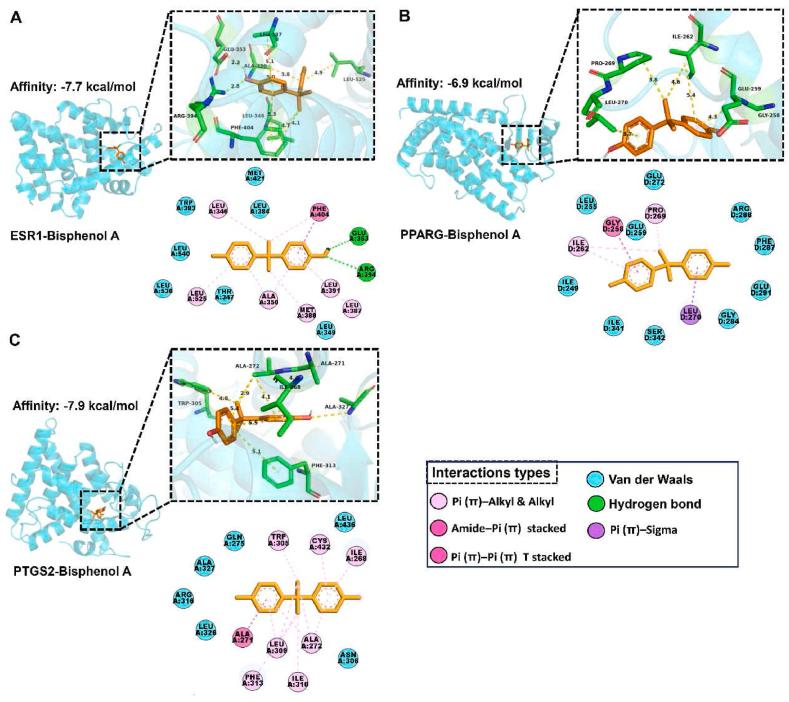
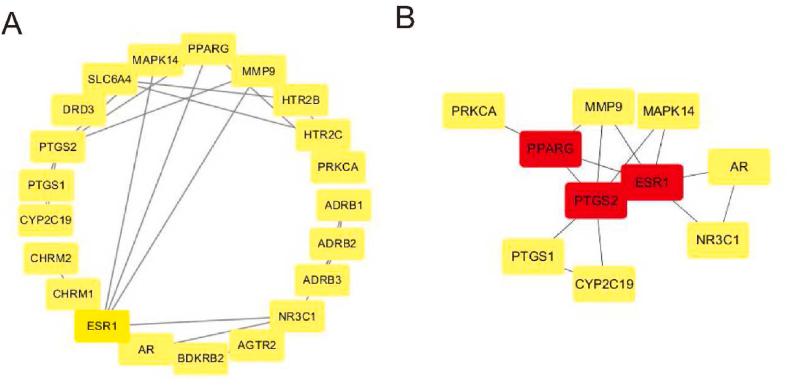
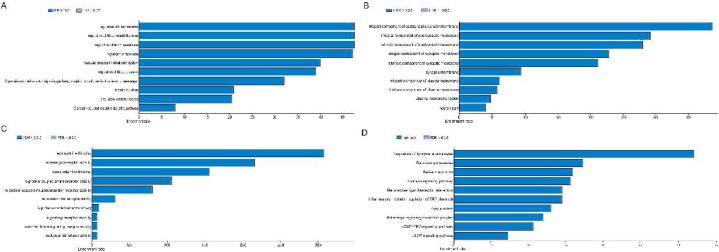
Based on information retrieved from ChEMBL, DrugBank, and OMIM databases, a total of 27 potential targets were found to be associated with the influence of BPA on CVD. Furthermore, the STRING and Cytoscape software were employed to identify three central genes-ESR1, PPARG, and PTGS2-and to construct both the protein-protein interaction network and an interaction diagram of potential targets. Gene ontology (GO) and KEGG (Kyoto Encyclopedia of Genes and Genomes, KEGG) pathway enrichment analyses via WebGestalt revealed key biological processes (BP), cellular components (CC), molecular functions (MF), and pathways, such as the calcium signaling pathway, inflammatory mediator regulation of TRP channels, gap junction, adrenergic signaling in cardiomyocytes, cGMP-PKG signaling pathway, and cAMP signaling pathway, predominantly involved in BPA-induced CVD toxicity. By using molecular docking investigations, it proved that BPA binds to ESR1, PPARG, and PTGS2 steadily and strongly.
CONCLUSION
This study not only establishes a theoretical framework for understanding the molecular toxicity mechanism of BPA in cardiovascular disease (CVD) but also introduces an innovative network toxicology approach to methodically investigate the influence of environmental contaminants on CVD. This methodology sets the stage for drug discovery efforts targeting CVD linked to exposure to endocrine-disrupting chemicals (EDCs).
背景
在全球范围内,心血管疾病(CVD)已成为主要死因。双酚A(BPA)被认为是最普遍且分布最广泛的内分泌干扰化学物质(EDC)之一,一直与心血管疾病的进展有关。本研究旨在揭示BPA暴露对心血管疾病产生毒性作用的分子机制。通过网络毒理学研究了BPA作用于心血管疾病的关键靶点和途径。通过分子对接评估了BPA与核心靶点的结合能力。
方法与结果
基于从ChEMBL、DrugBank和OMIM数据库检索到的信息,共发现27个潜在靶点与BPA对心血管疾病的影响相关。此外,利用STRING和Cytoscape软件鉴定出三个核心基因——雌激素受体1(ESR1)、过氧化物酶体增殖物激活受体γ(PPARG)和前列腺素内过氧化物合酶2(PTGS2),并构建了蛋白质-蛋白质相互作用网络和潜在靶点相互作用图。通过WebGestalt进行的基因本体(GO)和京都基因与基因组百科全书(KEGG)通路富集分析揭示了关键的生物学过程(BP)、细胞成分(CC)、分子功能(MF)和途径,如钙信号通路、TRP通道的炎症介质调节、间隙连接、心肌细胞中的肾上腺素能信号传导、cGMP-PKG信号通路和cAMP信号通路,这些主要参与了BPA诱导的心血管疾病毒性作用。通过分子对接研究证明,BPA与ESR1、PPARG和PTGS2稳定且强烈地结合。
结论
本研究不仅为理解BPA在心血管疾病(CVD)中的分子毒性机制建立了理论框架,还引入了一种创新的网络毒理学方法来系统地研究环境污染物对心血管疾病的影响。这种方法为针对与接触内分泌干扰化学物质(EDC)相关的心血管疾病的药物发现工作奠定了基础。


 Zotero 插件