
通过网络毒理学和分子对接研究6PPDQ对前列腺癌的潜在影响。
Investigating the Potential Effects of 6PPDQ on Prostate Cancer Through Network Toxicology and Molecular Docking.
作者信息
Song Yuanzhi, Weng Wuhong, Wu Shengde
机构信息
Department of Urology, Children's Hospital of Chongqing Medical University, National Clinical Research Center for Child Health and Disorders, Ministry of Education Key Laboratory of Child Development and Disorders, Chongqing 400014, China.
China International Science and Technology Cooperation Base of Child Development and Critical Disorders, Chongqing 400014, China.
出版信息
Toxics. 2024 Dec 8;12(12):891. doi: 10.3390/toxics12120891.
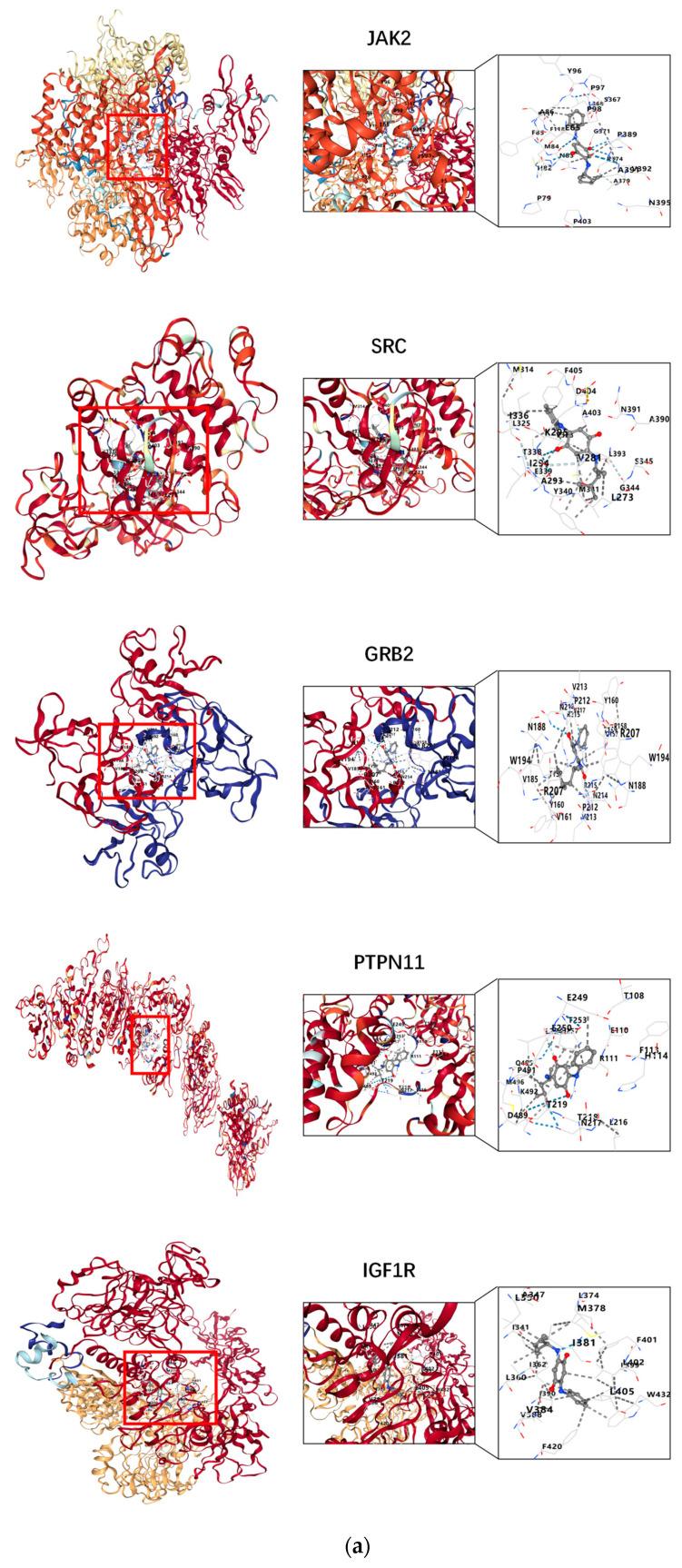
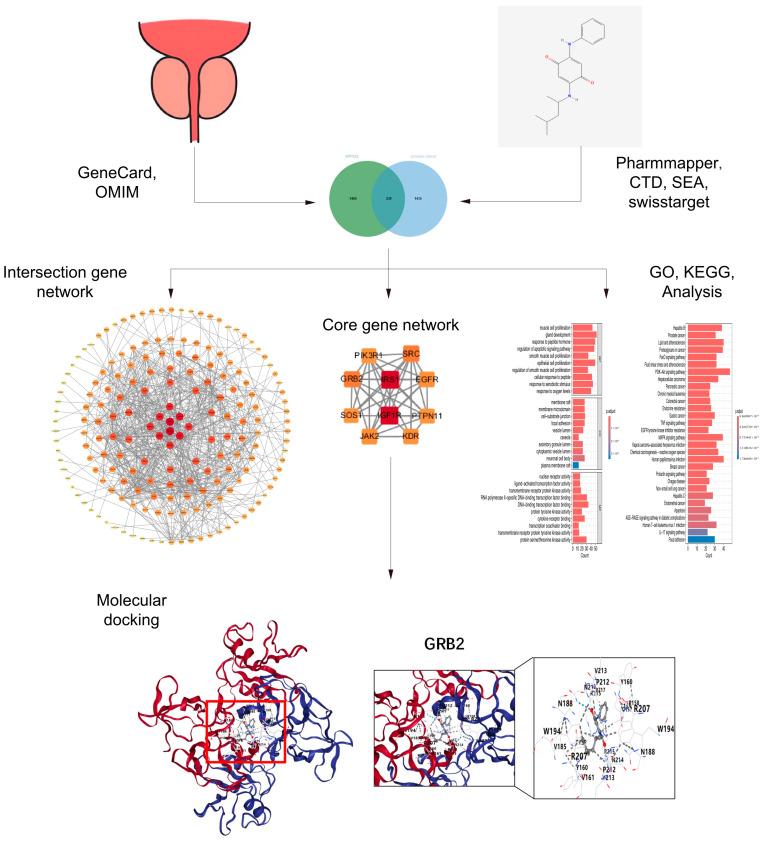
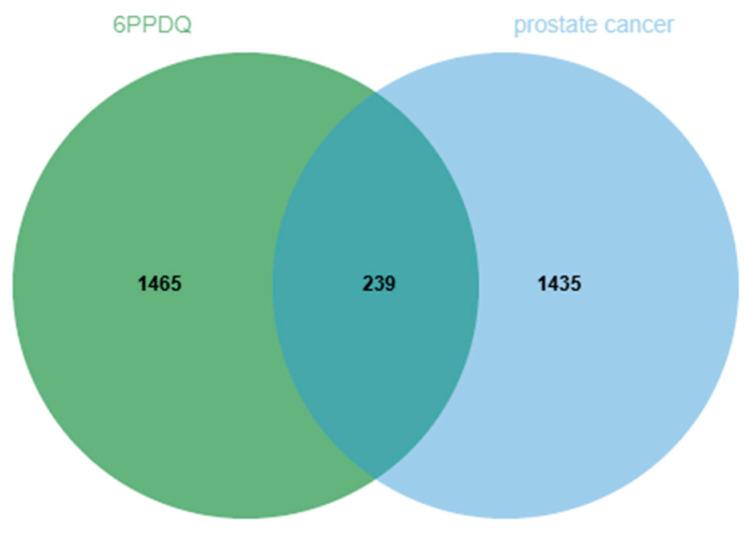
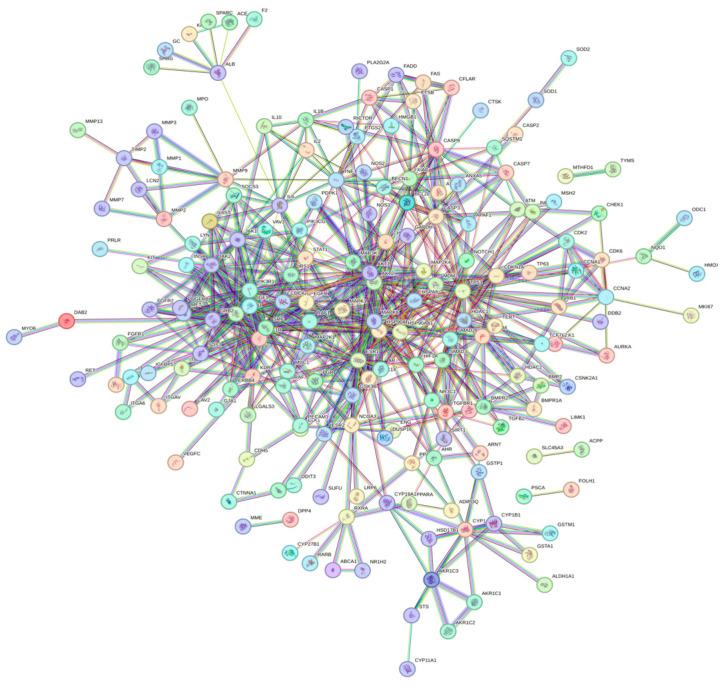
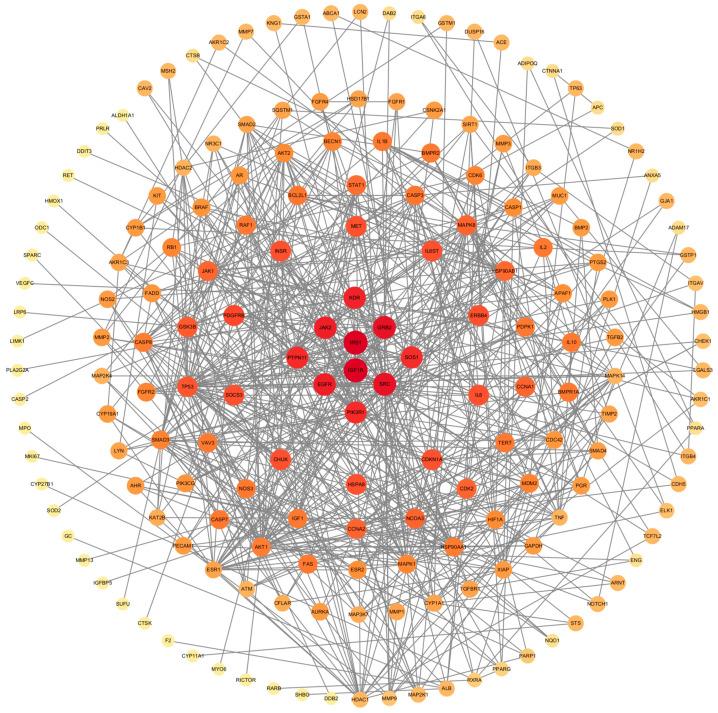
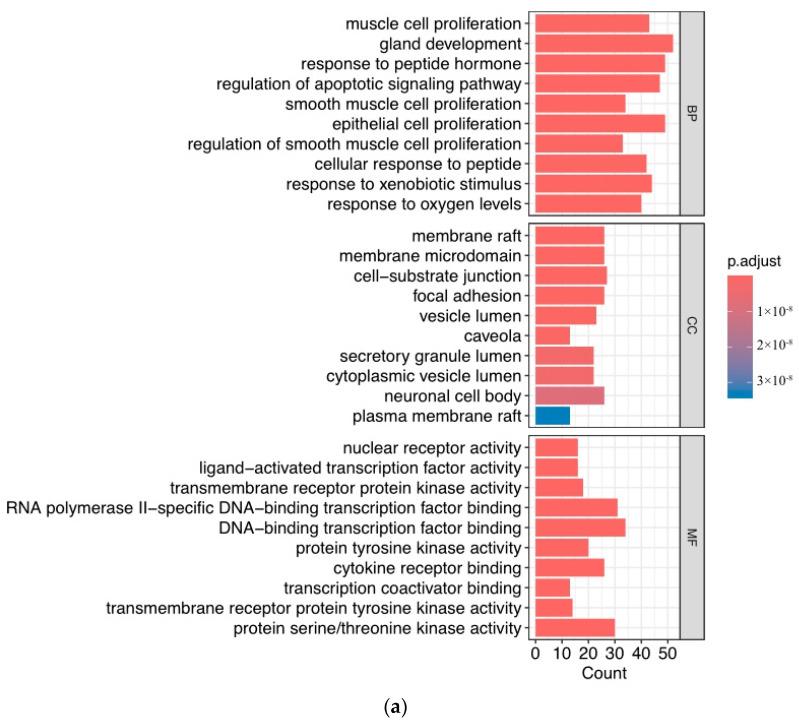
(1) Background: N-(1,3-Dimethylbutyl)-N'-phenyl-p-phenylenediamine-quinone (6PPDQ), as a newly discovered environmental toxin, has been found more frequently in our living conditions. The literature reports that damage to the reproductive and cardiovascular system is associated with exposure to 6PPDQ. However, the relationship between 6PPDQ and cancer still requires more investigation. This research aims to investigate the association between 6PPDQ and prostate cancer. (2) Methods and Results: Based on the data retrieved from the Pharmmapper, CTD, SEA, SwissTargetPrediction, GeneCard, and OMIM databases, we summarized 239 potential targets utilizing the Venn tool. Through the STRING network database and Cytoscape software, we constructed a PPI network and confirmed ten core targets, including IGF1R, PIK3R1, PTPN11, EGFR, SRC, GRB2, JAK2, SOS1, KDR, and IRS1. We identified the potential pathways through which 6PPDQ acts on these core targets using Gene Ontology (GO) and Kyoto Encyclopedia of Genes and Genomes (KEGG) analyses. Ultimately, through molecular docking methods, 6PPDQ binds closely with these ten core targets. These findings indicate that 6PPDQ may influence the proteins related to prostate cancer and may be linked to prostate cancer via several known signaling pathways. (3) Conclusions: This article employs innovative network toxicology to elucidate the prostate carcinogenic effects of 6PPDQ through its modulation of specific vital genes and signaling pathways, thereby establishing a foundational platform for future investigations into the impact of 6PPDQ on prostate cancer and potentially other tumors.
(1) 背景:N-(1,3-二甲基丁基)-N'-苯基-对苯二胺醌(6PPDQ)作为一种新发现的环境毒素,在我们的生活环境中越来越频繁地被发现。文献报道,6PPDQ暴露与生殖和心血管系统损伤有关。然而,6PPDQ与癌症之间的关系仍需更多研究。本研究旨在探讨6PPDQ与前列腺癌之间的关联。(2) 方法与结果:基于从Pharmmapper、CTD、SEA、SwissTargetPrediction、GeneCard和OMIM数据库检索到的数据,我们使用Venn工具总结了239个潜在靶点。通过STRING网络数据库和Cytoscape软件,我们构建了一个蛋白质-蛋白质相互作用(PPI)网络,并确定了十个核心靶点,包括胰岛素样生长因子1受体(IGF1R)、磷脂酰肌醇-3激酶调节亚基1(PIK3R1)、蛋白酪氨酸磷酸酶非受体型11(PTPN11)、表皮生长因子受体(EGFR)、原癌基因酪氨酸蛋白激酶(SRC)、生长因子受体结合蛋白2(GRB2)、酪氨酸蛋白激酶2(JAK2)、鸟嘌呤核苷酸交换因子1(SOS1)、激酶插入结构域受体(KDR)和胰岛素受体底物1(IRS1)。我们使用基因本体(GO)和京都基因与基因组百科全书(KEGG)分析确定了6PPDQ作用于这些核心靶点的潜在途径。最终,通过分子对接方法,6PPDQ与这十个核心靶点紧密结合。这些发现表明,6PPDQ可能影响与前列腺癌相关的蛋白质,并可能通过几种已知的信号通路与前列腺癌相关联。(3) 结论:本文采用创新的网络毒理学方法,通过调节特定的关键基因和信号通路来阐明6PPDQ对前列腺癌的致癌作用,从而为未来研究6PPDQ对前列腺癌及潜在其他肿瘤的影响建立了一个基础平台。

 Zotero 插件