
作为一种组成脂质的 1,2-二油烯基-3-三甲铵丙烷脂质纳米颗粒赋予了 Th1 细胞强烈的反应和针对疫苗抗原的抗体。
Lipid Nanoparticle with 1,2-Di-O-octadecenyl-3-trimethylammonium-propane as a Component Lipid Confers Potent Responses of Th1 Cells and Antibody against Vaccine Antigen.
机构信息
Laboratory of Nano-design for Innovative Drug Development, Graduate School of Pharmaceutical Sciences, Osaka University, 1-6 Yamadaoka, Suita, Osaka 565-0871, Japan.
Vaccine Creation Group, BIKEN Innovative Vaccine Research Alliance Laboratories, Research Institute for Microbial Diseases, Osaka University, 3-1 Yamadaoka, Suita, Osaka 565-0871, Japan.
出版信息
ACS Nano. 2024 Jul 2;18(26):16589-16609. doi: 10.1021/acsnano.4c00278. Epub 2024 Jun 17.
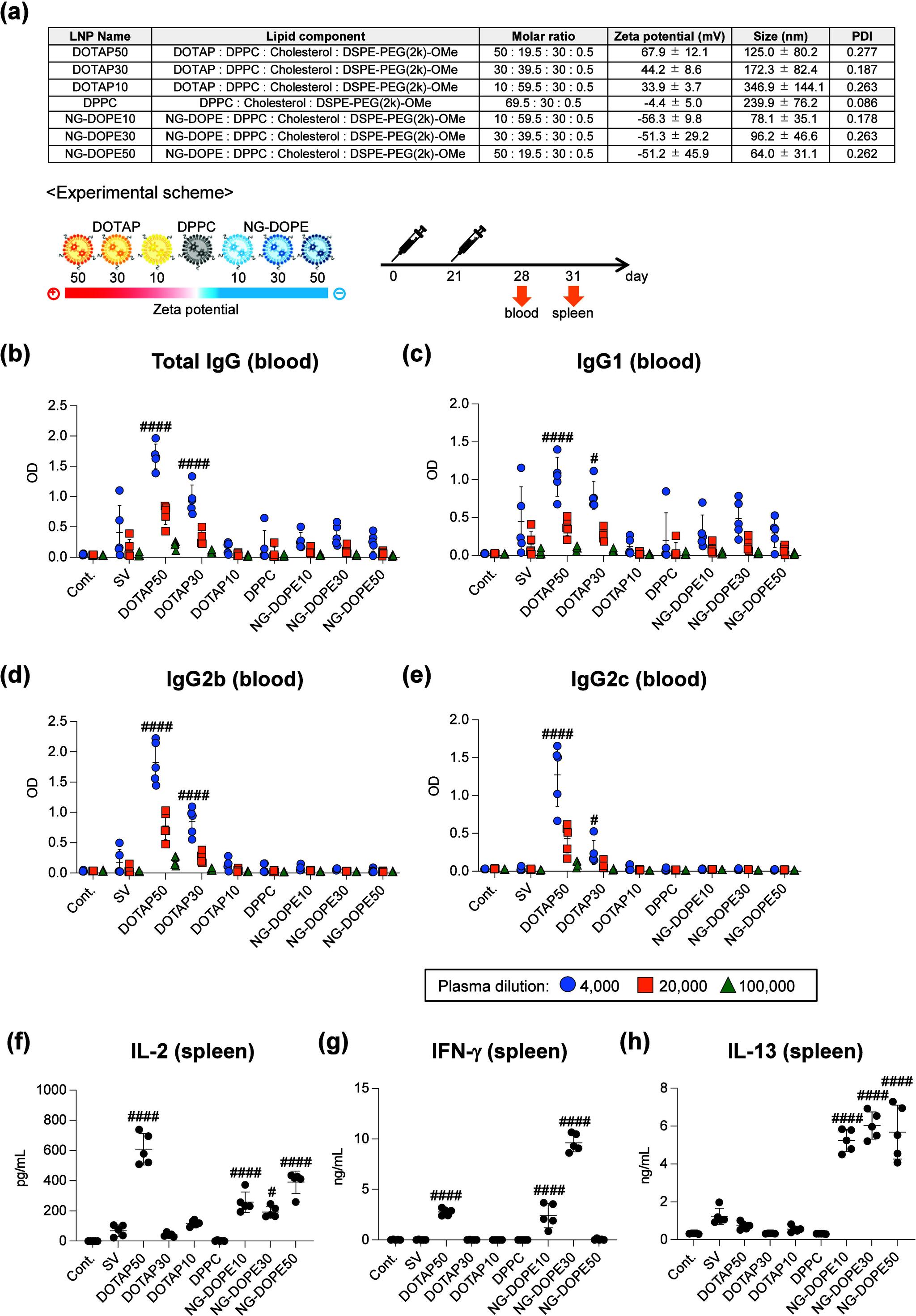
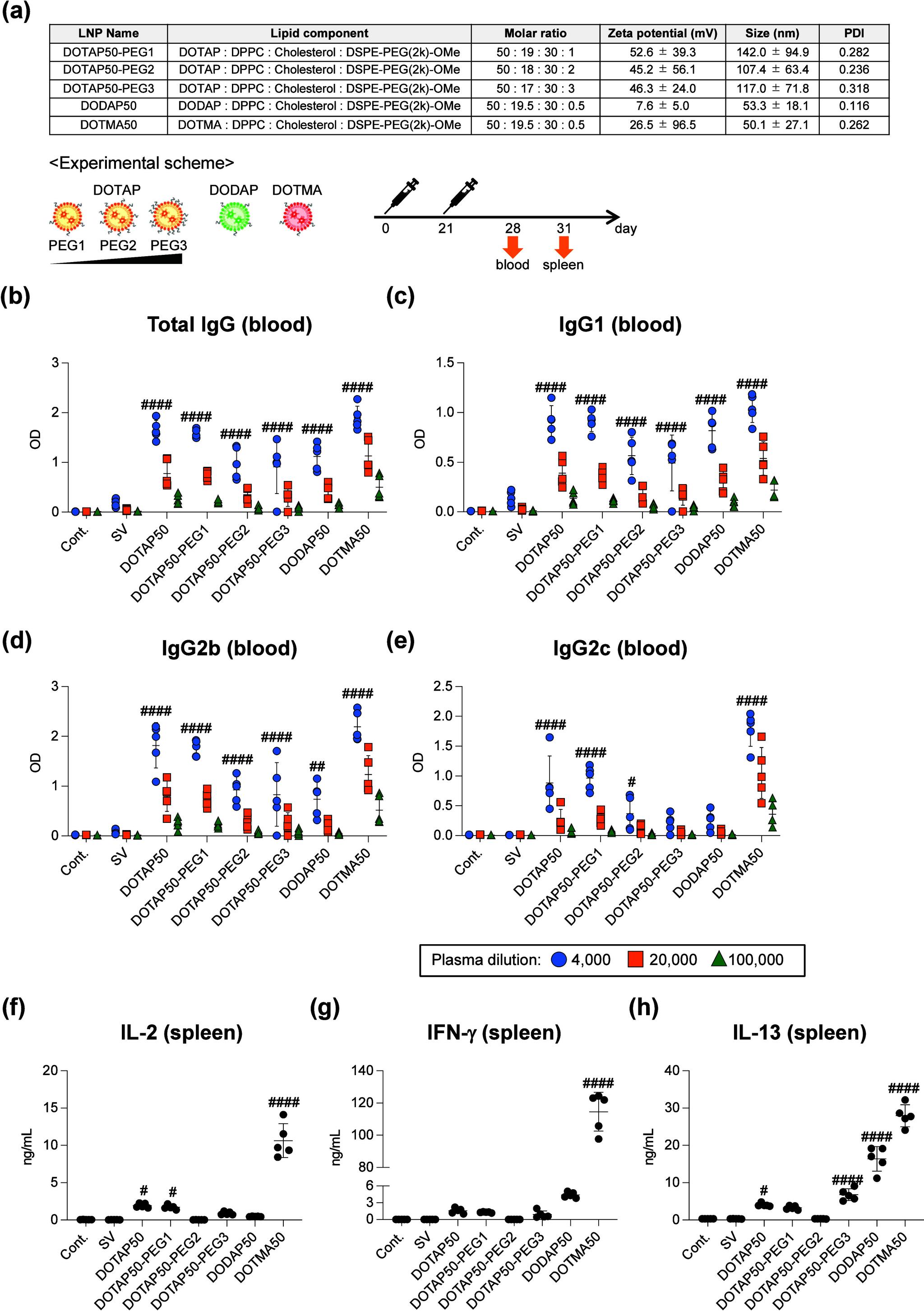
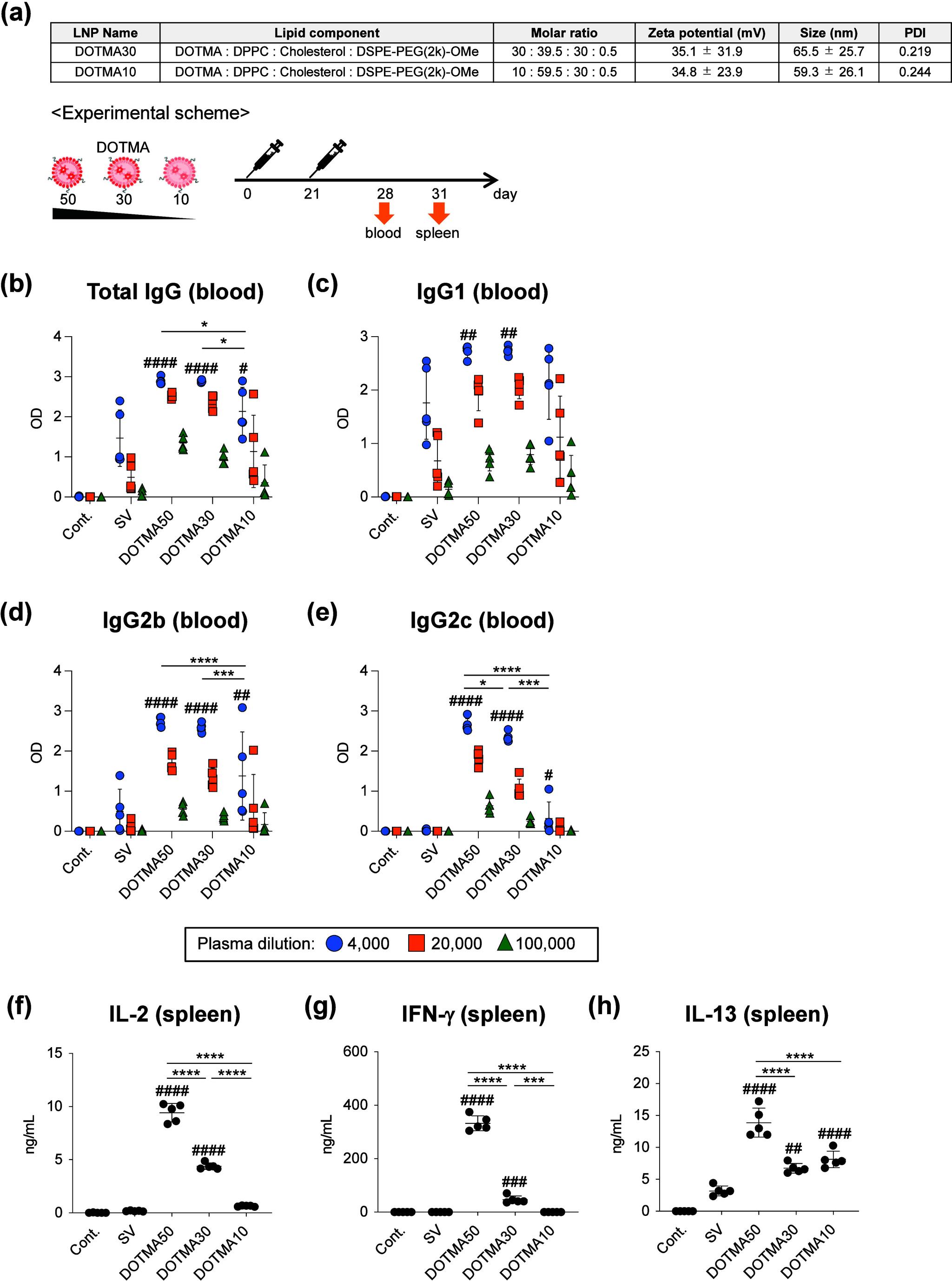
Adjuvants are effective tools to enhance vaccine efficacy and control the type of immune responses such as antibody and T helper 1 (Th1)- or Th2-type responses. Several studies suggest that interferon (IFN)-γ-producing Th1 cells play a significant role against infections caused by intracellular bacteria and viruses; however, only a few adjuvants can induce a strong Th1-type immune response. Recently, several studies have shown that lipid nanoparticles (LNPs) can be used as vaccine adjuvants and that each LNP has a different adjuvant activity. In this study, we screened LNPs to develop an adjuvant that can induce Th1 cells and antibodies using a conventional influenza split vaccine (SV) as an antigen in mice. We observed that LNP with 1,2-di-O-octadecenyl-3-trimethylammonium-propane (DOTMA) as a component lipid (DOTMA-LNP) elicited robust SV-specific IgG1 and IgG2 responses compared with SV alone in mice and was as efficient as SV adjuvanted with other adjuvants in mice. Furthermore, DOTMA-LNPs induced robust IFN-γ-producing Th1 cells without inflammatory responses compared to those of other adjuvants, which conferred strong cross-protection in mice. We also demonstrated the high versatility of DOTMA-LNP as a Th1 cell-inducing vaccine adjuvant using vaccine antigens derived from severe acute respiratory syndrome coronavirus 2 and . Our findings suggest the potential of DOTMA-LNP as a safe and effective Th1 cell-inducing adjuvant and show that LNP formulations are potentially potent adjuvants to enhance the effectiveness of other subunit vaccines.
佐剂是增强疫苗效力和控制免疫反应类型(如抗体和 T 辅助 1(Th1)或 Th2 型反应)的有效工具。几项研究表明,产生干扰素(IFN)-γ的 Th1 细胞在对抗细胞内细菌和病毒引起的感染方面发挥着重要作用;然而,只有少数佐剂可以诱导强烈的 Th1 型免疫反应。最近,几项研究表明,脂质纳米颗粒(LNPs)可用作疫苗佐剂,并且每种 LNP 具有不同的佐剂活性。在这项研究中,我们使用常规流感分裂疫苗(SV)作为抗原在小鼠中筛选 LNPs,以开发一种可以诱导 Th1 细胞和抗体的佐剂。我们观察到,含有 1,2-二油酰基-3-三甲基铵丙烷(DOTMA)作为成分脂质的 LNP(DOTMA-LNP)在小鼠中与单独的 SV 相比,可引发强烈的 SV 特异性 IgG1 和 IgG2 反应,并且与其他佐剂佐剂的 SV 一样有效。此外,与其他佐剂相比,DOTMA-LNP 诱导了强烈的 IFN-γ产生 Th1 细胞而没有炎症反应,这在小鼠中赋予了强烈的交叉保护作用。我们还使用源自严重急性呼吸系统综合征冠状病毒 2 和 的疫苗抗原证明了 DOTMA-LNP 作为 Th1 细胞诱导疫苗佐剂的高多功能性。我们的研究结果表明,DOTMA-LNP 作为一种安全有效的 Th1 细胞诱导佐剂具有潜力,并表明 LNP 制剂有可能成为增强其他亚单位疫苗有效性的有效佐剂。



 Zotero 插件