
通过脂质成分优化调节mRNA-脂质纳米颗粒疫苗的免疫原性和反应原性
Modulating Immunogenicity and Reactogenicity in mRNA-Lipid Nanoparticle Vaccines through Lipid Component Optimization.
作者信息
Kawaguchi Yoshino, Kimura Mari, Karaki Tatsuya, Tanaka Hiroki, Ono Chikako, Ishida Tatsuhiro, Matsuura Yoshiharu, Hirai Toshiro, Akita Hidetaka, Shimizu Taro, Yoshioka Yasuo
机构信息
Vaccine Creation Group, BIKEN Innovative Vaccine Research Alliance Laboratories, Research Institute for Microbial Diseases, The University of Osaka, 3-1 Yamadaoka, Suita, Osaka 565-0871, Japan.
Department of Pharmacokinetics and Biopharmaceutics, Graduate School of Biomedical Sciences, Tokushima University, 1-78-1 Sho-machi, Tokushima, Tokushima 770-8505, Japan.
出版信息
ACS Nano. 2025 Aug 5;19(30):27977-28001. doi: 10.1021/acsnano.5c10648. Epub 2025 Jul 23.
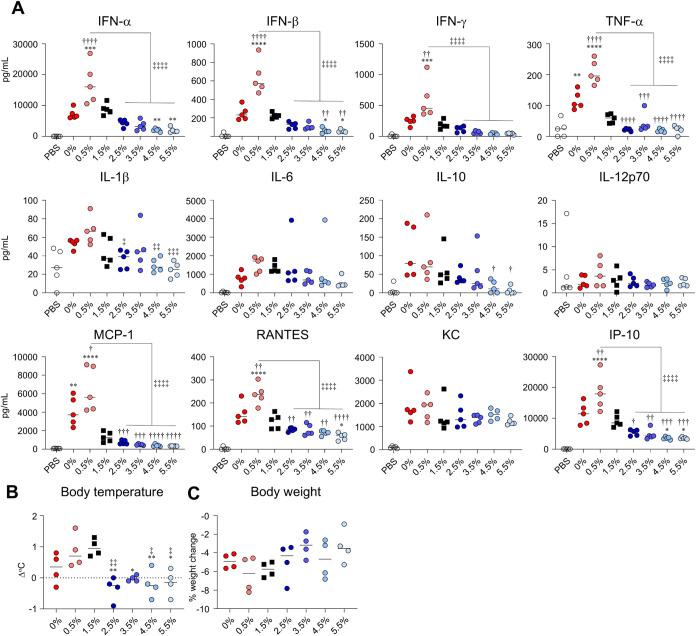
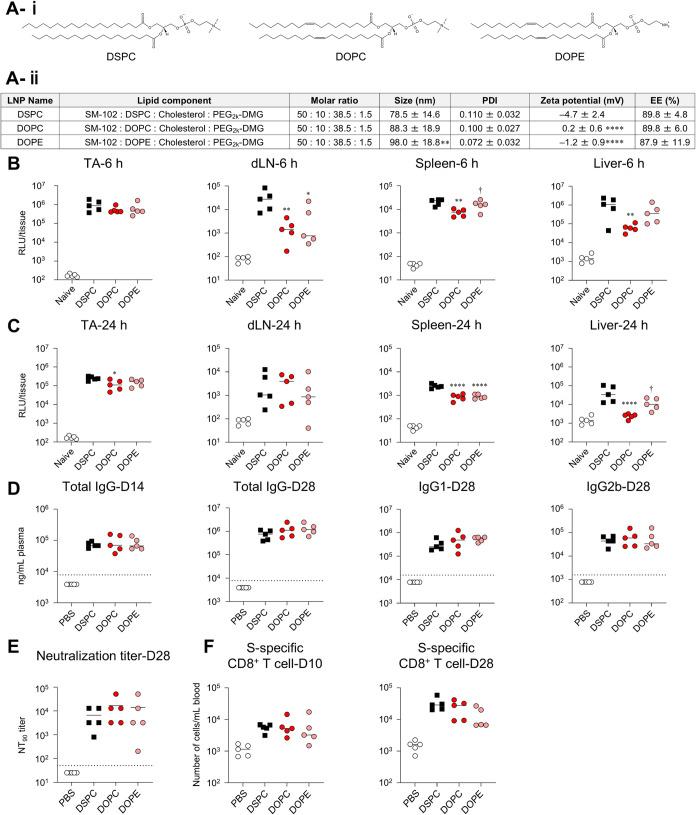
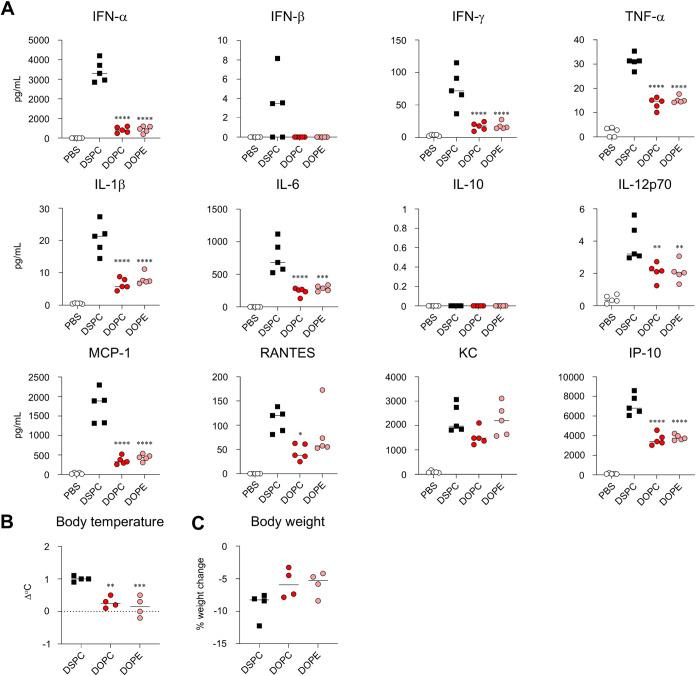
Messenger RNA (mRNA) vaccines effectively induce antibody production and T cell responses. However, adverse reactions, such as fatigue and fever, following administration remain a key challenge. To modulate the immunogenicity and reactogenicity of mRNA vaccines, the optimization of lipid nanoparticle (LNP) formulations has been attempted, particularly by screening ionizable lipids. In contrast, the potential impact of modifying other LNP components─poly(ethylene glycol) (PEG)-lipids, cholesterol, and phospholipids─on overall vaccine effects and adverse reactions remains underexplored. Here, we prepared mRNA-LNP formulations with altered structures and molar ratios of these components to assess their effects on protein expression, as well as on the induction of antigen-specific immune responses and adverse reactions. Reducing the PEG chain length and molar ratio of PEG-lipids increased antigen-specific antibody and CD8 T cell responses. LNPs with cholesterol substituted by plant sterols, or LNPs with phospholipids replaced by those with different head and tail group structures, induced antigen-specific antibody and CD8 T cell responses comparable to the control formulation. Alternately, these LNPs significantly reduced inflammatory cytokine production and adverse reactions, including fever, compared with the control LNPs. Finally, correlation analysis revealed a positive association between protein expression in specific organs and the magnitude of immune responses and adverse reactions. These findings demonstrate that modifying PEG-lipids, cholesterol, and phospholipids is beneficial for modulating the immunogenicity and reactogenicity of the mRNA-LNP vaccine.
信使核糖核酸(mRNA)疫苗能有效诱导抗体产生和T细胞反应。然而,接种后出现的诸如疲劳和发热等不良反应仍是一项关键挑战。为了调节mRNA疫苗的免疫原性和反应原性,人们尝试对脂质纳米颗粒(LNP)配方进行优化,尤其是通过筛选可电离脂质。相比之下,改变其他LNP成分——聚乙二醇(PEG)-脂质、胆固醇和磷脂——对整体疫苗效果和不良反应的潜在影响仍未得到充分探索。在此,我们制备了这些成分的结构和摩尔比有所改变的mRNA-LNP配方,以评估它们对蛋白质表达的影响,以及对抗原特异性免疫反应和不良反应诱导的影响。缩短PEG链长度和降低PEG-脂质的摩尔比可增强抗原特异性抗体和CD8 T细胞反应。用植物甾醇取代胆固醇的LNP,或用具有不同头部和尾部基团结构的磷脂取代原有磷脂的LNP,诱导产生的抗原特异性抗体和CD8 T细胞反应与对照配方相当。另外,与对照LNP相比,这些LNP显著降低了炎性细胞因子的产生和包括发热在内的不良反应。最后,相关性分析揭示了特定器官中的蛋白质表达与免疫反应强度和不良反应之间存在正相关。这些发现表明,改变PEG-脂质、胆固醇和磷脂有利于调节mRNA-LNP疫苗的免疫原性和反应原性。






 Zotero 插件