
外泌体在肾纤维化发生发展中的作用。
Exosomes on the development and progression of renal fibrosis.
机构信息
Department of Urology, Renmin Hospital of Wuhan University, Wuhan, Hubei, P.R. China.
Department of Anesthesiology, Renmin Hospital of Wuhan University, Wuhan, Hubei, P.R. China.
出版信息
Cell Prolif. 2024 Nov;57(11):e13677. doi: 10.1111/cpr.13677. Epub 2024 Jun 19.
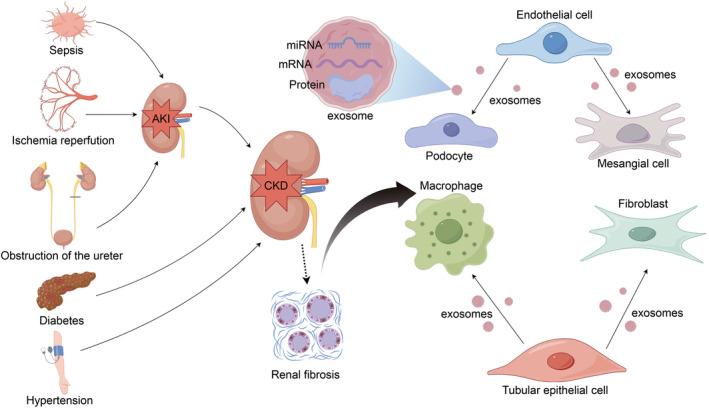
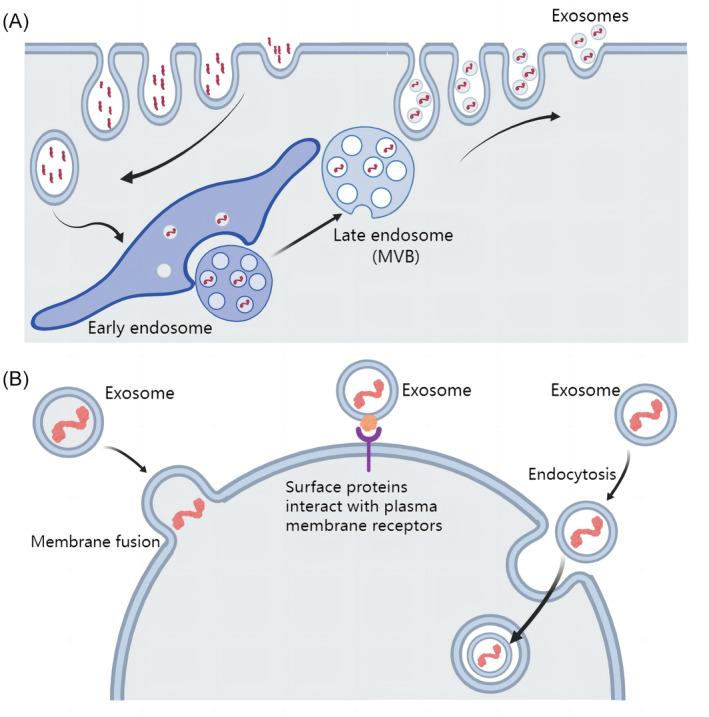
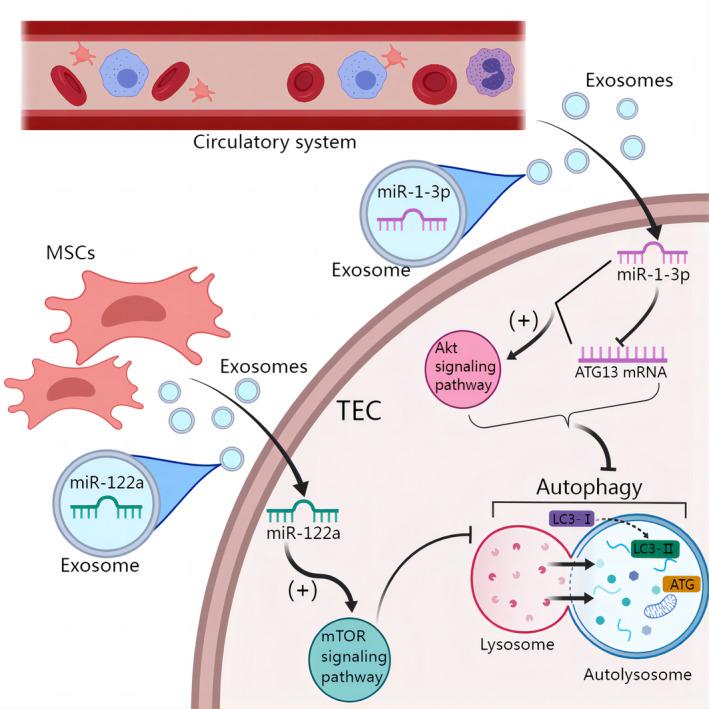
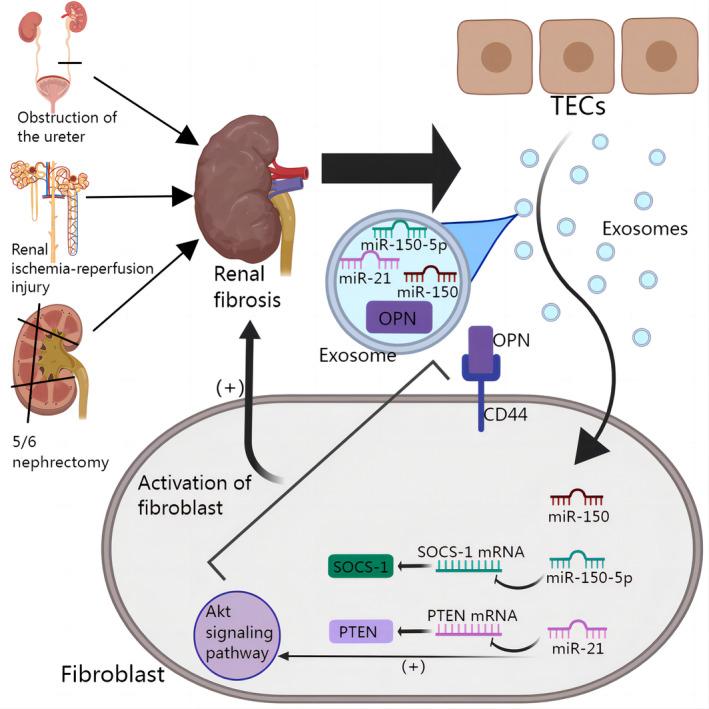
Renal fibrosis is a prevalent pathological alteration that occurs throughout the progression of primary and secondary renal disorders towards end-stage renal disease. As a complex and irreversible pathophysiological phenomenon, it includes a sequence of intricate regulatory processes at the molecular and cellular levels. Exosomes are a distinct category of extracellular vesicles that play a crucial role in facilitating intercellular communication. Multiple pathways are regulated by exosomes produced by various cell types, including tubular epithelial cells and mesenchymal stem cells, in the context of renal fibrosis. Furthermore, research has shown that exosomes present in bodily fluids, including urine and blood, may be indicators of renal fibrosis. However, the regulatory mechanism of exosomes in renal fibrosis has not been fully elucidated. This article reviewed and analysed the various mechanisms by which exosomes regulate renal fibrosis, which may provide new ideas for further study of the pathophysiological process of renal fibrosis and targeted treatment of renal fibrosis with exosomes.
肾纤维化是一种普遍的病理改变,发生在原发性和继发性肾脏疾病向终末期肾病进展的整个过程中。作为一种复杂且不可逆转的病理生理现象,它包括分子和细胞水平上一系列复杂的调节过程。外泌体是一类独特的细胞外囊泡,在细胞间通讯中起着至关重要的作用。在肾纤维化的背景下,多种途径受到各种细胞类型(包括肾小管上皮细胞和间充质干细胞)产生的外泌体的调节。此外,研究表明,体液(包括尿液和血液)中存在的外泌体可能是肾纤维化的标志物。然而,外泌体在肾纤维化中的调节机制尚未完全阐明。本文综述和分析了外泌体调节肾纤维化的各种机制,这可能为进一步研究肾纤维化的病理生理过程以及用外泌体靶向治疗肾纤维化提供新的思路。




 Zotero 插件