
肝缺血再灌注损伤的细胞和分子机制:氧化应激的作用及治疗方法。
Cellular and molecular mechanisms of hepatic ischemia-reperfusion injury: The role of oxidative stress and therapeutic approaches.
机构信息
Department of Cancer Biology, Mayo Clinic, Jacksonville, FL, 32224, USA; Department of Hepatology, Kanazawa Medical University, Uchinada, Ishikawa, 920-0293, Japan; Center for Regenerative Medicine, Kanazawa Medical University Hospital, Uchinada, Ishikawa, 920-0293, Japan.
Department of Biomedical Sciences, Joan C. Edwards School of Medicine, Marshall University, Huntington, WV, 25755, USA.
出版信息
Redox Biol. 2024 Sep;75:103258. doi: 10.1016/j.redox.2024.103258. Epub 2024 Jun 27.
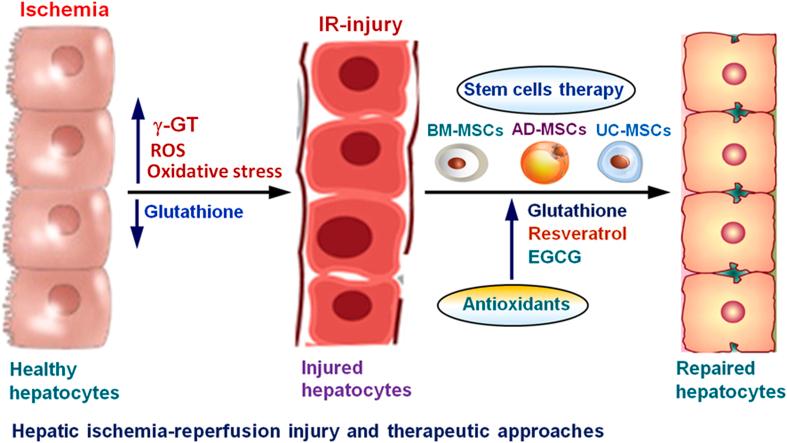
Ischemia-reperfusion (IR) or reoxygenation injury is the paradoxical exacerbation of cellular impairment following restoration of blood flow after a period of ischemia during surgical procedures or other conditions. Acute interruption of blood supply to the liver and subsequent reperfusion can result in hepatocyte injury, apoptosis, and necrosis. Since the liver requires a continuous supply of oxygen for many biochemical reactions, any obstruction of blood flow can rapidly lead to hepatic hypoxia, which could quickly progress to absolute anoxia. Reoxygenation results in the increased generation of reactive oxygen species and oxidative stress, which lead to the enhanced production of proinflammatory cytokines, chemokines, and other signaling molecules. Consequent acute inflammatory cascades lead to significant impairment of hepatocytes and nonparenchymal cells. Furthermore, the expression of several vascular growth factors results in the heterogeneous closure of numerous hepatic sinusoids, which leads to reduced oxygen supply in certain areas of the liver even after reperfusion. Therefore, it is vital to identify appropriate therapeutic modalities to mitigate hepatic IR injury and subsequent tissue damage. This review covers all the major aspects of cellular and molecular mechanisms underlying the pathogenesis of hepatic ischemia-reperfusion injury, with special emphasis on oxidative stress, associated inflammation and complications, and prospective therapeutic approaches.
缺血再灌注(IR)或再氧合损伤是在手术过程或其他情况下经历一段时间缺血后恢复血流时细胞损伤的矛盾加剧。急性中断肝脏的血液供应和随后的再灌注可导致肝细胞损伤、凋亡和坏死。由于肝脏的许多生化反应需要持续供应氧气,因此任何血流阻塞都可能迅速导致肝缺氧,进而迅速发展为绝对缺氧。再氧合导致活性氧和氧化应激的增加,从而导致促炎细胞因子、趋化因子和其他信号分子的产生增加。随后的急性炎症级联反应导致肝细胞和非实质细胞的显著损伤。此外,几种血管生长因子的表达导致许多肝窦的异质关闭,即使在再灌注后,肝脏的某些区域的氧供应也会减少。因此,确定减轻肝缺血再灌注损伤和随后的组织损伤的适当治疗方式至关重要。本综述涵盖了肝缺血再灌注损伤发病机制的细胞和分子机制的所有主要方面,特别强调了氧化应激、相关炎症和并发症以及有前途的治疗方法。



 Zotero 插件